
CanucksArmy has no direct affiliation to the Vancouver Canucks, Canucks Sports & Entertainment, NHL, or NHLPA
Can the Canucks’ Lukas Reichel join this list of 10 successful NHL reclamation projects?
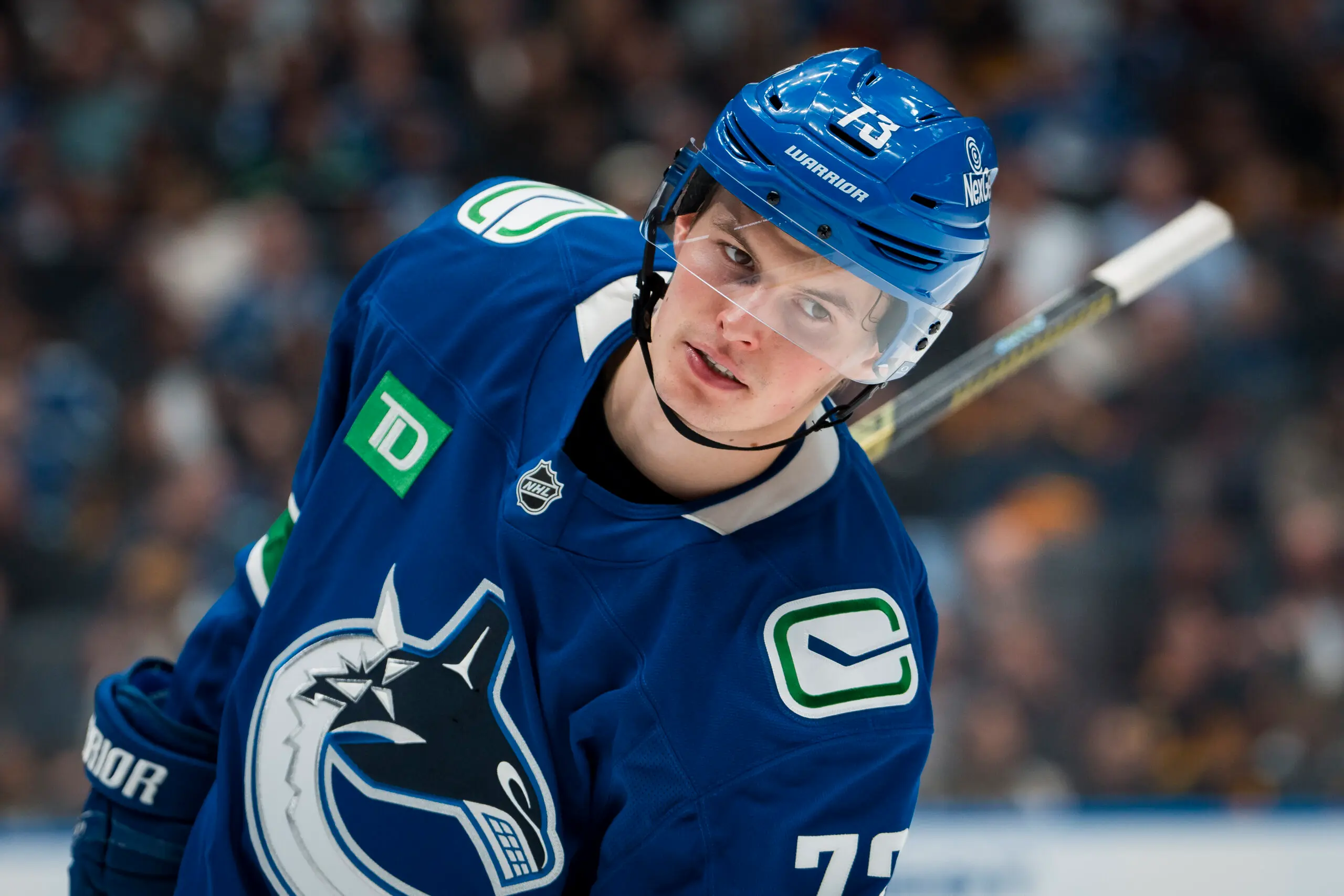
Photo credit: © Bob Frid-Imagn Images

By Cory McQuhae
Nov 13, 2025, 09:00 ESTUpdated: Nov 13, 2025, 02:58 EST


There were several reasons behind the Vancouver Canucks‘ decision to acquire Lukas Reichel from the Chicago Blackhawks on October 24th.
The former first-round pick is a prodigious AHL scorer and is two seasons removed from an impressive 2023 finish, when he scored 15 points in 23 games for the Blackhawks. He has displayed tantalizing speed through the neutral zone, playmaking vision, and an opportunistic scoring touch. However, apart from that brief blip of production at the end of 2023, his NHL profile has been disappointing.
The Canucks flipped one of their three 2027 fourth-round draft picks, making a low-risk assumption that he would be able to figure out his game with a change of scenery, as some before him had done.
While reclamation projects still have a high bust rate, here are 10 players who turned their careers around by finding a situation where they could thrive, and what the likelihood is of Reichel joining that list with the Canucks.
The Middle-Sixers
Ryan Poehling
Drafted: 25th overall, 2017, Montreal Canadiens |Breakout age: 24 | Breakout team: Philadelphia Flyers | Previous teams: Montreal Canadiens, Pittsburgh Penguins
Stats before breakout: 135GP, 20G, 16A, 36P (average of 21 points per 82 games) | Stats after breakout: 161GP, 24G, 41A, 65P (average of 33 points per 82 games) |
Stats at the 10 game mark with breakout team: 10GP, 0G, 1A, 1P
Stats at the 10 game mark with breakout team: 10GP, 0G, 1A, 1P
Players selected near the bottom of the first round are more likely to become bottom-six role players than impact stars. Poehling was good, not great, in the NCAA. He was a solid enough producer in the AHL, playing for less than half a season over his three years there. For the first several years of his career, he was trending toward not even meeting those modest expectations.
Traded to the Pittsburgh Penguins after two years with the Montreal Canadiens, he was not issued a qualifying offer after one season in Pittsburgh. The centre signed a modest one-year contract with the Philadelphia Flyers, where he broke out on a Flyers team that hung around the playoff race until the very end of the season. Since then, he has become a consistent 30-point, bottom-six contributor who brings size and faceoff ability.
He’s most likely already reached his NHL ceiling, but will probably remain in this role for quite a while.
Vasily Podkolzin
Drafted: 10th overall, 2019, Vancouver Canucks | Breakout age: 23 | Breakout team: Edmonton Oilers | Previous team: Vancouver Canucks
Stats before breakout: 137GP, 18G, 17A, 35P (average of 21 points per 82 games) | Stats after breakout: 100GP, 10G, 21A, 31P (average of 25 points per 82 games) | Stats at the 10 game mark with breakout team: 10GP, 0G, 1A, 1P
Hello there, old friend. Like Reichel, Podkolzin was also traded for a fourth-round pick.
As with Poehling, it’s less that the former-Canuck winger broke out but, instead, found a consistent role with a new team. While he did spend quite a bit of time in the top-six flanking Leon Draisaitl, he remained consistently effective when moved lower in the lineup – even if his production dropped.
Podkolzin’s increase in production has been modest. His improved reliability away from the puck and better understanding of how to play within a team’s system have led to his ascent into being an NHL regular.
Eeli Tolvanen
Drafted: 30th overall, 2017, Nashville Predators | Breakout age: 23 | Breakout team: Seattle Kraken | Previous Team: Nashville Predators
Stats before breakout: 135GP, 25G, 26A, 51P (average of 31 points per 82 games) | Stats after breakout: 226GP, 56G, 54A, 110P (average of 40 points per 82 games) | Stats at the 10 game mark with breakout team: 10GP, 5G, 2A, 7P
Tolvanen is a fun player. Not just because he’s become a good scorer since arriving in Seattle, but because he views hockey as an opportunity to hit the opposing players.
He was a good player in Nashville and had already become a full-time NHLer when the Predators placed him on waivers. With the Kraken, he ramped up his physical game, which has created more scoring opportunities for himself.
Sometimes, being given away by your previous team lights a fire. This was definitely the case for Tolvanen.
Owen Tippett
Drafted: 10th 0verall, 2017, Florida Panthers | Breakout age: 23 | Breakout team: Philadelphia Flyers | Previous team: Nashville Predators
Stats before breakout: 94GP, 14G, 19A, 33P (average of 29 points per 82 games) | Stats after breakout: 268GP, 84G, 74A, 158P (average of 48 points per 82 games) | Stats at the 10 game mark with breakout team: 10GP, 2G, 1A, 3P
When the Flyers acquired Tippett in exchange for Claude Giroux, he was in the midst of his second straight disappointing season in the NHL. He was known for being a great scorer in the AHL, but could he translate those skills to jump to the next level? Even upon arriving in Philadelphia, he didn’t immediately break out. After that mid-season trade, he only registered seven points in 21 games.
The following season, however, saw his talent coalesce. He scored 27 goals and 22 assists across 77 games and bested those numbers the season afterwards.
Tippett’s improvement was about being given an opportunity on a bad team, while his former team had Stanley Cup aspirations. He wasn’t amazing when first arriving, but the Flyers were committed to unlocking his full potential, and he responded.
Too Early to Tell
Kappo Kakko
Drafted: 2nd Overall, 2019, New York Rangers | Breakout age: 23 | Breakout team: Seattle Kraken | Previous team: New York Rangers
Stats Before Breakout: 330GP, 61G, 70A, 131P (average of 33 points per 82 games) | Stats after breakout: 55GP, 10G, 20A, 30P (average of 45 points per 82 games) | Stats at the 10 game mark with breakout team: 10GP, 3G, 4A, 7P
Calling his trade to Kraken a breakout is a bit of a misnomer. The burly winger had already tallied 40 points in the 2022-23 season. His stagnation afterwards led the Rangers to lose faith in him. At the time of the trade, he recorded a respectable 14 points in 30 games. He then subsequently found his footing with the Kraken and ended the season with 30 points across 49 games with them. These 44 points over 79 games were a career high.
Unfortunately, Kakko hasn’t been able to carry over this momentum into this season. An injury limited him during training camp and delayed the start of his season. At this point, he’s gone pointless through six games.
Dylan Cozens
Drafted: 7th Overall, 2019, Buffalo Sabres | Breakout age: 21/23 | Breakout team: Buffalo Sabres/Ottawa Senators | Previous team: Buffalo Sabres
Stats before breakout: 341GP, 77G, 120A, 197P (average of 47 points per 82 games) | Stats after breakout: 38GP, 11G, 17A, 28P (average of 60 points per 82 games) | Stats at the 10 game mark with breakout team: 10GP, 3G, 5A, 8P
For Cozens, the trade to the Senators isn’t about breaking out but recapturing the tantalizing talent displayed in 2022-23, where he registered 68 points. His production fell off a cliff over the next two seasons.
Upon arrival in Ottawa, his production immediately climbed back up; 16 points in 21 games. He’s maintained his improved play throughout this season and is an integral part of the Senators’ future.
The change of scenery looked to have gotten his career back on track, but with a sample size of under half a season, it’s far too early to say this definitively.
Trevor Zegras
Drafted: 9th Overall, 2019, Anaheim Ducks | Breakout age: 20/24 | Breakout team: Anaheim Ducks/Philadelphia Flyers | Previous team: Anaheim Ducks
Stats before breakout: 268GP, 67G, 119A, 186P (average of 57 points per 82 games) | Stats after breakout: 15GP, 4G, 12A, 16P (average of 87points per 82 games) | Stats at the 10 game mark with breakout team: 10GP, 4G, 8A, 12P
Zegras, the most recently acquired player on this list, has had a complete career turnaround since donning the orange and black.
Many will remember how he burst onto the scene upon becoming a full-time NHLer, putting up back-to-back 60-point seasons. There were many warts to his game, however. He was less than committed to the defensive zone and, increasingly, took selfish penalties. Injuries and an attempt to change his style to be more conducive to team success led to a significant drop in offensive production. Frustrated with him, the Ducks felt he would never get his form back and sent him to the Flyers this summer. Interestingly, Poehling was part of the return.
Although the sample size is extremely small, the master of “The Michigan” has not only found his offensive touch again, but is on pace to easily surpass his career highs without hurting the team defensively. He still takes too many penalties, but his commitment and effort can no longer be disputed.
If he can carry this level of play throughout the season, he’ll be in the next category in short order.
Gold Standard
Dylan Holloway
Drafted: 14th Overall, 2020, Edmonton Oilers | Breakout age: 22 | Breakout team: St. Louis Blues | Previous team: Edmonton Oilers
Stats before breakout: 89GP, 9G, 9A, 18P (average of 27 points per 82 games) | Stats after breakout: 94GP, 30G, 41A, 71P (average of 62 points per 82 games) | Stats at the 10 game mark with breakout team: 10GP, 4G, 1A, 5P
The Oilers not matching the Blues’ offer sheet to Holloway — a modest two-year, $2.3M AAV contract — and allowing him to leave for only a third-round draft pick compensation is one of the more shocking and, ultimately, misguided moves in recent memory. His incredible speed and two-way play immediately made him a building block for the Blues.
The start of this season, however, hasn’t gone quite as planned. Through the first 17 games, he’s only recorded eight points and, if this pace continues, won’t even crest 41 points across a full season. Still, for his cap hit, speed, and penalty killing ability, there’s zero regret about acquiring him.
Jared McCann
Drafted: 24th Overall, 2014, Vancouver Canucks | Breakout age: 25 | Breakout team: Seattle Kraken | Previous teams: Vancouver Canucks, Florida Panthers, & Pittsburgh Penguins
Stats before breakout: 353GP, 66G, 89A, 155P (average of 36 points per 82 games) | Stats after breakout: 320GP, 121G, 126A, 347P (average of 63 points per 82 games) | Stats at the 10 game mark with breakout team: 10GP, 5G, 3A, 9P
By the time the Kraken selected McCann in the expansion draft, he had already been a part of four organizations, although taking the ice for only three of them. His three seasons in Pittsburgh were solid but marred by injury. This unreliable nature, along with the looming expansion draft, prompted the Penguins to send him to Toronto so the Maple Leafs would have the honour of exposing him in the draft.
His first season with the Kraken was revelatory, as he scored nearly 30 goals and tallied 50 points in 74 games. There were still blemishes in his game, as reflected by an ugly minus-28. However, he sorted them out and scored 40 goals and 70 points the following season.
Multiple organizations had given up on him, but at the very least, he was already an NHL player by the time he arrived in Seattle. Once McCann had matured and been given a real opportunity, he made the most of it.
Sam Bennett
Drafted: 4th Overall, 2014, Calgary Flames | Breakout age: 25 | Breakout team: Florida Panthers | Previous team: Calgary Flames
Stats before breakout: 402GP, 68G, 72A, 140P (average of 29 points per 82 games) | Stats after breakout: 305GP, 98G, 103A, 201P (average of 54 points per 82 games) | Stats at the 10 game mark with breakout team: 10GP, 6G, 9A, 15P
Here he is, the ultimate change-of-scenery player. The mythical beast that everyone wants to emulate. Bennett’s true breakout was the moment he put on a Panthers sweater. His 15 points in his first 10 games were his best stretch of scoring in his professional career.
The highs of that offensive blast haven’t been sustainable, at least during the regular season, but he’s proven himself to be an all-situations second-line centre. He’s also of the extremely rare breed whose scoring actually increases in the playoffs. Bennett has scored 51 points across 62 games over the last three playoffs, which is an 82-game pace of 67 points.
When a player is traded in a change-of-scenery move, Bennett is the guy who is pointed to as the best-case scenario.
Reichel’s Chances of Joining this List
The most successful of these players got off to a hot start with their new team. The confidence gained from that was invaluable and led to sustained improvement in play.
When comparing Reichel to the other players in this list, the top-six forwards’ turnarounds happened very quickly. In contrast, the useful bottom-six players already had some intangibles that justified keeping them in the lineup.
However, Reichel’s singular point across his first 10 games as a Canuck has been disappointing, despite seeing massive deployment.
Once arriving in Vancouver, Reichel skated as the second line centre between Evander Kane and Brock Boeser. He was held pointless through the first seven games, while averaging 15:54 minutes of ice time. However, over the last three games, Reichel’s minutes have decreased to 11:29 per game, and he was benched for the final 10 minutes of the third period in his most recent outing.
Could a switch to the wing help Reichel get more acclimated to his new team? Probably. Through the 10-game sample size, it’s apparent he’s best suited on the wing. However, with minimal viable centre options with the prolonged absence of Teddy Blueger, the Canucks have no choice but to deploy Reichel as their second-line centre.
For the same reasons, we did not draw a conclusion for Kakko, Cozens or Zegras; it’s just too early to tell if Reichel can join the list of these successful reclamation projects. The best-case scenario for Reichel would be for it all to click into place like it did for Owen Tippett with the Flyers. But until the Canucks get healthier and they can experiment with him on the wing, fans will have to wait and see if he can turn it around on his own and become the NHL’s next inspiring reclamation story.
PRESENTED BY VIVID SEATS



Breaking News
- WDYTT: Do you believe Canucks’ Elias Pettersson is bouncing back, and if so, how big?
- Checking in on 16 former Canucks one week into 2026-27 season
- Blackfish: Malhotra’s NCAA debut, Cootes’ AHL debut, and more
- Scenes from practice: Mancini appears set to make season debut as Canucks start road trip in Carolina
- What a $127.5 million NHL salary cap could mean for the Canucks in 2028-29

Vancouver CanucksTeam Cap Summary

Cap Summary
2026-27
2027-28
Projected Cap Hit
$88,074,947
$71,329,167
Projected Cap Space
$15,925,053
$42,170,833
Current Cap Space
$16,610,002
$42,170,833
Active Players
23/23
13/23
Draft Picks
Round
'27
'28
1
1
1
2
2
2
3
1
1