
CanucksArmy has no direct affiliation to the Vancouver Canucks, Canucks Sports & Entertainment, NHL, or NHLPA
Why Filip Chytil might just be the most important Canucks forward this season
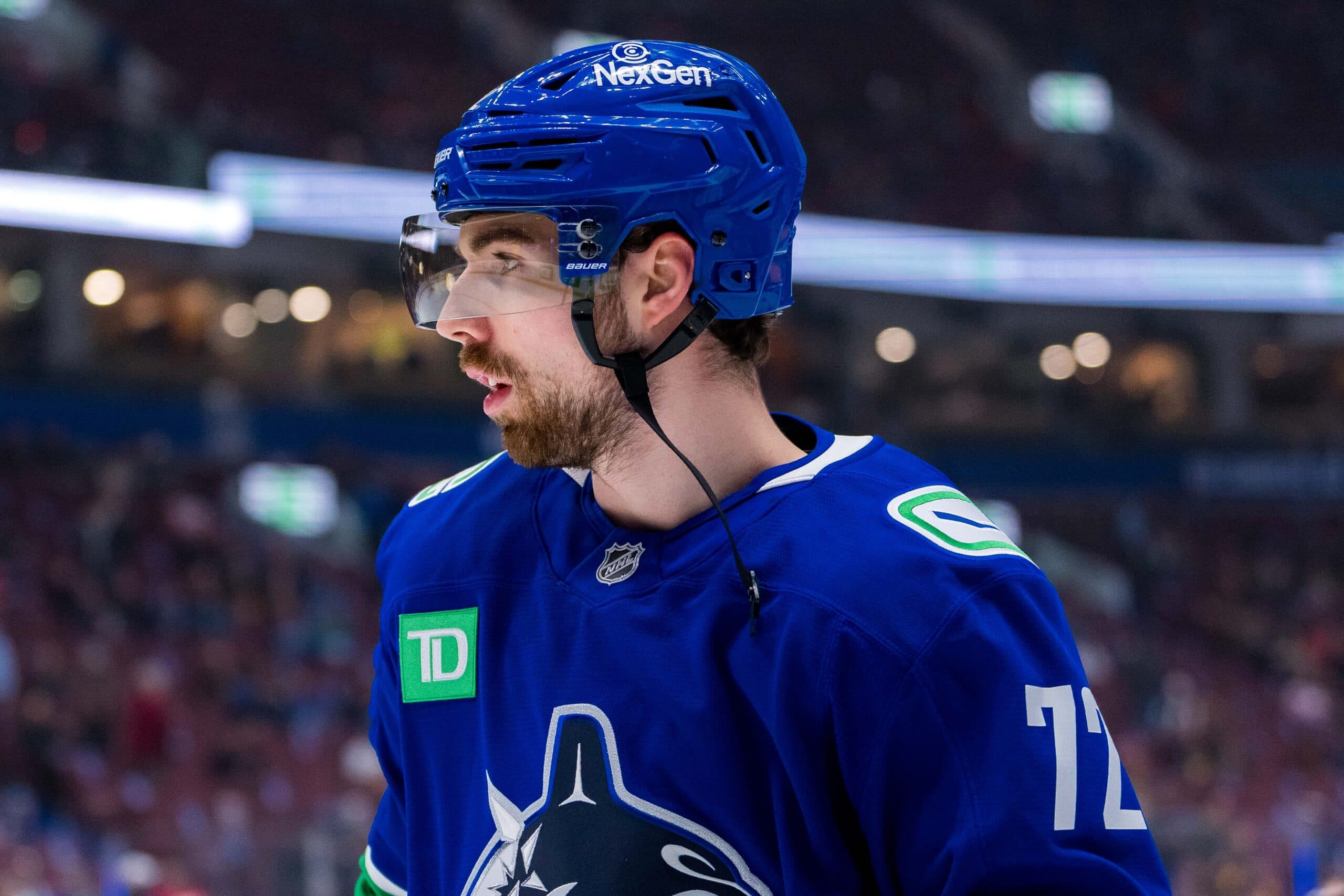
Photo credit: © Bob Frid-Imagn Images

By Elijah Ford
Oct 7, 2025, 09:00 EDTUpdated: Oct 6, 2025, 21:40 EDT


November 19, 2024.
That was the day the Vancouver Canucks announced J.T. Miller would be taking an indefinite leave of absence from the team just over a month into the regular season. The response from fans immediately was confusion. Once the smoke cleared, it brought up a litany of questions about the team’s future. When will he be coming back? Is there something more to this? And most importantly, who is going to fill the second line centre hole left by Miller’s departure?
Names like Mason McTavish, Marco Rossi, and Jack Roslovic have all been linked with the Canucks to fill that apparent void down the middle. But with the regular season less than a week away and seemingly no trade in place, the Canucks are going to have to look internally for a top-6 middleman. Some may be concerned about this, but the Canucks already have a player with the talent to thrive in that role. When looking at the roster both on paper and on the ice, Filip Chytil sticks out as the player who needs to step up and fulfill his obvious potential this year.
Chytil is a smooth-skating 26-year-old centreman coming off a 26-point season in only 56 games played. When watching Chytil, the first thing that stands out is his straight-line speed. He shows it off in the neutral zone in particular, where his controlled zone entries were a breath of fresh air last year in Rick Tocchet’s heavy dump-and-chase system.
A former first-round pick, Chytil made an immediate impact, leading the team in expected goals for, penalties drawn per 60 minutes, and coming second in Corsi percentage. Chytil’s advanced statistics suggest that the gap between him and some of the players the Canucks were rumoured to be interested in this offseason is minute at best.
Names like Mason McTavish, Marco Rossi, and Jack Roslovic have all been linked with the Canucks to fill that apparent void down the middle. But with the regular season less than a week away and seemingly no trade in place, the Canucks are going to have to look internally for a top-6 middleman. Some may be concerned about this, but the Canucks already have a player with the talent to thrive in that role. When looking at the roster both on paper and on the ice, Filip Chytil sticks out as the player who needs to step up and fulfill his obvious potential this year.
Chytil is a smooth-skating 26-year-old centreman coming off a 26-point season in only 56 games played. When watching Chytil, the first thing that stands out is his straight-line speed. He shows it off in the neutral zone in particular, where his controlled zone entries were a breath of fresh air last year in Rick Tocchet’s heavy dump-and-chase system.
A former first-round pick, Chytil made an immediate impact, leading the team in expected goals for, penalties drawn per 60 minutes, and coming second in Corsi percentage. Chytil’s advanced statistics suggest that the gap between him and some of the players the Canucks were rumoured to be interested in this offseason is minute at best.
Chytil: Corsi % – 54.82%, Fenwick % – 55.75%, xGF% – 55.8%, Goals/60 – 0.93
McTavish: Corsi % – 45.25%, Fenwick % – 44.75%, xGF% – 46.41%, Goals/60 – 1.03
Roslovic: Corsi % – 57.48%, Fenwick % – 55.23%, xGF% – 49.99%, Goals/60 – 1.18
Rossi: Corsi % – 50.12%, Fenwick % – 51.09%, xGF% – 53.19%, Goals/60 – 0.96
Chytil has also looked improved from last year so far during training camp and preseason. He looks stronger on the puck along the boards, and his playmaking ability has stood out among Canucks forwards.
At second line centre in the NHL, there is more to the job than simply creating offence. Although Chytil is a play-driving centreman offensively, there are questions surrounding his ability to anchor a line defensively. It’s difficult to use advanced stats to gauge a player’s defensive performance. With external factors like teammates, linemates, and the team’s system playing significant roles in defence, individualizing a side of the ice is an inexact science.
With the numbers we have, Chytil was below average in most of them. His expected goals against the worst on the team with a minimum of 15 games. He was also near the top of the team in high-danger chances allowed per 60. Where Chytil helped himself was in his stick skills, where he led the team in takeaways per 60. Chytil’s defence will have to improve if he is to be expected to log over 15 minutes a night in the middle of the ice. Especially in a Pacific Division littered with talent at centre.
Even with that, the most concerning aspect of Chytil’s future with the Canucks comes off the ice. Chytil has suffered at least four concussions before coming to the Canucks. A concussion from a hit he took from Jason Dickinson against Chicago ended his season last year. Concussions affecting careers have a long history in hockey. The most famous of which is probably Eric Lindros, who had eight concussions before taking a hit from Scott Stevens, which effectively ended his career. Other notable players, such as Pat Lafontaine, Paul Karia, and Mike Richter, have had their careers cut short due to head injuries.
With modern medical practices, we have seen players with significant concussion history enjoy long, fruitful careers. Sidney Crosby is the most notable example. Early in his career, Crosby had four diagnosed concussions, with his last being in the 2017 playoffs. T.J. Oshie suffered at least five concussions by 2018. Oshie went on to play out the rest of his career, retiring after the 2025 season. The Canucks are crossing their fingers that Chytil’s progression will be aligned with the latter examples.
The Canucks are coming into this season icing the best defensive core they have had in years. Led by one of the best players in the world, Quinn Hughes, the team has been able to surround him with versatile pieces on the back end, with other prospects like Mancini and D Elias Pettersson developing in the system. The Canucks’ top 6, backed by a Vezina-calibre goaltender in Thatcher Demko, with defensive stalwart Adam Foote behind the bench, is sure to be effective at keeping pucks out of Vancouver’s net.
On the contrary, Vancouver’s offence is full of question marks. Led by the regression of forward Elias Pettersson and the departure of Miller, the Canucks ranked 23rd in goals per game last season. That will need to be improved if the Canucks are going to give themselves a chance for a playoff run this season.
At the forefront of this will be Chytil. The talent is undeniable; he leaps off the screen with his end-to-end rushes, and his ability to make plays for his teammates has shown significant growth over the last few months. It’s simply time for him to put his first-round talent into practice.
If Chytil can take a step forward defensively and stay healthy, the sky is the limit. A 60-70 point scorer on the second line for a team that already has much of its offensive production taken care of on the back end by Hughes, the Canucks could be a top team in the Pacific division, potentially contending for a Stanley Cup. If he remains stagnant, it is going to be difficult for Vancouver to keep up with other premier rosters that have an abundance of goal scoring in their top 6. Chytil, along with Pettersson, is the Canucks’ true X-factor this season. And ultimately, the team may go as far as those centremen can take them.
At second line centre in the NHL, there is more to the job than simply creating offence. Although Chytil is a play-driving centreman offensively, there are questions surrounding his ability to anchor a line defensively. It’s difficult to use advanced stats to gauge a player’s defensive performance. With external factors like teammates, linemates, and the team’s system playing significant roles in defence, individualizing a side of the ice is an inexact science.
With the numbers we have, Chytil was below average in most of them. His expected goals against the worst on the team with a minimum of 15 games. He was also near the top of the team in high-danger chances allowed per 60. Where Chytil helped himself was in his stick skills, where he led the team in takeaways per 60. Chytil’s defence will have to improve if he is to be expected to log over 15 minutes a night in the middle of the ice. Especially in a Pacific Division littered with talent at centre.
Even with that, the most concerning aspect of Chytil’s future with the Canucks comes off the ice. Chytil has suffered at least four concussions before coming to the Canucks. A concussion from a hit he took from Jason Dickinson against Chicago ended his season last year. Concussions affecting careers have a long history in hockey. The most famous of which is probably Eric Lindros, who had eight concussions before taking a hit from Scott Stevens, which effectively ended his career. Other notable players, such as Pat Lafontaine, Paul Karia, and Mike Richter, have had their careers cut short due to head injuries.
With modern medical practices, we have seen players with significant concussion history enjoy long, fruitful careers. Sidney Crosby is the most notable example. Early in his career, Crosby had four diagnosed concussions, with his last being in the 2017 playoffs. T.J. Oshie suffered at least five concussions by 2018. Oshie went on to play out the rest of his career, retiring after the 2025 season. The Canucks are crossing their fingers that Chytil’s progression will be aligned with the latter examples.
The Canucks are coming into this season icing the best defensive core they have had in years. Led by one of the best players in the world, Quinn Hughes, the team has been able to surround him with versatile pieces on the back end, with other prospects like Mancini and D Elias Pettersson developing in the system. The Canucks’ top 6, backed by a Vezina-calibre goaltender in Thatcher Demko, with defensive stalwart Adam Foote behind the bench, is sure to be effective at keeping pucks out of Vancouver’s net.
On the contrary, Vancouver’s offence is full of question marks. Led by the regression of forward Elias Pettersson and the departure of Miller, the Canucks ranked 23rd in goals per game last season. That will need to be improved if the Canucks are going to give themselves a chance for a playoff run this season.
At the forefront of this will be Chytil. The talent is undeniable; he leaps off the screen with his end-to-end rushes, and his ability to make plays for his teammates has shown significant growth over the last few months. It’s simply time for him to put his first-round talent into practice.
If Chytil can take a step forward defensively and stay healthy, the sky is the limit. A 60-70 point scorer on the second line for a team that already has much of its offensive production taken care of on the back end by Hughes, the Canucks could be a top team in the Pacific division, potentially contending for a Stanley Cup. If he remains stagnant, it is going to be difficult for Vancouver to keep up with other premier rosters that have an abundance of goal scoring in their top 6. Chytil, along with Pettersson, is the Canucks’ true X-factor this season. And ultimately, the team may go as far as those centremen can take them.
Sponsored by bet365


Breaking News
- Canucks place Aatu Räty on NHL waivers
- WWYDW: Who or what has most surprised you through 10% of the Canucks’ season?
- The Statsies: Brock Boeser has his best game of the year in Canucks’ loss to Islanders
- The Stanchies: Despite growing pains on defence, Canucks battle valiantly in 3-2 loss to Islanders
- Instant Reaction: Leevi Meriläinen stands out in Canucks’ 3-2 loss to Islanders

Vancouver CanucksTeam Cap Summary

Cap Summary
2026-27
2027-28
Projected Cap Hit
$88,074,947
$71,329,167
Projected Cap Space
$15,925,053
$42,170,833
Current Cap Space
$17,163,668
$42,170,833
Active Players
23/23
13/23
Draft Picks
Round
'27
'28
1
1
1
2
2
2
3
1
1