
CanucksArmy has no direct affiliation to the Vancouver Canucks, Canucks Sports & Entertainment, NHL, or NHLPA
Why has the last month been so slow for the Vancouver Canucks?
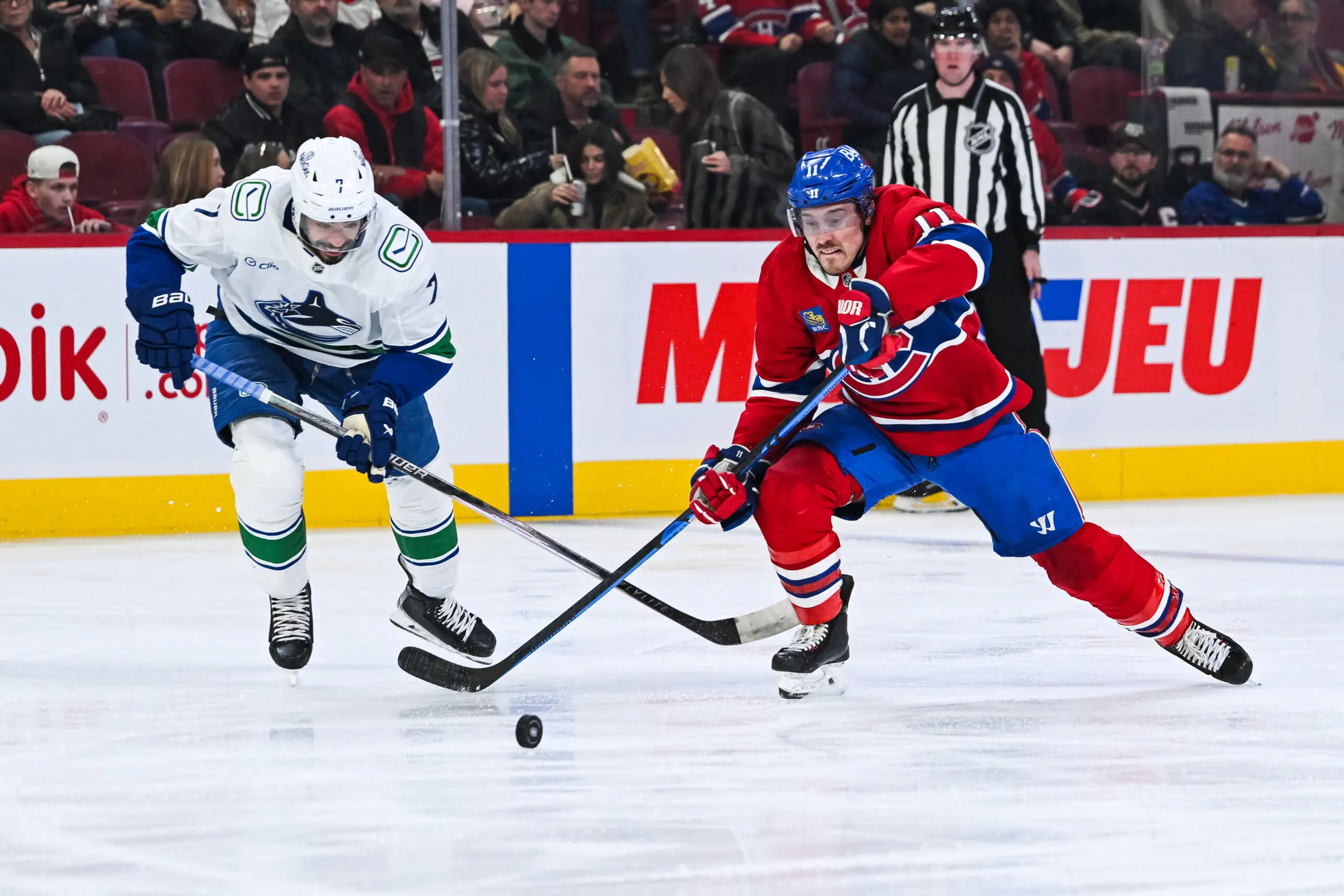
Photo credit: David Kirouac IMAGN IMAGES via Reuters Connect

Aug 6, 2026, 12:00 EDTUpdated: Aug 5, 2026, 18:14 EDT


To say that the Vancouver Canucks have had a slow offseason wouldn’t just be a misstatement; it’d be an outright inaccuracy. Since officially closing out the 2025-26 campaign, the Canucks have changed most of their front office, replaced their coaching staff, drafted nine players, signed eleven contracts, and completed four trades.
That’s plenty of action. In most years, that’s more than a whole summer’s worth.
But the last of these transactions came on July 2, 2026, the day after the Free Agent Frenzy, when the team signed Matthew Stienburg to a one-year, two-way deal. It’s been radio silence from the team in the more-than-a-month since, and there’s no denying that it’s led to this offseason feeling a bit…slower than expected.
Why might that be? As usual, there are a few different answers to be found.
First and foremost, the Canucks have got their business done as early as possible, and often ahead of time. Really, this goes back to the Rutherford Regime, and if you’re going to give that front office for anything, it’s probably proactivity. The Canucks managed to trade Quinn Hughes at essentially the exact right time. The same goes for Conor Garland, dealt near the Trade Deadline, right before his no-movement clause was about to kick in.
Were the Canucks still trying to negotiate the departures of Hughes, now less than a year away from unrestricted free agency, and Garland, who now has a full NMC, then this summer would indeed be a lot busier. But busier and a lot more stressful. Most can be grateful that it’s the Minnesota Wild dealing with the Hughes extension drama at this point in time, and that the Canucks have firmly moved in a different direction.
This trend has largely continued under Ryan Johnson, though that may be a matter of natural sequence, as some moves just needed to happen ahead of others. Management needed to be replaced ASAP because the new management needed time to prepare for the draft and the offseason. You needed the new management in place to fire the old coaches, and you needed new coaches in place before free agency hit, because who’s going to sign on a team with no coach? With that all taken care of, the draft and Free Agent Frenzy each came in turn.
That said, there were a few instances where Johnson and Co. were genuinely proactive. Trading Marcus Pettersson for a far-flung first round pick in anticipation of Jamie Oleksiak becoming available as a Pettersson replacement via free agency? That’s a proactive move, in contrast to signing Oleksiak first and then spending all summer shopping Pettersson around. It might lead to a quieter kind of summer, as it has, but that’s a trade-off worth making.
The Canucks could even be said to have spent some of this offseason proactively laying down tracks for an eventual sale at the Trade Deadline, which is really thinking ahead.
Speaking of which, another reason why the Canucks haven’t done much in the past month is that none of what they have left to do has much time-related pressure attached to it. Yes, there are still a few things on the agenda, and few feel as though the Canucks are ‘done.’ But with the rebuild, the franchise is officially on a long-view, and there’s just nothing else that has to get done this summer.
Many are expecting more trades of veterans eventually, and especially so in the case of Jake DeBrusk. But nothing says that has to happen in any sort of immediate future. DeBrusk isn’t anywhere close to a detriment on the ice, and for the time being, still provides ample veteran insulation for the younger Canucks. He’s also, as we’ve pointed out, a fairly consistent player, year-to-year, and not someone who is likely to lose much trade value over the next season or two.
In fact, after DeBrusk’s very odd 2025-26, in which he produced a preposterous amount of his points on the power play and very little at five-on-five, any return to a more normal stat line in 2026-27 probably increases his trade value.
Long story short, the difference in what the Canucks might get back for DeBrusk now, or in-season, or at the trade deadline, or even next offseason, is relatively minimal. And so, it’s not just fine for the Canucks to sit around and wait for a great offer; it’s probably the wise choice.
You can apply similar thinking to most of the remaining vets on the roster. They’re all, for one, players who management seems fine keeping around as mentor-types for the next generation, at least on a short-term basis. They’re also a bunch who stand to either maintain or increase their personal trade values throughout the 2026-27 season. You’ve got the likes of Elias Pettersson, so badly in need of further rebounding, but unlikely to bottom out any harder. You’ve got mid-range ‘vets’ like Marco Rossi and Linus Karlsson still on an upward trend. You’ve got Filip Hronek, who likely won’t be traded until a future year when his NMC has run dry. And then you’ve got a bunch on short-term, expiring deals who would likely be dealt closer to the deadline, if anything, like Paul Cotter, Brendan Gallagher, Drew O’Connor, or Luke Schenn.
There are some exceptions to this general rule. Filip Chytil remains a question mark, likely to be allowed this final year of his contract before being quietly let go, but unlikely to be traded unless he sees a serious return to health. Brock Boeser, in specific, seems likely to lose trade value as he continues to age, and so if the team were planning to trade him, sooner would be better than later, but they don’t seem too motivated to do that.
For the most part, the Canucks are more than content to sit with what they have and only make trades when the time is right.
If there’s an area of the roster where they’re not exactly content, it’s probably the crease, but there, the Canucks options are limited. At this point, they kind of have to wait and see how Thatcher Demko’s latest comeback goes, and until the result of that is known, the whole situation is frozen. The Canucks seem set on hanging on to Kevin Lankinen as a reliable backup, and if Demko were to re-injure himself or need more time, the team would still want to have Nikita Tolopilo on hand. The Canucks might move one of these three goalies eventually, but that will have to come after at least a little of training camp has played out.
The final reason to which we’ll attribute the slow past month is going to be the most important, and it’s that the small handful of actual time-pressing tasks left to the Canucks are by far their most complicated. And when we say this, we primarily mean the contract extension for Zeev Buium – though Liam Öhgren and the younger Elias Pettersson are also extension-eligible, and deserve some mention.
That Buium extension will be the most consequential contract the Canucks have signed since Hughes was eligible for his second contract. And the Canucks need to do better this time around. Buium became extension-eligible as of July 1, but they’ve only got until September 15 to sign him to an eight-year deal. After that, the new CBA takes hold, and the maximum is reduced to seven years.
Given the outrageous developments with RFA contracts around the league, the Canucks have to see this as an opportunity to lock up their most important asset with a long-term contract that is almost guaranteed to age well. The fact that Buium is not offer-sheet-eligible now but would be in any future RFA summer only adds to the need.
But at the same time, Buium and his camp have to be aware of how rapidly RFA salaries are escalating league-wide. Though their negotiating ability is limited, there’s no reason for them to not be asking for at least an increased portion of the pie.
It’s a complex and nuanced negotiation, is what we’re saying. And it’s one the Canucks have to get right. That takes time, and if it takes the entire summer, it’ll have been time well spent. In other words, the thing they’re taking the longest with is the thing they should be taking the longest with. As we get closer to September, we can begin discussing the notion of running out of time, but we’re still a good six weeks away from that.
In the end, though it’s made for a boring month, the reasons why business has been so slow around the Canucks of late are largely positive ones. Getting stuff done early, and ensuring that the team isn’t operating under the gun of any self-imposed deadlines, is no doubt of great benefit.
Would another trade be greatly welcomed at this point? Absolutely, if only for something else to talk about. But one doesn’t need to happen anytime soon, and that’s the point here.
Sponsored by bet365


Breaking News
- Canucks: What happened the last time a controversial former captain returned to Vancouver?
- Scenes from morning skate: Canucks looking to snap winless skid and spoil Quinn Hughes’ homecoming
- Canucks place defenceman Jack Thompson on NHL waivers
- Could the Canucks swing a trade for Capitals forward Ivan Miroshnichenko?
- Canucks’ Ohgren responds to healthy scratch: ‘I know I have to play harder’

Vancouver CanucksTeam Cap Summary

Cap Summary
2026-27
2027-28
Projected Cap Hit
$87,295,050
$71,329,167
Projected Cap Space
$16,704,950
$42,170,833
Current Cap Space
$19,176,096
$42,170,833
Active Players
23/23
13/23
Draft Picks
Round
'27
'28
1
1
1
2
2
2
3
1
1