
CanucksArmy has no direct affiliation to the Vancouver Canucks, Canucks Sports & Entertainment, NHL, or NHLPA
What’s behind the early struggles from Canucks’ Zeev Buium and Filip Hronek?
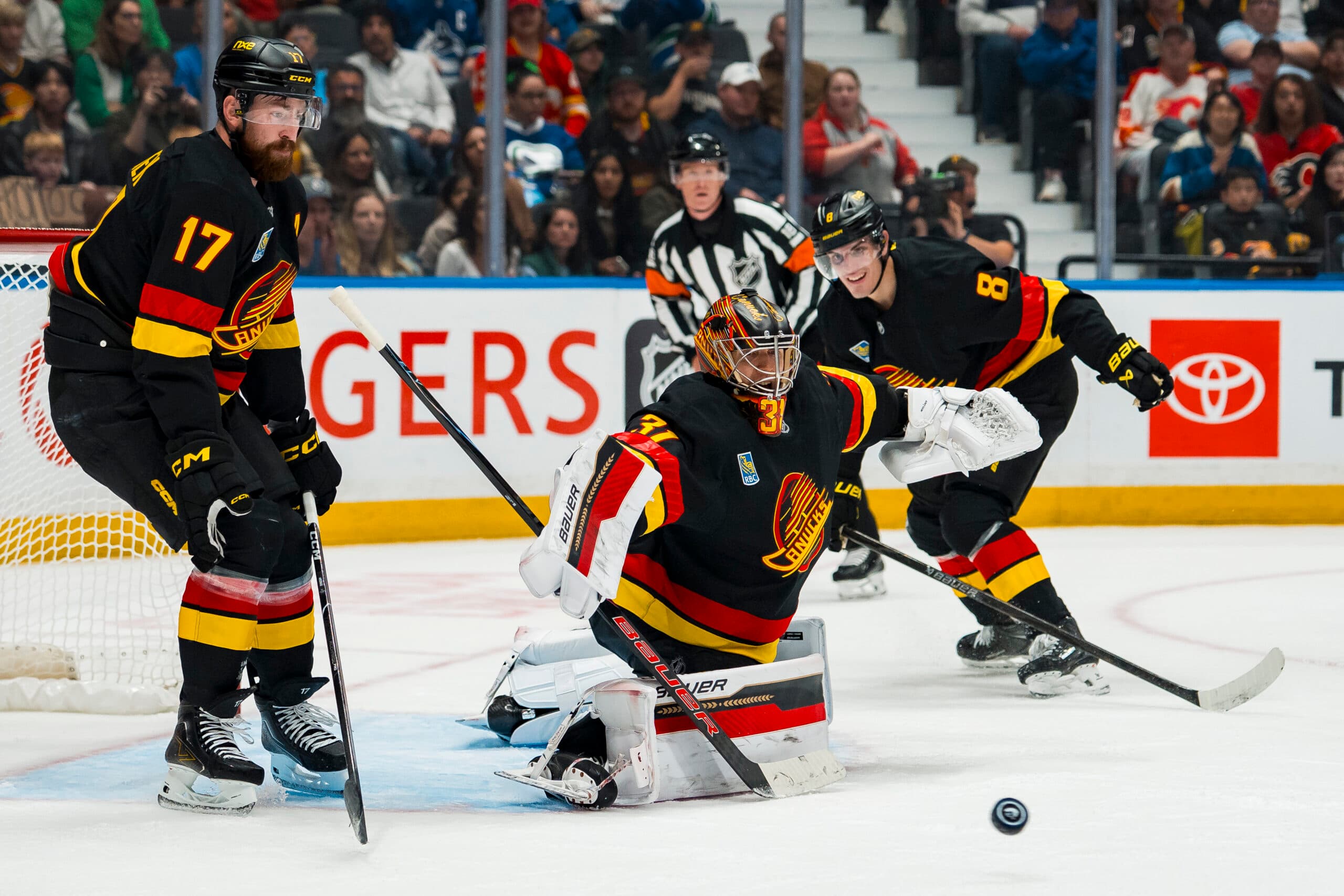
Photo credit: Bob Frid-Imagn Images

By Elijah Ford
Oct 15, 2026, 16:30 EDTUpdated: Oct 15, 2026, 15:45 EDT


The Vancouver Canucks have gotten off to a difficult start to the season, and their struggles have extended to the top of their defence corps.
Filip Hronek and Zeev Buium have surprisingly been among Vancouver’s least effective defencemen by the underlying numbers through the team’s first eight games. Hronek ranks fifth-worst on the team with a 41.53% Corsi-for percentage, while Buium sits just ahead of him at 41.89%.
The eye test has not been much kinder. Both defencemen have looked uncomfortable with the puck at times, making questionable decisions and struggling to consistently move play in the right direction. Each has recorded eight giveaways in the defensive zone, tied for the most on the team. For a pairing expected to help drive Vancouver’s transition game, those numbers are concerning.
However, there are reasons to believe the early struggles are more complicated than two defencemen simply playing poorly. Between an exceptionally difficult run of opponents, a potentially awkward stylistic fit, and the growing pains of a young player adjusting to an unfamiliar environment, there are several factors worth considering before sounding the alarm.
A brutal start to the schedule
The first thing to consider is the competition the pair has faced to this point. According to HockeyStatCards.com, Hronek’s quality of competition ranks in the 95th percentile, while Buium’s ranks in the 80th percentile. The next-closest Vancouver defensive pairing, Tom Willander and Jamie Oleksiak, sits in the 53rd percentile. In other words, the Canucks’ top pairing has been dealing with some of the toughest assignments in the league.
Through eight games, Buium and Hronek have already faced Connor McDavid and Leon Draisaitl twice, as well as the top lines of the Stanley Cup finalist Golden Knights and the reigning Stanley Cup champion Carolina Hurricanes in unsheltered minutes. That context matters when evaluating their underlying numbers. Playing against elite offensive talent makes it more difficult to control possession, limit scoring chances, and avoid mistakes. When those matchups come regularly, even experienced defencemen can struggle to produce favourable results.
It does not completely excuse the mistakes, particularly the giveaways that have plagued both players. But it does help explain why their numbers might look worse than their individual performances would suggest. The question is whether Vancouver can get more out of the pairing as the season progresses, particularly if the difficult matchups continue.
Were Buium and Hronek the right fit together?
Another potential issue is the stylistic fit between the two defencemen. Both Buium and Hronek are capable puck-movers who are more comfortable contributing offensively than simply sitting back and defending. That skill set can be valuable when a team is controlling possession, creating opportunities off the rush and spending extended periods in the offensive zone. The problem is that Vancouver has struggled to consistently establish that type of game.
When the Canucks spend long stretches defending against skilled opponents, a pairing featuring two offensively minded defencemen can become vulnerable. Both players are capable defenders, but their tendencies can leave the team exposed when possession changes hands or an attempted offensive play breaks down. The underlying numbers offer some evidence that the pairing has struggled to find its footing.
Together, Buium and Hronek as a pair have posted a Corsi-for percentage of 37.5%, a high-danger chances-for percentage of 46.43%, and a scoring-chances-for percentage of 33.80%. Neither player’s individual results have been particularly encouraging, either. Buium has recorded a goals-for percentage of 38.04%, a high-danger chances-for percentage of 38.98% and a scoring-chances-for percentage of 35.71%. Hronek’s respective numbers are 43.81%, 46.15% and 40.34%.
There is some reason for optimism when examining their numbers away from each other. Without Hronek, Buium’s Corsi-for percentage rises to 47.11%, while his scoring-chances-for percentage improves to 37.68%. Without Buium, Hronek’s Corsi-for percentage increases to 47.83%, and his scoring-chances-for percentage reaches 50%.
Those figures are not definitive proof that the pairing is the problem, particularly given the small sample size and differences in deployment. Still, they raise a legitimate question about whether Vancouver is getting the most out of either player by keeping them together. With defensive-minded options such as Oleksiak and Luke Schenn available, there is a case for giving one of the more offensively inclined defencemen a partner whose first instinct is to defend and simplify the game. That would not necessarily require splitting Buium and Hronek permanently. But if the Canucks want their puck-movers to take more calculated risks and drive offence, providing them with a more defensively reliable partner could help create that freedom.
Buium needs to rediscover his assertiveness
While the pairing’s struggles deserve scrutiny, Buium’s individual game is particularly interesting.
The young defenceman showed many flashes of the creativity and offensive instincts that made him such an exciting prospect last year. However, early in this season, that confidence has been harder to find. At times, Buium appears caught between holding onto the puck too long and moving it before an opportunity has fully developed. Rather than allowing the game to come to him, he has occasionally looked like he is forcing plays that are not there. His internal hockey clock seems to be a split second off, as this play against the New Jersey Devils illustrates.
Hronek gives Buium the puck with plenty of room to move up the wall, but a Devils forward is backchecking with momentum. Buium has a few options in this situation. He can simply drop the puck back to an unguarded, trailing Hronek. He can use the forward’s momentum against him, cut back towards the boards and keep control of the puck himself. Alternatively, Brock Boeser has presented his stick beyond centre ice, giving Buium a target to redirect the puck into the offensive zone. Despite these options, Buium hesitates for a split second, giving the Devils forward time to knock him off the puck.
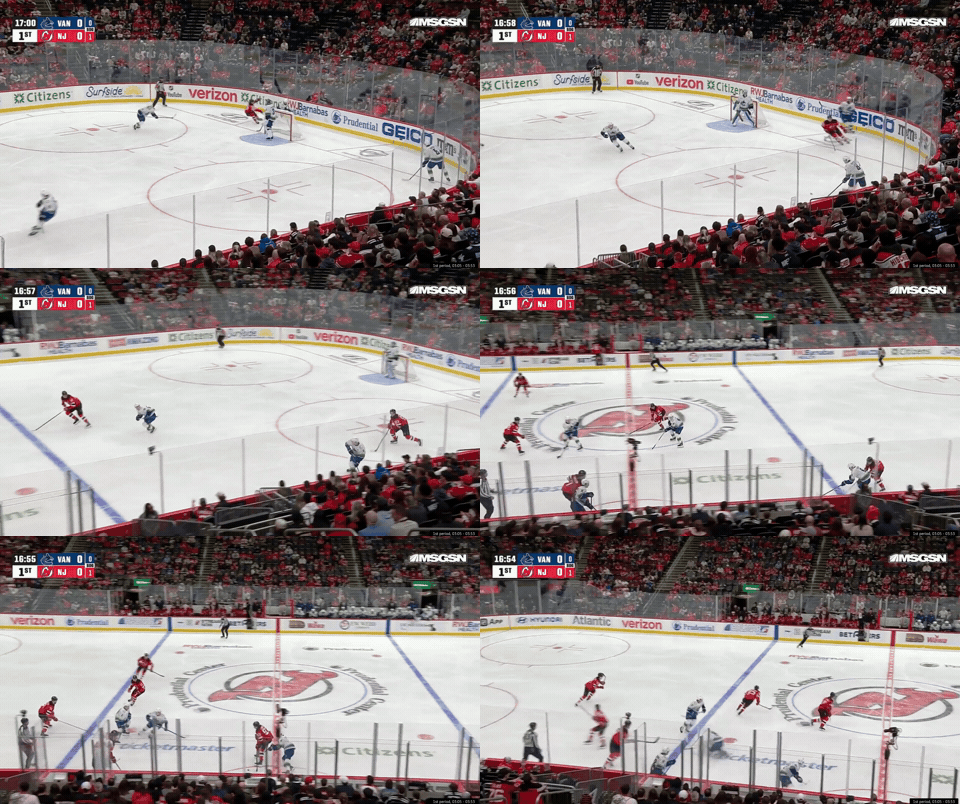
His defensive game has also shown signs of fatigue and inexperience. Buium can get caught watching the puck, and as shifts wear on, he has occasionally resorted to lunging at opponents rather than maintaining sound positioning.
Willander, his fellow young defenceman, has looked more willing to carry the puck aggressively and trust his instincts. Buium arguably has even more natural offensive talent, but that ability has not consistently translated into confident decision-making. Some of these issues are to be expected from a young player. Buium is still adjusting to the demands of the NHL, and the consistency required to defend against the world’s best players takes time to develop.
There is also a psychological element worth considering.
Buium has spent much of his hockey career winning, playing alongside talented teammates and competing on teams with legitimate aspirations. This is a different challenge: playing for a rebuilding Canucks team that entered the season almost disregarding wins and losses, spending plenty of time defending. That adjustment can be difficult, particularly for a young player who is reportedly hard on himself. A couple of mistakes can snowball into hesitation, and hesitation can make the next mistake more likely.
The solution is not for Buium to abandon his offensive instincts. It is to trust them again, recognize when opportunities are available, and understand when a simpler play is the better option. Sometimes, all it takes is one successful rush, one confident breakout pass or one offensive play to get a young defenceman back on track.
Hronek’s decision-making has been off
For Hronek, the explanation is less straightforward. His experience and established NHL track record make his early struggles more surprising. Although the quality of competition provides important context, some of his decisions with the puck have been difficult to explain away. His turnovers haven’t necessarily been egregious, but they have been persistent. Consider this play against the Flames, for example.
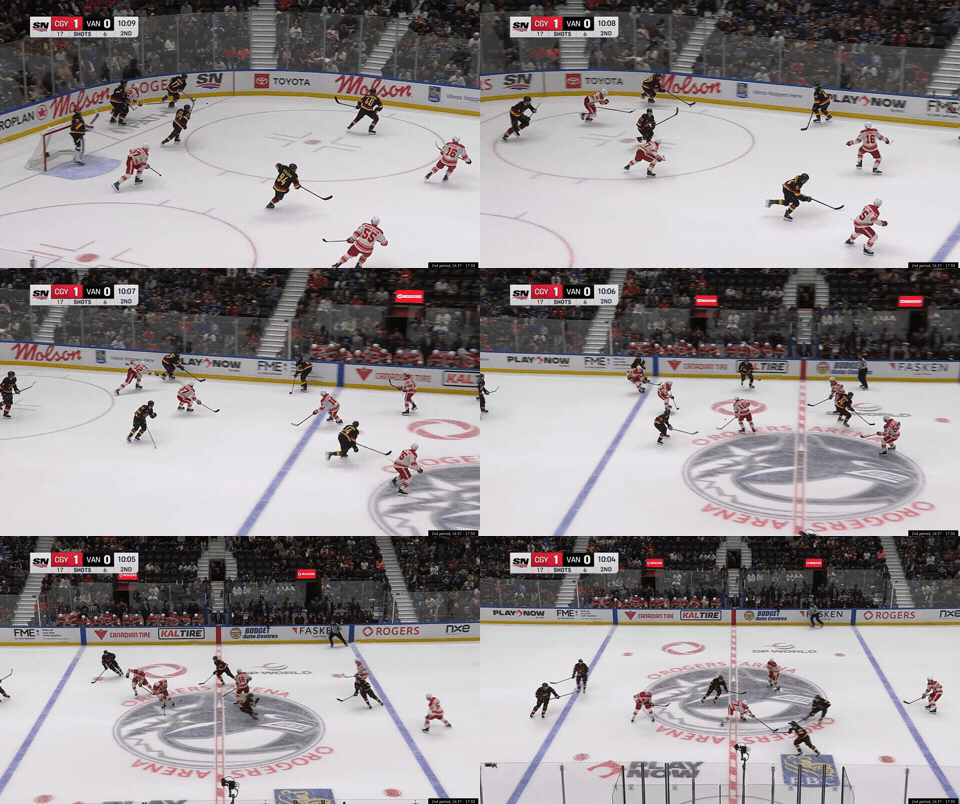
A similar issue appeared in this sequence against the Islanders. Hronek iced the puck before this faceoff and was unable to get it deep on the following rush, leaving the Canucks stuck on the ice for an extended shift.
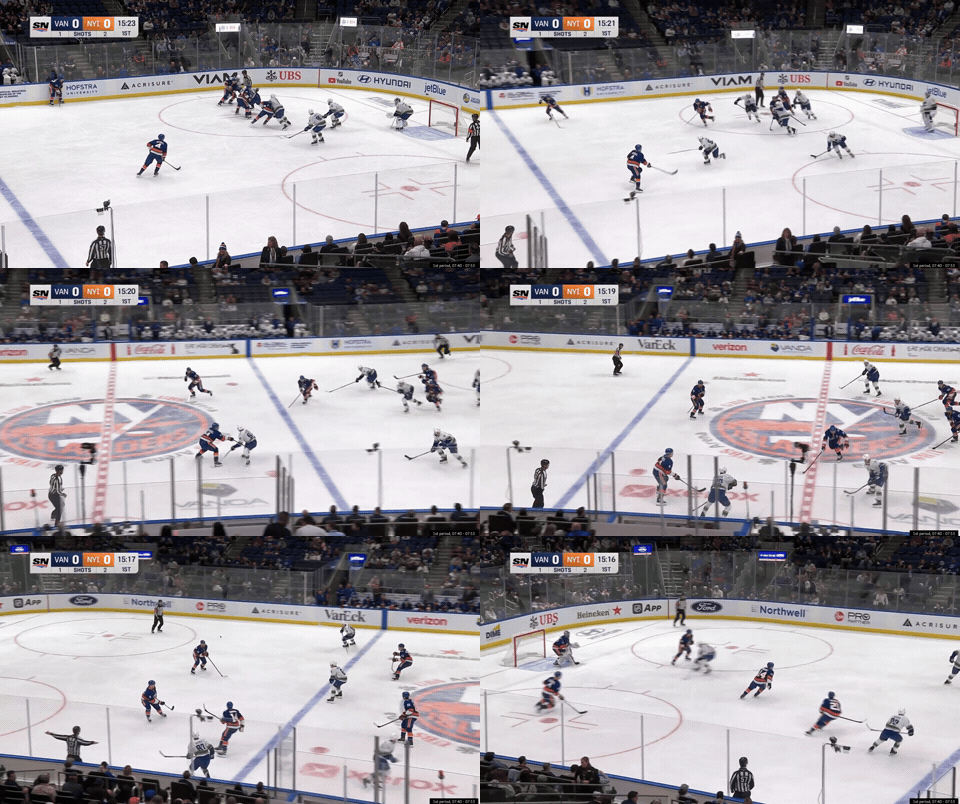
These kinds of mental lapses are particularly concerning because they undermine one of the Canucks’ most important responsibilities: getting the puck out of danger and turning defence into offence. With Buium still learning the nuances of NHL defence, Hronek’s decision-making becomes even more important. A reliable veteran presence could help stabilize the pairing, but that becomes difficult when both players are making costly mistakes. Hronek is likely just going through a bit of an early-season slump, but if this kind of decision-making continues, the Canucks may have to make some uncomfortable deployment decisions on defence.
Patience is warranted, but improvement is necessary
The Canucks have legitimate reasons to be concerned about their top pairing, but eight games are not enough to make definitive judgments about either defenceman. They have since been split, with Hronek now playing with Elias Pettersson and Zeev Buium shifting to the third pair.
The quality of competition has been unusually difficult, the stylistic fit between Buium and Hronek deserves examination, and the young defenceman is still learning how to navigate the demands of the NHL. Those factors do not erase the poor possession numbers or the defensive mistakes. They do, however, suggest that Vancouver’s problems may be fixable rather than evidence of a fundamental decline in either player’s ability.
For Buium, the priority is rediscovering his confidence, making quicker decisions, and trusting his offensive instincts without forcing plays. For Hronek, it is about exercising better judgment with the puck and providing the stability his young partner needs. And for the Canucks, a broader question remains: whether keeping two offensively inclined defencemen together is the best way to maximize their abilities on a team that will likely spend much of the season defending.
The early results have not been encouraging. But before Vancouver considers more drastic changes, it should determine whether the problem lies primarily with the players’ current level of play, their deployment, or the fit between them. There is a difference between a pairing that is struggling to find its rhythm and one that simply does not work. The Canucks have yet to establish which one they have.
Sponsored by bet365


Breaking News
- What’s behind the early struggles from Canucks’ Zeev Buium and Filip Hronek?
- Canucks’ Räty clears NHL waivers, will report to AHL Abbotsford
- Blackfish: Romani opens strong, Cootes continues to impress and Malhotra shows his offensive potential
- Scenes from morning skate: Chytil to make season debut for Canucks vs. Panthers
- What does the younger Elias Pettersson’s breakout mean for the Canucks and their rebuild?

Vancouver CanucksTeam Cap Summary

Cap Summary
2026-27
2027-28
Projected Cap Hit
$88,074,947
$71,329,167
Projected Cap Space
$15,925,053
$42,170,833
Current Cap Space
$17,259,555
$42,170,833
Active Players
23/23
13/23
Draft Picks
Round
'27
'28
1
1
1
2
2
2
3
1
1