
CanucksArmy has no direct affiliation to the Vancouver Canucks, Canucks Sports & Entertainment, NHL, or NHLPA
How the Canucks can fix their early-season defensive breakdowns
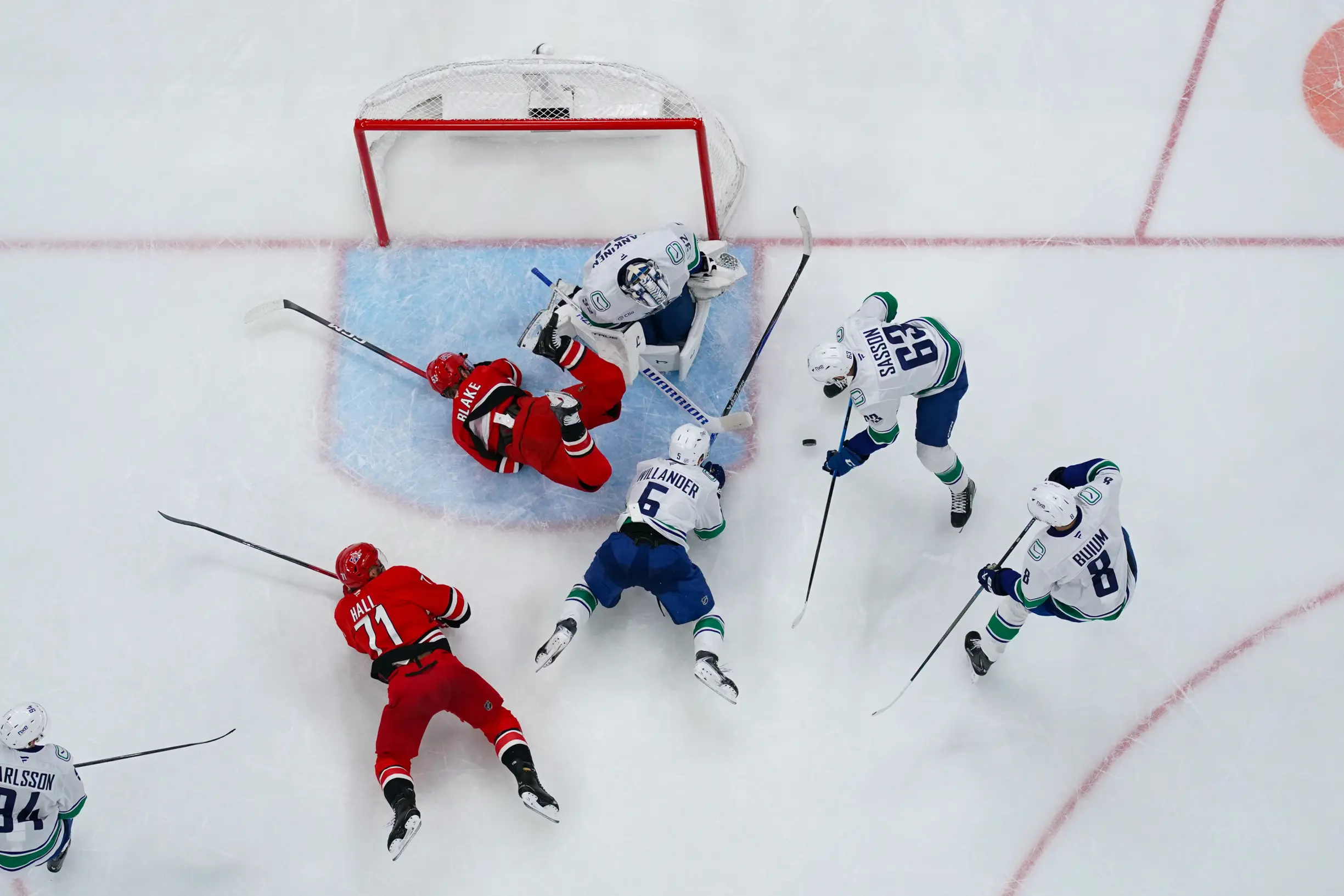
Photo credit: James Guillory-Imagn Images

By Elijah Ford
Oct 24, 2026, 13:00 EDTUpdated: Oct 24, 2026, 01:33 EDT


The Vancouver Canucks have struggled defensively through the early stages of the season, but the issues have not always been as straightforward as they might appear.
Under former head coach Adam Foote, Vancouver regularly appeared disorganized in its own zone, with multiple players caught out of position simultaneously. The Canucks have shown flashes of a more structured defensive approach under Manny Malhotra, but individual breakdowns continue to give opponents opportunities to score.
Some of those mistakes stem from players adjusting to unfamiliar responsibilities. Others come down to delayed reactions or teammates failing to recognize when they need to adjust their positioning. The encouraging part is that many of these issues are correctable. Vancouver does not necessarily need to overhaul its defensive structure, but its players must become more consistent in recognizing their assignments, communicating changes, and reacting to developing plays. Here are some of the breakdowns costing the Canucks goals and how they can address them.
An adjustment down the middle
One of the biggest changes under Malhotra has been his willingness to prioritize size and speed at centre. That has meant giving players opportunities down the middle despite their limited experience at the position.
The flexibility of Malhotra’s defensive structure can accommodate that approach, allowing wingers to assume certain centreman responsibilities as the play develops. However, that flexibility makes communication and awareness even more important. The centreman is the fulcrum of Malhotra’s defensive structure. The position requires constant awareness of what is happening around the slot, where opposing forwards are moving, and which passing lanes need to be protected.
That adjustment has been noticeable for players such as Drew O’Connor, Max Sasson and Paul Cotter. Their size and speed make them attractive options down the middle, but playing centre requires different defensive instincts than playing wing.
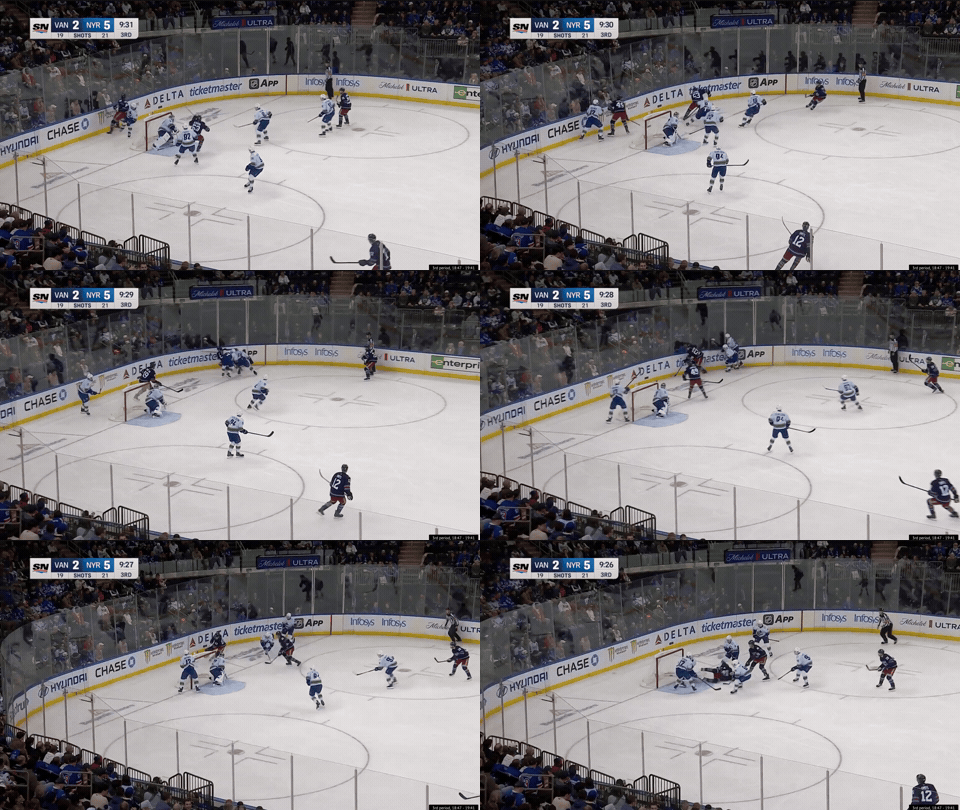
Consider this sequence, where O’Connor is playing centre. Zeev Buium does a good job checking his opponent and cutting off the angle along the boards. O’Connor, meanwhile, should be supporting the play from the inside, protecting the middle and limiting the opponent’s route to the net. Instead, he takes the outside path, allowing the opposing forward to cut back and drive the puck toward the front of the net.
The solution is not necessarily to stop using these players at centre. Rather, they need to improve their understanding of the position’s defensive responsibilities. That means maintaining inside positioning, scanning for threats before they develop, and recognizing when a teammate has already taken away an opponent’s route along the boards.
Those habits take repetition, but the coaching staff can reinforce them through video sessions and practice. The objective is to make the correct positioning instinctive rather than something a player has to process after the opponent has already gained an advantage.
Defencemen need to recognize when to let go
Similar challenges have appeared on Vancouver’s blue line, where defenders must recognize when to follow an opponent and when to pass that responsibility to a teammate.
Tom Willander is involved in a sequence that illustrates the importance of those decisions. He tracks an opponent high into the zone, leaving two Canucks focused on the same attacker and giving Evan Bouchard a three-on-two opportunity.
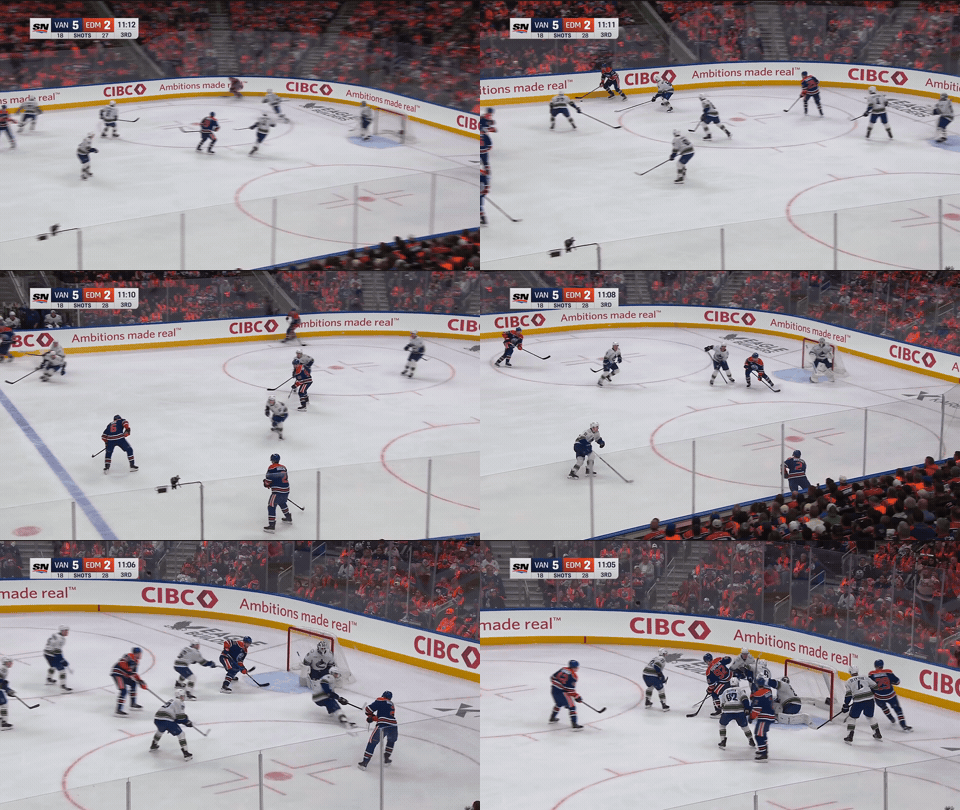
There is, however, another possible explanation for Willander’s positioning. If Vancouver has switched to a man-oriented defensive look, following his assignment higher into the zone may be the correct decision. The problem then becomes whether his teammates recognize the change and adjust accordingly.
In that scenario, Marco Rossi needs to read the developing coverage and switch responsibilities with Willander. If Willander follows his man higher, Rossi must recognize the space opening behind him and adjust his own positioning, preventing both players from guarding the same attacker while leaving another threat unaccounted for.
That distinction matters. A defenceman following his opponent to the blueline is not automatically making a mistake. The breakdown occurs when the rest of the group fails to account for the space and responsibilities left behind. The same principle applies to this play involving Filip Hronek. The most visible mistake is his failure to maintain coverage on an opposing attacker, allowing a wide-open cross-crease pass. However, the breakdown begins earlier, when Aatu Räty moves too high in the zone and leaves the bumper area insufficiently protected.
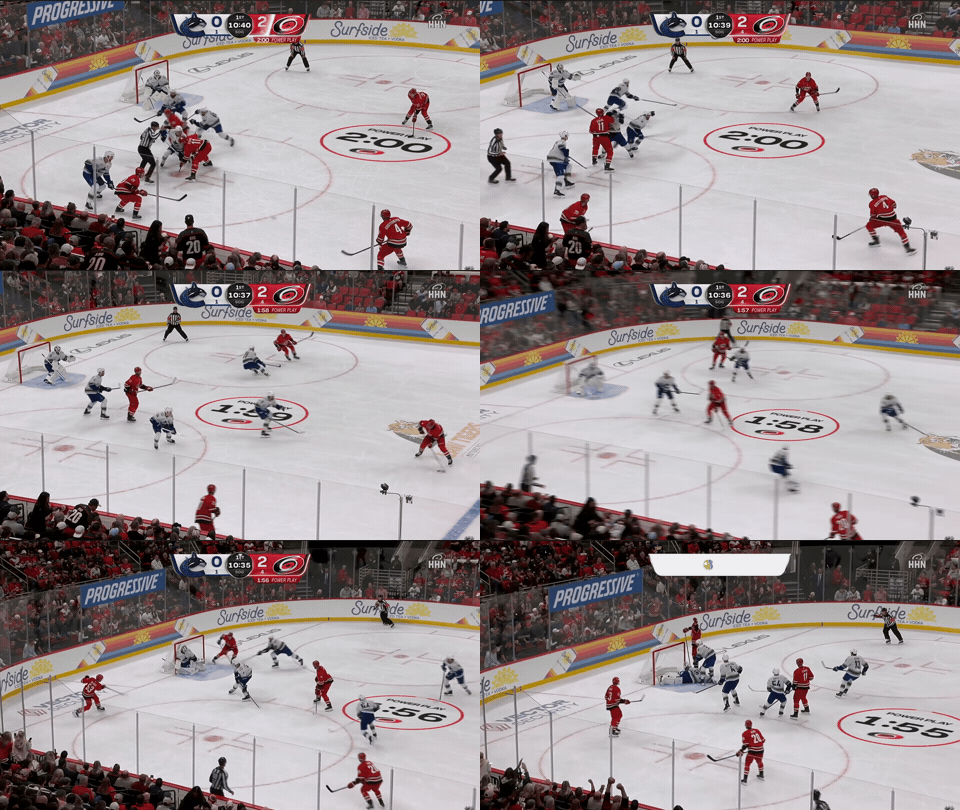
Räty needs to recognize his responsibility and remain in a position to protect the middle of the ice. If he maintains coverage around the bumper, Jamie Oleksiak can concentrate on defending the threat near the side of the net without leaving the middle exposed. That adjustment would likely stop this play, eliminating the initial passing lane from the point.
The lesson is that the final player involved in a breakdown is not always the one who created it. By the time Hronek is forced to react, an earlier positioning mistake has already made the situation more difficult for Vancouver’s defence.
That does not mean the defencemen are blameless, either. Vancouver has repeatedly had players caught watching the puck or defending the same area, leaving dangerous opponents unattended elsewhere in the zone. On this play, both Oleksiak and Buium gravitate toward the left side of the net, leaving an attacker unguarded in the slot and Arshdeep Bains without adequate support near the goal line.
Buium needs to recognize that Oleksiak is occupied on the left side and adjust accordingly. He can rotate toward the middle to protect the front of the net or move across to support Bains near the goal line, helping prevent the pass into the slot.
When a team spends extended stretches defending in its own zone, it can be tempting to watch the puck rather than maintain awareness of individual assignments. Vancouver’s young defencemen must learn to trust their teammates to handle their responsibilities while remaining alert to the threats in their own areas. Otherwise, one player trying to compensate for another’s mistake can trigger a chain reaction, leaving multiple attackers open and turning a manageable defensive sequence into a goal against.
Faceoff coverage requires quicker reactions
Vancouver’s coverage immediately following defensive zone faceoffs has also been inconsistent. Winning the draw is only part of the job; players must recognize the opposing team’s likely options and react quickly enough to disrupt them. The Canucks’ game against Tampa Bay provided multiple examples of how a split-second delay can create a dangerous opportunity.
On the Lightning’s fourth goal, Elias Pettersson is beaten to the puck off the draw by a Tampa Bay forward, despite Vancouver winning the faceoff. This allows the attacker to have momentum with the puck in the middle of the ice, where he generates a high-danger chance and converts.
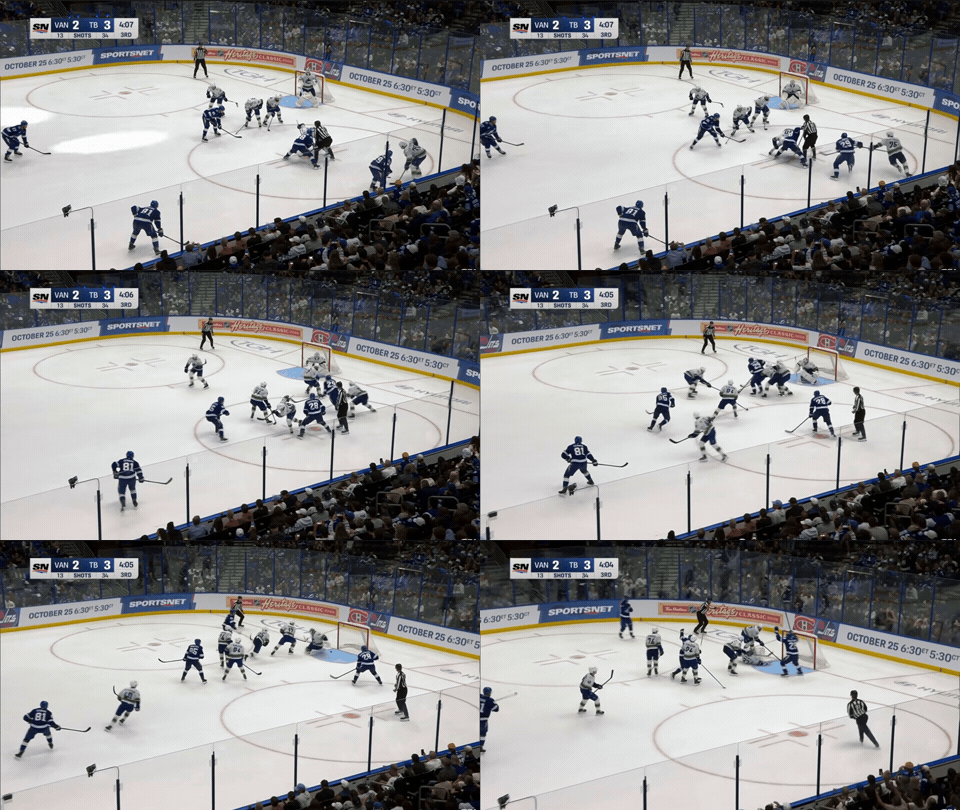
Players must be prepared to transition instantly from the faceoff formation into their defensive responsibilities, particularly when an opponent is already itching to move toward open ice. Nikita Kucherov’s second goal in that same game, however, presents a slightly different problem. On this play, Vancouver’s read is sound. Pettersson seems to recognize the threat and moves to disrupt the passing or shooting lane, but he arrives a fraction too late to prevent Kucherov from getting his shot away.
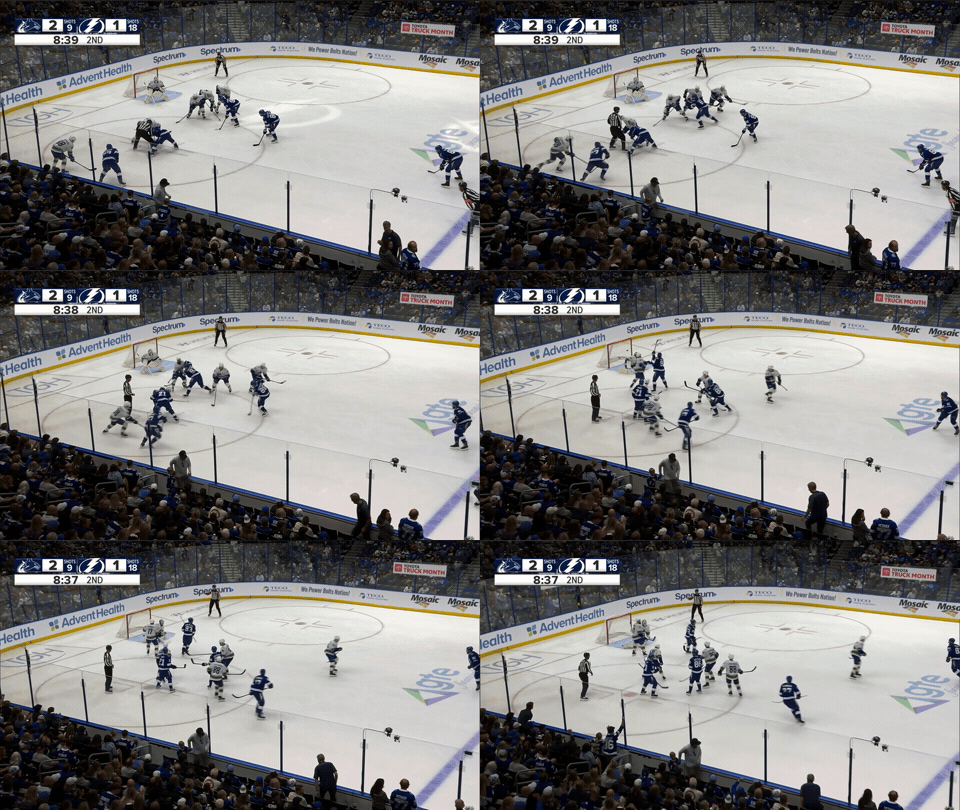
That is an important distinction. Pettersson does not simply lose track of his assignment or fail to anticipate the play. He identifies the danger, but Kucherov executes quickly enough to find the opening.
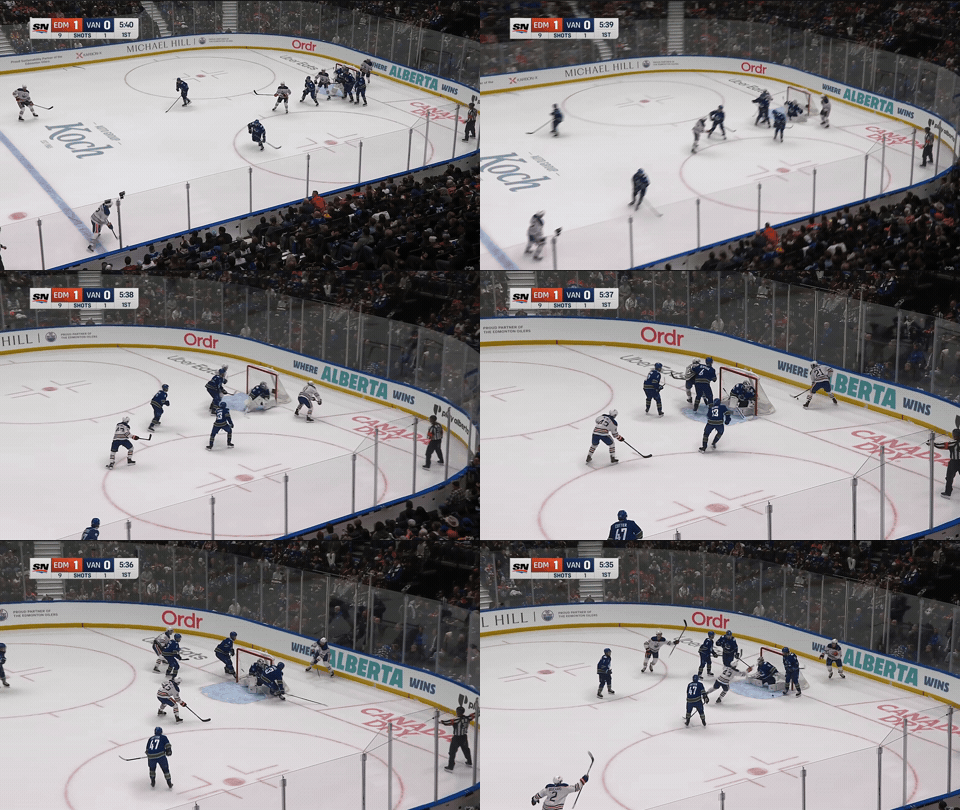
The Canucks cannot be expected to prevent every goal, particularly against elite finishers. Still, these situations leave little margin for error. Pettersson must line up to attack Kucherov’s stick immediately, using positioning and anticipation to react as soon as the puck moves. The same principle applies to Vancouver’s first goal against of the season versus Edmonton. Brock Boeser took a split second too long to close in on Evan Bouchard, giving the Oilers defenceman the time and space to make a play.
Wingers must recognize which opposing defencemen demand immediate pressure. Against a less dangerous puck-mover, there may be opportunities to provide additional support closer to the net. Against a player like Bouchard or Adam Fox, allowing too much space near the blue line can be costly.
Vancouver has already seen the consequences, with Bouchard recording a hat trick while Fox also found the back of the net. The solution is not to abandon defensive assignments and chase every puck aggressively. It is to identify the threat early, close the gap, and remain aware of the passing options and open ice left behind.
Better reads, better results
It is still early in the season, and there is plenty to learn about how Malhotra’s defensive approach will develop. It would be premature to conclude that the structure itself is fundamentally flawed when many of Vancouver’s breakdowns involve correctable decisions, delayed reactions, or missed adjustments between teammates.
The coaching staff can reinforce those details through video and practice, but the players ultimately need to recognize developing threats in real time. Malhotra’s defensive structure may offer Vancouver a more cohesive foundation than it had last season. For that foundation to translate into better results, the Canucks must execute it more precisely and forcefully.
The answer is not simply to demand fewer mistakes. It is to make better reads, communicate more effectively, and understand how one player’s positioning affects everyone else. Those adjustments will not eliminate every scoring chance, but they could prevent the avoidable breakdowns that have continued to cost Vancouver goals.
Sponsored by bet365


Breaking News
- How the Canucks can fix their early-season defensive breakdowns
- ‘Glad to be somewhere I’m wanted’: Jacob Quillan excited for new opportunity with Canucks
- Canucks: What kind of reception will Quinn Hughes get when he returns on Sunday?
- The Canucks are one of the smallest teams in the NHL, but can they change that?
- NHL Notebook: Jets trade Hellebuyck to Devils for package of four players and two draft picks

Vancouver CanucksTeam Cap Summary

Cap Summary
2026-27
2027-28
Projected Cap Hit
$87,295,050
$71,329,167
Projected Cap Space
$16,704,950
$42,170,833
Current Cap Space
$19,063,296
$42,170,833
Active Players
23/23
13/23
Draft Picks
Round
'27
'28
1
1
1
2
2
2
3
1
1