
CanucksArmy has no direct affiliation to the Vancouver Canucks, Canucks Sports & Entertainment, NHL, or NHLPA
What are the 5 most important things that need to happen for the Canucks in 2026-27?
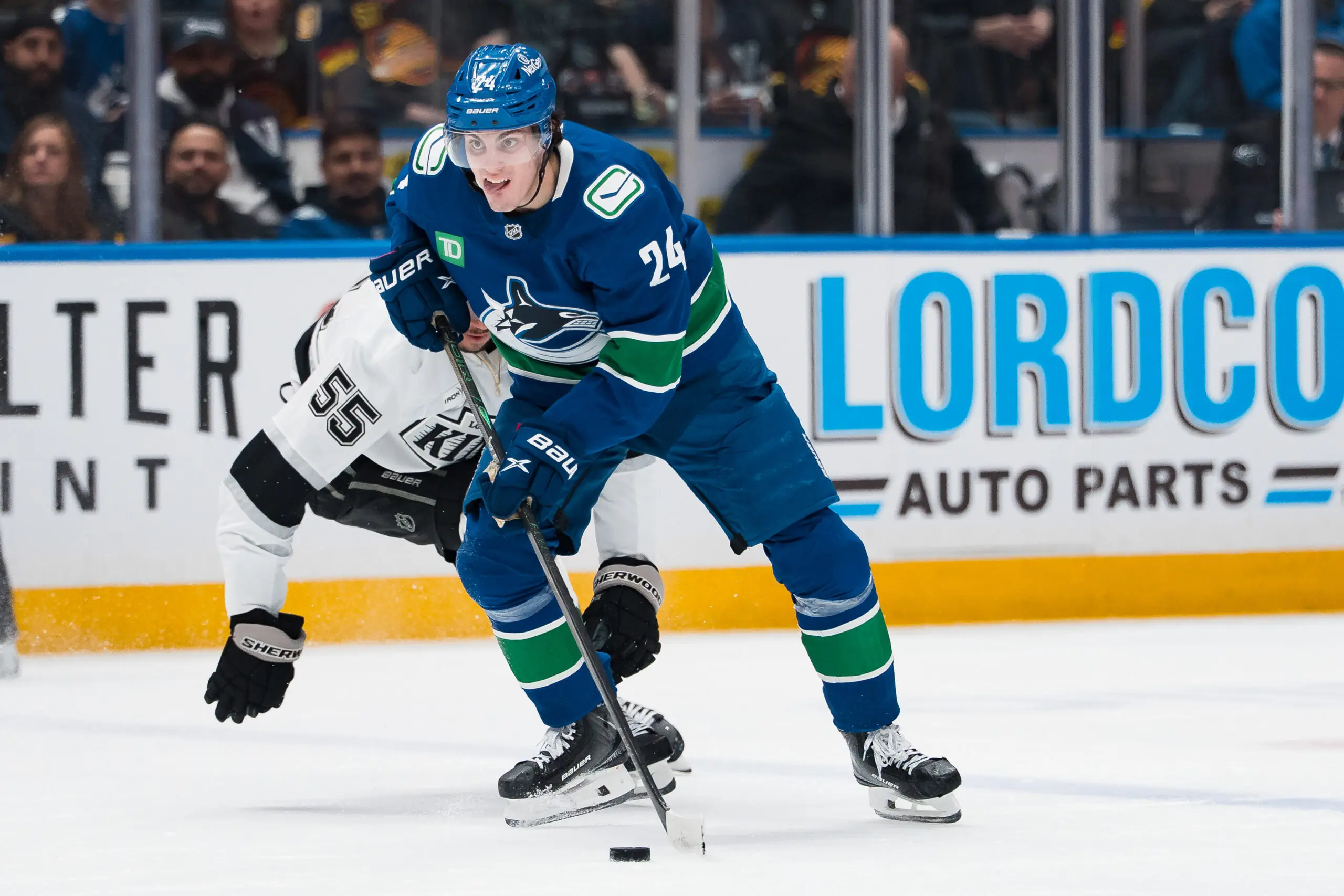
Photo credit: Bob Frid for IMAGN IMAGES via Reuters Connect

Sep 4, 2026, 10:00 EDTUpdated: Sep 3, 2026, 19:22 EDT


Success can be a tough thing to measure for a rebuilding franchise, and short-term success doubly so. But the 2026-27 season, the first season for the Vancouver Canucks under the leadership of GM Ryan Johnson, is going to be judged through this complicated lens all the same.
Last week, in our weekly WDYTT or What Do You Think Thursday? call-and-response column, we asked readers what a successful 2026-27 season looked like to them. While all of the answers fit into a general theme of ‘doing what is best for the franchise down the road,’ everyone had a slightly different version of what was most important in getting there.
With that in mind, and with the actual 2026-27 now just weeks away, we thought we’d spend some time today thinking about the most important things that could happen for the Canucks this season. Or, if you’re as invested in this rebuild as most of the rest of us, maybe we should say the things that need to happen in 2026-27.
#1: To earn another top-five draft pick at the end of the season, at least
It wouldn’t be quite right to say that the Canucks need to finish in the basement of the 2026-27 standings. What they really need is another top-five draft pick. But unless they’re going to somehow trade for such a selection, the only way they’re going to get their hands on one is another season filled primarily with losing.
Another last-place finish would give the Canucks the best odds at first and second overall, and guarantee them a top-three pick. That’s ideal.
Finished in second-last place guarantees them a top-four pick, and third-last place guarantees them a top-five pick. And, with our eyes on the rebuild, a top-five pick is probably the bare minimum the Canucks want to get out of this year.
But, again, it’s less about the finish and all about the outcome here. For the Canucks to finish a little higher in the standings, win a lottery, and still get that first or second overall pick – as the Toronto Maple Leafs and San Jose Sharks did last year – would be just as good as outright tanking. Maybe even better.
Getting their hands on as high a draft pick as possible is the result that matters most.
(Some will say that hoping for the Canucks to experience lottery luck is futile, and thus the Canucks still need to finish as low in the standings as possible, and those folks might have a point, too.)
#2: For Zeev Buium to take a major step forward
Draft picks are the fuel that will fire this ongoing rebuild, but at a certain point, the Canucks will need to develop the players already in the organization, and that should start in earnest this year. There’s no player projected to be on the opening roster for 2026-27 that is more long-term important to the franchise than Zeev Buium, who will start the year out as a 20-year-old sophomore.
Buium’s rookie campaign of 26 points was overall impressive, but didn’t quite match the hype that Buium had built up as a prospect prior. If he can start to take some major steps toward reaching his highest potential during this season, which should be top-pairing potential, that checks one box off the rebuild ‘to-do’ list and moves the entire process forward.
Practically speaking, that probably equates to Buium being at least second on the team in average ice-time, behind only Filip Hronek, and that Buium starts to face tougher and tougher matchups as the year goes on. Adding at least 14 or so points to that total feels like a minimum, and if Buium can also start to get some successful reps on the PP1 unit, then we’re really cooking.
But these are just the objective measures. Subjectively, Buium needs to continue proving himself as someone capable of being a cornerstone of this rebuild for years to come.
#3: For at least one of Liam Öhgren or Jonathan Lekkerimäki to step firmly into the top-six
If we look at the Canucks’ organizational depth chart, and especially their long-term depth chart, it’s clear that the rebuild lacks some talent on the wings.
Recent first-round pick Adam Novotný should help with that. But he probably won’t arrive until next season at the earliest, and maybe even later than that. And given that any good team needs at least four top-six wingers, the Canucks probably need to get on developing some more sooner rather than later.
Fortunately, there are at least two players waiting in the literal wings that have the potential to develop into top-six talents, and that’s Liam Öhgren and Jonathan Lekkerimäki.
Öhgren is certainly closer as of now, with 97 NHL games already under his belt and a decent run of chemistry with the BRÖ line last season. But then, Lekkerimäki, who has scored 32 goals in 57 games across his last two AHL seasons, might still have the higher-end offensive potential.
Honestly, with Öhgren profiling as a pseudo-power forward and Lekkerimäki as a pure sniper, one of the best things that could happen for the Canucks is for both to step into the top-six and start finding some success there as soon as this season. But at a minimum, they need at least one of them to start the process of progress in 2026-27.
#4: Either a Marco Rossi evolution or an Elias Pettersson resurrection, or both
This one is a little more indirect than the other entries. Even after a year on the rebuild trail, the Canucks are still an overall asset-poor franchise. In order for the rebuild to be more successful down the road, the Canucks will need to bring in more picks and prospects than they currently have in their cupboards. And that’s pretty much going to require them cashing in on some of their older players.
They can probably get something decent for Jake DeBrusk eventually. Filip Hronek will make a very tempting trade target in a few summers. But in the meantime, it must be acknowledged that centres are a potent currency in the NHL, and that the Canucks have two with the potential to increase their trade value this season.
Marco Rossi was drafted as a future 1C, and he might still have another level to his game were he to be deployed as one this season. Have him look good in that role, and suddenly the trade value for him shoots up significantly, to the point that the Canucks might be looking at multiple high picks and quality prospects. Or maybe they just keep him around for the rebuild at that point.
Alternatively, the beleaguered Elias Pettersson could show some signs of a career resurrection. At which point, in a centre-starved market, some other team probably takes a shot at him and delivers the Canucks a far nicer trade return than they might currently get (and probably no retention, either).
If either of these things happen, the Canucks can count on a nice income of some extra picks. And if both happen, they’re really in the money.
Room will have to be created for Caleb Malhotra and Braeden Cootes, and maybe another 2027 centre draft pick eventually, too. If the Canucks can clear out a centre and profit greatly from doing so, that’s an ideal situation for them, and that begins with a step-up from at least one of Rossi or Pettersson in 2026-27.
#5: Absolutely ZERO counter-rebuild moves made by management
Our recent breakdown of the trade and signing history of the Jim Rutherford-Patrik Allvin Regime led to some interesting insights, one of which was that they started relatively strong before starting to see their moves go downhill due to a desperation brought on by a lack of clear vision for the franchise.
GM Johnson cannot fall into the same traps that Vancouver general managers have in the past. He doesn’t just need to be strong; he needs to be resolute. And that means making absolutely zero moves that are counter to the rebuild.
We all know what we’re talking about here. Trading draft picks for ‘project’ players in their early 20s so as to speed along the rebuild. Signing expensive free agents. Exchanging future-based assets for veterans, even those with good mentorship abilities. These are all things that GMs have done in the past, and they just don’t work out. Rebuilds cannot be rushed, simple as that.
Johnson has a major advantage here in that a rebuild has been both declared and largely accepted by the fanbase. He and the Sedins have talked openly about a patient approach. But that patient approach will be tested, perhaps as early as this year.
Making it through 2026-27 without doing anything counter to the rebuild is Johnson’s first real test. And it’s a test he’ll be repeating for the next several years running.
Sponsored by bet365


Breaking News
- Canucks’ Räty clears NHL waivers, will report to AHL Abbotsford
- Blackfish: Romani opens strong, Cootes continues to impress and Malhotra shows his offensive potential
- Scenes from morning skate: Chytil to make season debut for Canucks vs. Panthers
- What does the younger Elias Pettersson’s breakout mean for the Canucks and their rebuild?
- Kole Lind talks signing in Abbotsford, why he’s impressed by Braeden Cootes, and more

Vancouver CanucksTeam Cap Summary

Cap Summary
2026-27
2027-28
Projected Cap Hit
$88,074,947
$71,329,167
Projected Cap Space
$15,925,053
$42,170,833
Current Cap Space
$17,259,555
$42,170,833
Active Players
23/23
13/23
Draft Picks
Round
'27
'28
1
1
1
2
2
2
3
1
1