
CanucksArmy has no direct affiliation to the Vancouver Canucks, Canucks Sports & Entertainment, NHL, or NHLPA
Canucks Rebuild: How the four 2026 Conference Finalists were built
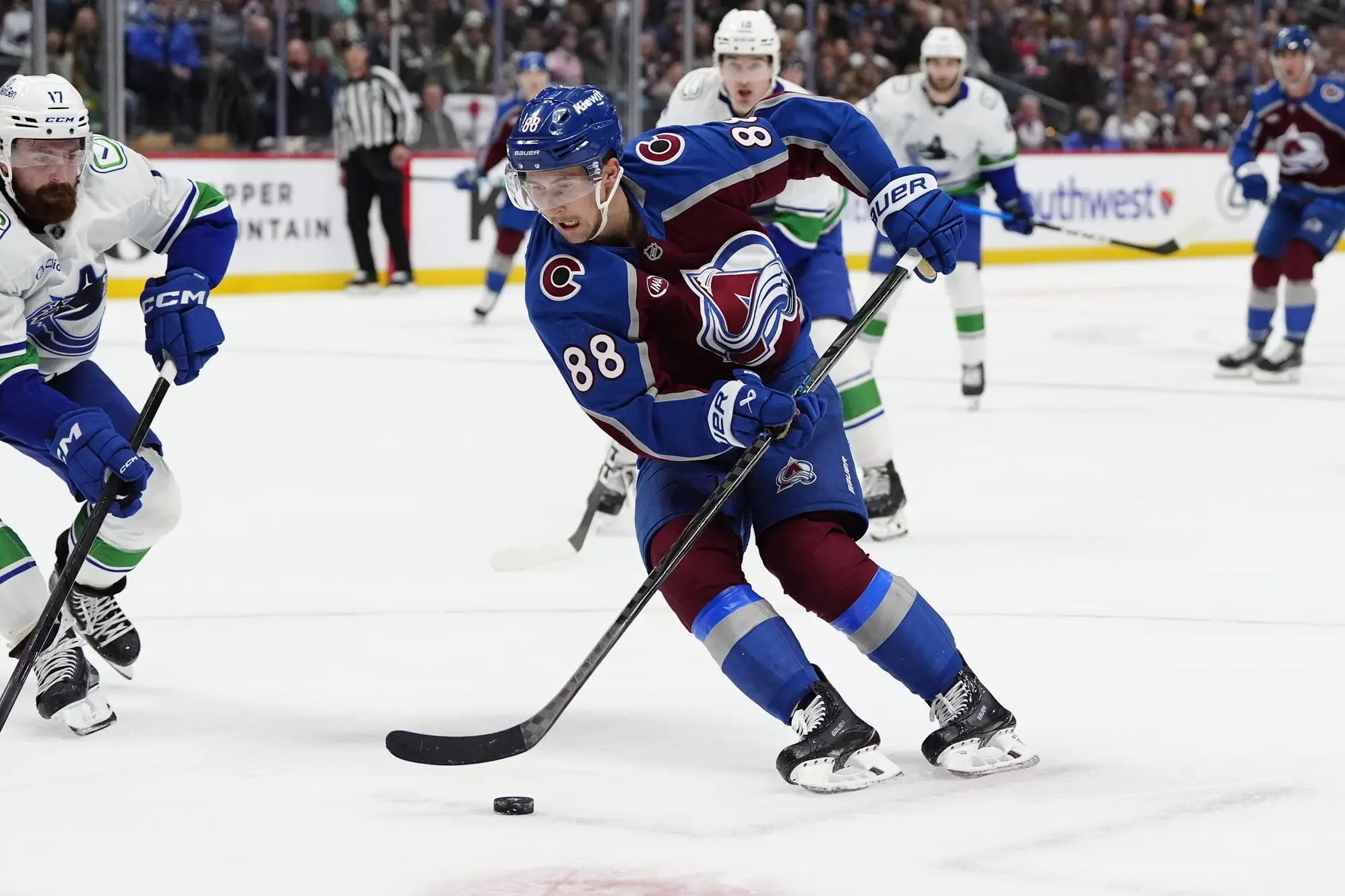
Photo credit: © Ron Chenoy-Imagn Images

May 26, 2026, 15:30 EDTUpdated: May 27, 2026, 11:30 EDT


The Vancouver Canucks are rebuilding. And whenever one is building of any type, even of the re- variety, it’s nice to have a blueprint on hand.
As it stands, the 2026 Stanley Cup Playoffs have reached the third round, meaning we’re currently seeing the remaining four teams duke it out for the Western and Eastern Conference Championships. As far as picking out teams to pattern the Canucks’ own rebuild after, those four teams – the Carolina Hurricanes, the Colorado Avalanche, the Montreal Canadiens, and the Vegas Golden Knights – seem like as good a place to start as any.
We already wrote up a piece on how the Canadiens achieved a relatively short-term turnaround of their own. But to better understand how all four of these Conference Finalists got to where they are today, we thought it might be interesting to break down their playoff rosters by means of acquisition. To get there, we’re taking all the players who have played in at least five postseason games for these teams and checking whether they were acquired through the draft, trade, free agency, or some other means (offer sheets, undrafted free agents, waivers, etc.).
Each team will have built itself up differently. But there should still be a consistent message here for the Canucks: no team of any real quality is ever built in a single way. The Canucks’ own rebuild will start with and centre on the draft, but there’s a lot more trading and signing to be done in the long term, too, to get this team up to Conference Finalist standards – or beyond.
(Note: Players listed, by category, in descending order of 2026 postseason points.)
The Carolina Hurricanes
Draft: Jackson Blake, Seth Jarvis, Sebastian Aho, Andrei Svechnikov, Jordan Staal, Jaccob Slavin, Alexander Nikishin (7)
Trade: K’Andre Miller, Taylor Hall, Logan Stankoven, Mark Jankowski, Jordan Martinook (4)
Free Agency: Nikolaj Ehlers, Eric Robinson, Jalen Chatfield, Shayne Gostisbehere, William Carrier, Sean Walker, Frederik Andersen (8)
The Carolina Hurricanes are the poster child for responsible, patient, and efficient roster-building. They acquired their most important pieces either through the draft or, in the case of Miller, Hall and Stankoven, through trading a major piece they’d previously drafted and developed (Martin Necas, by way of Mikko Rantanen). They’ve also managed to find major contributors from all corners of the draft.
The Hurricanes do have some notable UFA additions, but the most important signing was just this past offseason was Ehlers, long after Carolina had built up a competitive roster elsewise.
If there’s a lesson to be taken away here, it’s that free agency is a final step to building, and shouldn’t be used as a shortcut to contention.
The Colorado Avalanche
Draft: Nathan MacKinnon, Gabriel Landeskog, Cale Makar (3)
Trade: Martin Necas, Devon Toews, Nazem Kadri, Artturi Lehkonen, Nicolas Roy, Jack Drury, Ross Colton, Brett Kulak, Brock Nelson, Josh Manson, Nick Blankenburg, Scott Wedgewood (12)
Free Agency: Valeri Nichushkin, Parker Kelly, Brent Burns (3)
Undrafted Free Agency: Sam Malinski, Logan O’Connor (2)
The Colorado Avalanche are a much more mixed bag than the Hurricanes. They drafted their core of MacKinnon and Makar (and, to a lesser extent these days, Landeskog), but have since engaged in nearly constant trading to adapt and supplement the roster around them.
The Avalanche also acquired their largest trade piece, Necas, through the trading of someone they’d drafted and developed, the aforementioned Rantanen. Many of the other trade pieces, like Toews, Lehkonen, and Kulak, were acquired in exchange for excess second- and later-round draft picks.
But then, Colorado is also a team that has made major swings when they deemed it necessary, paying a first-round pick and more for names like Kadri, Roy, and Nelson, with varying results.
One thing the Avs have stayed away from is free agency, for the most part. Kelly and Burns are relatively minor pieces, and Nichushkin is someone they picked up after a buyout and turned into the player he is today.
The Montreal Canadiens
Draft: Lane Hutson, Juraj Slafkovsky, Cole Caufield, Jake Evans, Ivan Demidov, Kaiden Guhle, Jayden Struble, Oliver Kapanen, Jakub Dobes (8)
Trade: Nick Suzuki, Alex Newhook, Phillip Danault, Josh Anderson, Zach Bolduc, Alexandre Carrier, Kirby Dach, Mike Matheson, Noah Dobson (9)
Free Agency: Alexandre Texier, Joe Veleno (2)
Undrafted Free Agency: Arber Xhekaj (1)
We’ve already covered the Canadiens’ rebuild in more depth in another article, but this breakdown yields some interesting insights. The Canadiens are an extremely draft-and-development-focused team, with almost all of their most important pieces either being outright drafted by the team or, in the case of Suzuki, traded for while still a prospect and then developed.
Their trades have been effective and all at a relatively low cost, with Dobson being the notable exception. The team also paid a first for Dach back in the day, but probably regrets that expenditure.
The Montreal rebuild has been fairly quick, all things considered, but that was made more possible by years of solid-to-spectacular drafting heading into the rebuild, especially in the middle of the first round. After that, all it took were some draft-day home runs in the likes of Hutson and Demidov to put the Canadiens over the top and into contention.
The Vegas Golden Knights
Draft: Pavel Dorofeyev, Kaeden Korczak (2)
Expansion Draft: William Karlsson, Brayden McNabb (2)
Trade: Jack Eichel, Brett Howden, Ivan Barbashev, Shea Theodore, Mark Stone, Tomas Hertl, Colton Sissons, Noah Hanifin, Rasmus Andersson, Cole Smith, Nic Dowd, Reilly Smith, Keegan Kolesar, Jeremy Lauzon (14)
“Trade”: Mitch Marner (1)
Free Agency: Dylan Coghlan, Brandon Saad, Ben Hutton, Carter Hart (4)
You had to know that the Vegas Golden Knights weren’t going to follow any sort of pattern. Looking at this now, we have to wonder: are the Knights the greatest trading team of the modern NHL era? They’ve built a consistent contender largely through team-to-team transactions. For all the noise that was made about the advantages they received at the Expansion Draft, the Knights only retain two players from that draft and one more acquired through Expansion Draft-related trading (Theodore).
We put Marner in his own special category because while he technically arrived via trade, he did so as a pending unrestricted free agent. Aside from him, the Golden Knights have played it surprisingly cheap in the Free Agent Frenzy, taking on only buy-low options.
The rest of the roster has been built via trades, and often of the extremely expensive variety. The Knights sent out countless first-round picks and prospects as good as Suzuki in order to get their hands on all these players, but in the end, they picked their targets well and probably care more about the results than the costs at this point.
Sponsored by bet365


Breaking News
- Canucks place Aatu Räty on NHL waivers
- WWYDW: Who or what has most surprised you through 10% of the Canucks’ season?
- The Statsies: Brock Boeser has his best game of the year in Canucks’ loss to Islanders
- The Stanchies: Despite growing pains on defence, Canucks battle valiantly in 3-2 loss to Islanders
- Instant Reaction: Leevi Meriläinen stands out in Canucks’ 3-2 loss to Islanders

Vancouver CanucksTeam Cap Summary

Cap Summary
2026-27
2027-28
Projected Cap Hit
$88,074,947
$71,329,167
Projected Cap Space
$15,925,053
$42,170,833
Current Cap Space
$17,163,668
$42,170,833
Active Players
23/23
13/23
Draft Picks
Round
'27
'28
1
1
1
2
2
2
3
1
1