
CanucksArmy has no direct affiliation to the Vancouver Canucks, Canucks Sports & Entertainment, NHL, or NHLPA
Canucks Draft 2026: How many top-five picks are on each of the remaining playoff teams?
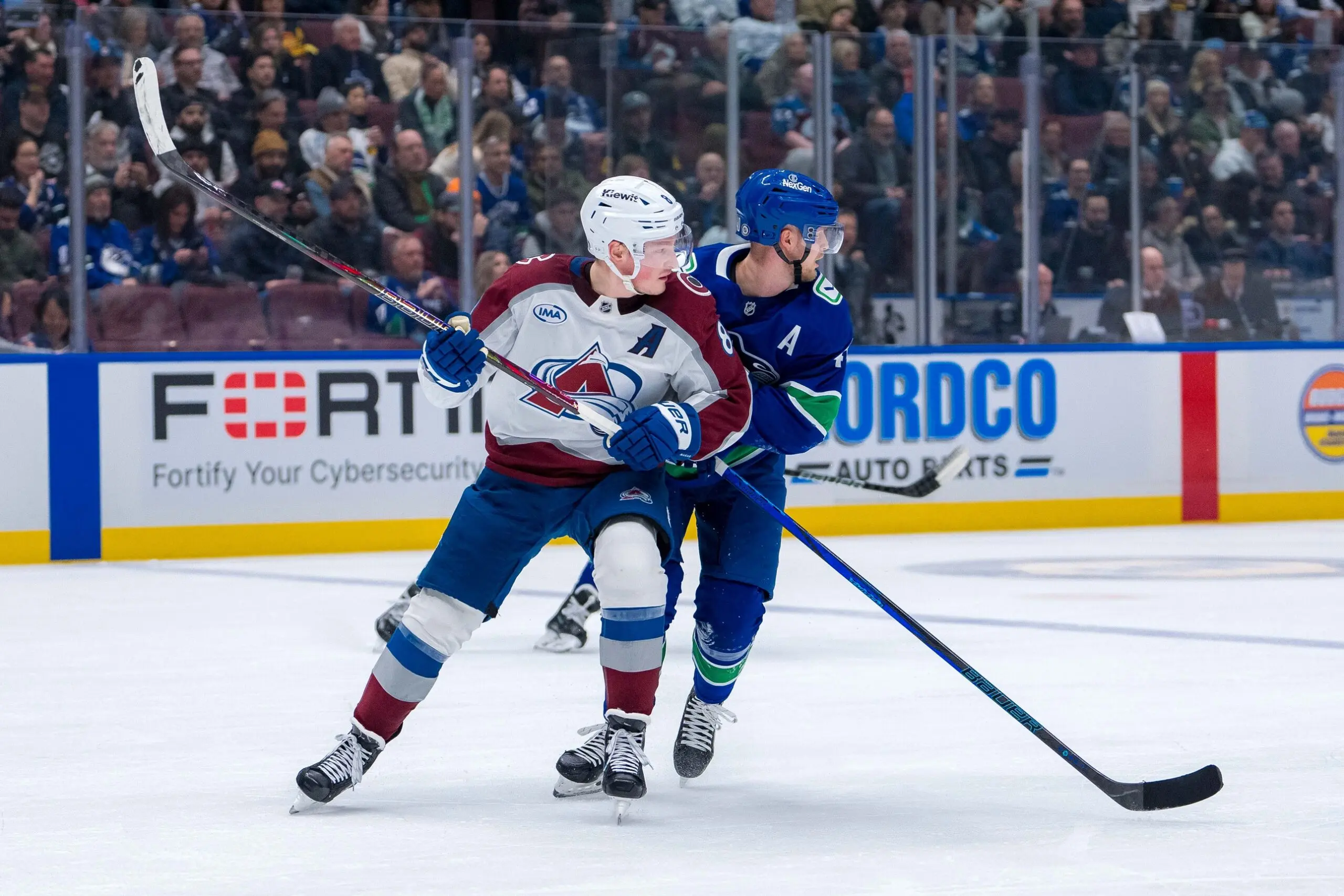
Photo credit: © Bob Frid-Imagn Images

May 4, 2026, 14:10 EDTUpdated: May 4, 2026, 14:05 EDT


The 2026 Draft Lottery occurs on Tuesday, and no matter the result, the Vancouver Canucks are guaranteed to be left with a top-three selection in the 2026 NHL Entry Draft. That’ll make it the highest pick the Canucks have had since they selected Daniel and Henrik Sedin at second and third overall in 1999. That alone would qualify this upcoming pick as one of the most important in franchise history, and its placement at the beginning of this long-awaited rebuild only makes that more true.
But what this first-to-third overall pick won’t be is the be-all and end-all of the rebuild. It is a pick of vital importance, and it is essential that the Canucks absolutely knock it out of the park to the best of their ability. But time and again, it’s been said that truly great teams are best built by making multiple high draft picks. And so, as important as this year’s draft is, it’s been said to be equally important that the Canucks continue to finish low in the standings and continue to accumulate more lottery picks in the next couple of seasons to come.
The second round of these 2026 Stanley Cup Playoffs gives us a convenient opportunity to test this notion with a simple question: how many top-five draft picks are there on each of the remaining eight teams? It’s not a perfect science, but it should provide a basic barometer of how many such picks are typically needed to compete in this league – and how many the Canucks should be planning to make before they’ve really got this rebuild off the ground.
The current count, for the record, is technically one, as Elias Pettersson was once drafted at fifth overall (and for as long as he stays on the roster). But most would agree that he hardly counts anymore when it comes to predicting the Canucks’ long-term future success. (We’re also not counting the outgoing Evander Kane, who was once picked at fourth overall.) Most would agree it’s fair to start the count at one with the Canucks’ top pick in the 2026 Draft.
How high has the top-five pick count gotten for the NHL’s current elite eight?
Anaheim Ducks
Number of Top-Five Draft Picks on Roster: 4
Top-Five Draft Picks: Leo Carlsson (2nd, 2023), Mason McTavish (3rd, 2021), Beckett Sennecke (3rd, 2024), Cutter Gauthier (5th, 2022)
The Anaheim Ducks are really the case study for what a good rebuild should look like. Over the course of four drafts, they’ve acquired four of the most important players on their roster, and it has turned their franchise all the way around from a basement-dweller to a burgeoning contender in relatively quick fashion.
There were other key draft picks, like Jackson LaCombe in the second round, that played a big role in building up the Ducks, as well as some trades, including the one that brought Gauthier in. For the most part, however, Anaheim is a team built through the draft, and the early stages of the draft, specifically.
Buffalo Sabres
Number of Top-Five Draft Picks on Roster: 3
Top-Five Draft Picks: Rasmus Dahlin (1st, 2018), Owen Power (1st, 2021), Bowen Byram (4th, 2019)
For a team that has been as bad as long as the Buffalo Sabres have, they’re not particularly powered by lottery picks, and especially not recent ones. That said, Dahlin is the Sabres’ runaway MVP, and they could not be doing anything they’re doing without having picked him at first overall all those years ago.
Beyond this trio of defenders, the Sabres have another eight former first-rounders and another six former second-rounders on their roster. The Sabres are more a testament, then, to the slow, patient, and sustained rebuild, though that’s not exactly been by their choice.
Carolina Hurricanes
Number of Top-Five Draft Picks on Roster: 3
Top-Five Draft Picks: Taylor Hall (1st, 2010), Jordan Staal (2nd, 2006), Andrei Svechnikov (2nd, 2018)
The Hurricanes are another team built on picks made long ago, though in a very different way from the Sabres. Carolina has been a contender for a while now, and so they’ve had to make do with the core pieces and high picks they had on hand and supplement the rest of the roster in other ways. Of the top-five picks we’ve listed, only Svechnikov really plays a core role these days.
The Hurricanes are one of those rare, well-balanced teams where the talent on their roster comes from all over the draft. But then, they’ve long been one of the most well-run teams in hockey, and that’s tough to emulate.
Colorado Avalanche
Number of Top-Five Draft Picks on Roster: 3
Top-Five Draft Picks: Nathan MacKinnon (1st, 2013), Gabriel Landeskog (2nd, 2011), Cale Makar (4th, 2017)
The Colorado Avalanche are a good example of what we’re talking about. They’ve been a well-run franchise in their own right for a good while now, but they’d still be absolutely nothing without their lottery picks, and without Nathan MacKinnon and Cale Makar in particular. The low half-decade that brought about those selections set the Avalanche up for a decade-plus of contention. That window’s been propped open even further by bringing in a bunch of former firsts from other franchises through trade (like Martin Necas, Val Nichushkin, and Nazem Kadri).
The Avs stand as a testament to the fact that it generally requires both luck and skill to build a true long-term contender.
Minnesota Wild
Number of Top-Five Draft Picks on Roster: 1
Top-Five Draft Picks: Zach Bogosian (3rd, 2008)
The Wild are a strange case. Their only top-five pick is Zach Bogosian, a player drafted nearly two decades ago who plays a depth role on their blueline. Beyond that, they’re mostly made up of players who really, really should have been drafted higher than they were, like Quinn Hughes (7th), Matt Boldy (12th), and especially Kirill Kaprizov (135th).
There’s a lot of luck here, there’s a lot of drafting ability, and there’s even a bit of circumstance (as we saw play out with the Hughes trade). In other words, the Wild are built in a way that would be awfully difficult to replicate intentionally.
Montreal Canadiens
Number of Top-Five Draft Picks on Roster: 3
Top-Five Draft Picks: Juraj Slafkovsky (1st, 2022), Kirby Dach (3rd, 2019), Ivan Demidov (5th,, 2024)
The Canadiens are another poster child for the importance of high picks in turning a franchise around. Like the Ducks, they’ve got an enormous amount of value out of the last half-decade or so of drafting, including two of their most important young forwards. They’ve also loaded up on eight other first-round picks throughout their roster, on top of these three listed here, and – just like the Ducks did with LaCombe – somehow plucked a franchise defender out of the second round with Lane Hutson.
The Canadiens got scary good, scary quick. And the primary reason that happened was their choices in the draft, especially their willingness to hang on to (and accumulate) picks.
Philadelphia Flyers
Number of Top-Five Draft Picks on Roster: 0
Top-Five Draft Picks: None.
The Flyers are a weird team, and they honestly probably don’t belong on any real list of contenders. But they’re in the second round, so here we are. While the Flyers don’t have any top-five picks on their playoff roster, they do have seven top-ten picks, and those are Jamie Drysdale (6th), Porter Martone (6th), Matvei Michkov (7th), Sean Couturier (8th), Rasmus Ristolainen (8th), Trevor Zegras (9th), and Cam York (10th). And those names, put together, come pretty close to covering the whole of the current Philadelphia core.
They’re a team that has been built with more of a quantity-than-quality approach at the draft, but the bulk of that quantity has still come from the upper-third of the first round.
Vegas Golden Knights
Number of Top-Five Draft Picks on Roster: 3
Top-Five Draft Picks: Jack Eichel (2nd, 2015), Mitch Marner (4th, 2015), Noah Hanifin (5th, 2015)
As a still-somewhat-recent expansion franchise, the Vegas Golden Knights were always going to have an odd relationship with the draft. And so, they do have three top-five picks on their roster – three top-five picks from the same 2015 Entry Draft, no less – but none of them are picks the Knights have made themselves.
Still, however, they got them, bringing in premium talent like these, which has been absolutely key to Vegas building and sustaining their success as a contender. They ultimately fit well into this model of needing top-of-the-draft talent to compete as well as anyone else. (Though it’s worth noting that with just three other former first-rounders on their roster, they’ve got by far the least of any team in the second round.)
Conclusions
There are no hard-and-fast rules here, but there is a clear trend. The average number of top-five draft picks on the remaining eight playoff rosters is a bit below three, and six of the eight teams have three or more. The role those top picks play will vary, as will how long ago they’ve been made, but the overall truth of the matter remains the same: the best way to compete and contend in this league is to make as many draft picks as high as possible in the draft.
Suffice it to say, then, that whoever the Canucks pick in 2026 will not be the final piece of the Canucks’ rebuild puzzle. Even if we’re going to count Pettersson as a top-five pick, the Canucks would still need another top-fiver – one presumably drafted in 2027 after another basement finish – to get themselves to that threshold of three. And, from what we’re seeing here, another top-five pick in 2028 wouldn’t hurt much, either.
But what this all shows, too, is that just making those picks won’t constitute a complete rebuild job on their own, either. Even those teams, like the Ducks, who have been especially fortunate at the high end of the draft, have had to supplement their top selections with plenty of other talent from later in the process.
The Canucks’ rebuild begins in earnest with Tuesday’s Draft Lottery, but it doesn’t even come close to ending there.
Sponsored by bet365


Breaking News
- The Stanchies: Canucks serve up defensive zone breakdowns in Thanksgiving loss to Rangers
- Instant Reaction: Canucks struggle defending off the rush in 6-2 loss to Rangers
- Abbotsford weekly: Cootes and Lind tally 3 points each in Canucks’ first win of the season
- NHL fines Devils’ Evan Rodrigues $5,000 for high-sticking Canucks’ Marco Rossi in the neck
- Canucks Game Day: Desperate to shore up the penalty kill against the Rangers

Vancouver CanucksTeam Cap Summary

Cap Summary
2026-27
2027-28
Projected Cap Hit
$88,074,947
$71,329,167
Projected Cap Space
$15,925,053
$42,170,833
Current Cap Space
$16,975,056
$42,170,833
Active Players
23/23
13/23
Draft Picks
Round
'27
'28
1
1
1
2
2
2
3
1
1