
CanucksArmy has no direct affiliation to the Vancouver Canucks, Canucks Sports & Entertainment, NHL, or NHLPA
The Canucks are allowing the most high-danger chances against in the entire NHL
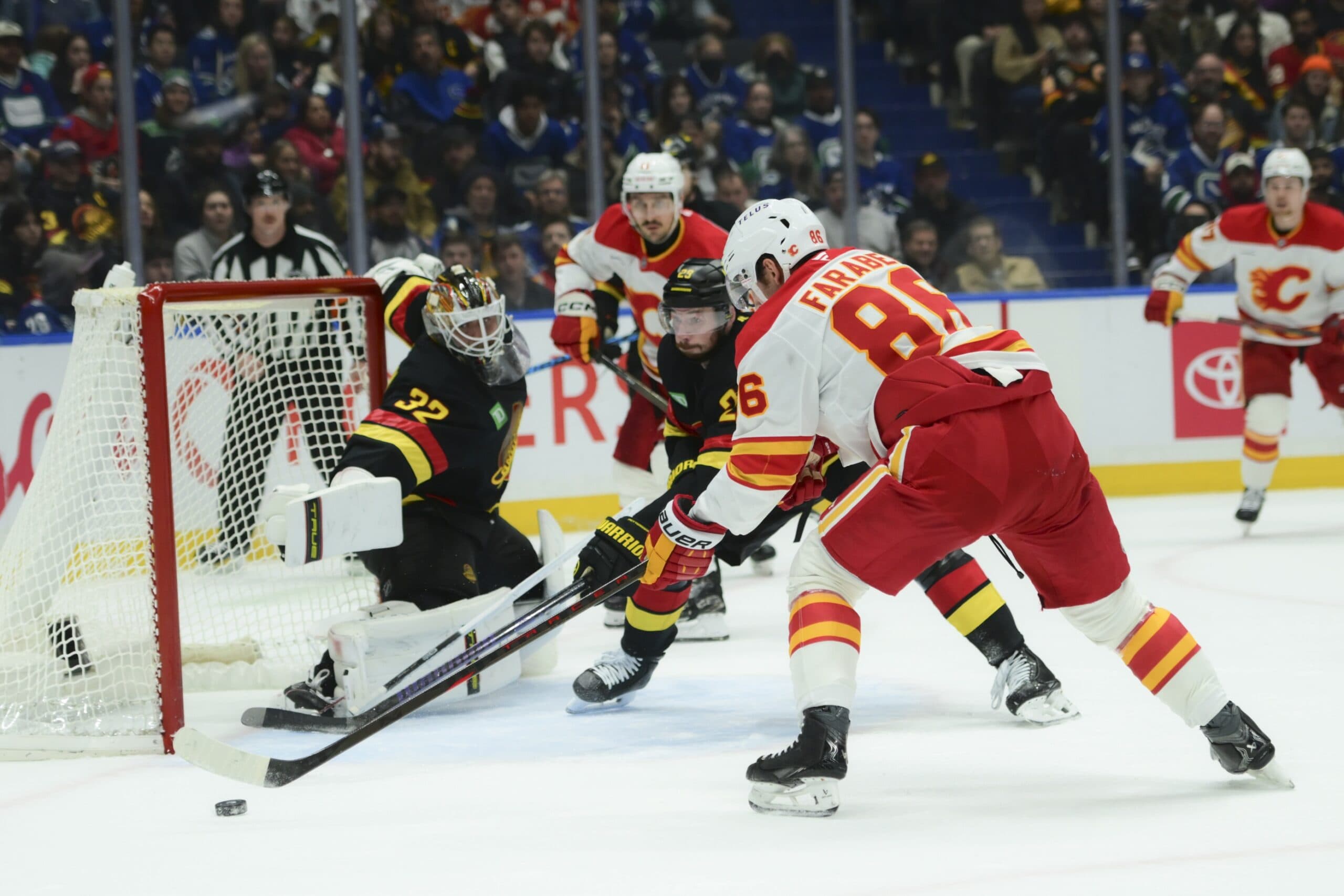
Photo credit: © Simon Fearn-Imagn Images

Nov 24, 2025, 15:00 ESTUpdated: Nov 24, 2025, 12:20 EST


The 2025-26 season has not been a good one for the Vancouver Canucks.
As of this Monday morning writing, they sit with the third-worst record in the NHL at 9-12-2, ahead of only the Calgary Flames and the Nashville Predators.
But as bad as that record may look, the underlying numbers say it could be even worse.
The Canucks rank quite low in virtually every category that matters. Being outscored 50-41 at five-on-five, their Goals For rate of 45.05% is the sixth-worst in the NHL. They have controlled just 44.31% of the shots in their games, the second-worst rate in the league, ahead of just the San Jose Sharks.
If there was one thing about the 2025-26 Canucks that was meant to be a strength, it was the back-end. With a veteran goaltending tandem of Thatcher Demko and Kevin Lankinen, and a deep blueline featuring Quinn Hughes, Filip Hronek, Marcus Pettersson, Tyler Myers, Derek Forbort, Elias Pettersson, Tom Willander, and more, the Canucks looked to have a better blueline and crease situation than at any point in recent memory.
But that has not been the case, and it’s those more purely defensive metrics that look the worst off for the Canucks right now. It is in those categories where they’re at the absolute bottom of the NHL.
In terms of just general five-on-five scoring chances, the Canucks have achieved 443 and allowed 540 through 23 games. That’s a control of only 45.07%, and that’s not good at all. In fact, it’s the fourth-worst in the league.
But when measuring by high-danger scoring chances, specifically – those chances coming from areas and situations on the ice more likely to result in goals – the Canucks are the absolute worst in the National Hockey League.
The Canucks have earned just 182 high-danger chances for themselves, while allowing 254 against. That gives them a 14-chance ‘lead’ on the next-worst team, the New York Islanders, who have allowed 240 high-danger chances against.
Oddly enough, the Canucks do not have the worst ratio of high-danger chances. That goes to the Seattle Kraken, who have succeeded at suppressing chances in general – they’re at a 130-191 high-danger chances record, for a percentage control of 40.50%.
But the Canucks are right behind them with 41.74%.
This is why the Canucks also lead the league in expected five-on-five goals against at 55.34 through 23 games.
The Canucks have ‘only’ allowed 50 of those expected goals against to actually cross the goal-line. This likely comes down to goaltending.
While the goaltenders haven’t been the story of the season in the way some were expecting them to be, Demko and Lankinen have still bailed the Canucks out far more than the average tandem thus far in 2025-26. The Canucks’ even-strength team save percentage of 90.88% is exactly middle-of-the-road at 15th overall so far. But their save percentage on high-danger shots specifically is at 85.88%, which is seventh-best in the entire NHL. The individual stats say that Demko has done a little more per-capita high-danger saving than Lankinen, but that they’ve both contributed in roughly equal measure.
In other words, the Canucks goaltenders have been faced with the toughest job in the NHL this season, being tasked with facing an inordinate amount of chances in general, and difficult-to-save chances in particular. They’ve proven more than equal to the task so far, for all the good that it’s done.
What does it mean, if anything?
It certainly doesn’t bode well for any notion of the Canucks pulling themselves out of the standings hole they’ve put themselves in. Whenever a team is a few points back of a playoff spot, it’s always tempting to play ‘what if.’ What if a few of those one-goal losses turned into one-goal wins instead?
These statistical realities should dissuade any such thinking in Canucksland. Because what they really mean is that any one-goal losses probably could have been two-goal losses instead, if not for some timely goaltending.
They’re also the kind of numbers that tend to even out over time. The longer a season goes on, the more those expected stats and the actual stats tend to align.
And we’ve got to think that’s especially true when we’re talking about high-danger chances. A team simply cannot get by allowing more in-close and point-blank shots against their goaltenders than any other team in the league and expect to find success.
It should actually raise the question of how low the Canucks might sink in these standings. We should note that the two teams behind them, the Flames (176) and the Predators (177), actually rank in the bottom 10 for high-danger chances allowed. On that front, at least, they’ve been significantly better than the Canucks. Might that allow them to ‘leapfrog’ the Canucks over the coming months, leaving Vancouver alone in the league’s basement of basements?
Sunday’s game between the Canucks and Flames was a fine microcosm of this in action. Overall, the Canucks outshot the Flames to the tune of 27-25. And if we look at just five-on-five scoring chances, the Canucks narrowly beat out the Flames 19-18.
But if we look at the five-on-five high-danger chances, specifically, we find that the Flames beat the Canucks on that by a 10-6 margin. As a result, the Flames won the game 5-2.
The Canucks, very plainly, are not giving themselves much of a chance to win – because they’re giving all their best chances to the opposition.
Sponsored by bet365


Recent articles from Stephan Roget
Breaking News
- The Statsies: Brock Boeser has his best game of the year in Canucks’ loss to Islanders
- The Stanchies: Despite growing pains on defence, Canucks battle valiantly in 3-2 loss to Islanders
- Instant Reaction: Leevi Meriläinen stands out in Canucks’ 3-2 loss to Islanders
- NHL Notebook: Bedard returns for Chicago, and is Rick Tocchet on the hot seat?
- Demotion to third defensive pair for Canucks’ Buium ‘not a step backward’ according to Malhotra

Vancouver CanucksTeam Cap Summary

Cap Summary
2026-27
2027-28
Projected Cap Hit
$88,074,947
$71,329,167
Projected Cap Space
$15,925,053
$42,170,833
Current Cap Space
$17,163,668
$42,170,833
Active Players
23/23
13/23
Draft Picks
Round
'27
'28
1
1
1
2
2
2
3
1
1