
CanucksArmy has no direct affiliation to the Vancouver Canucks, Canucks Sports & Entertainment, NHL, or NHLPA
Luke Schenn might not be an every-night player for the Canucks in 2026-27, and that’s alright with them
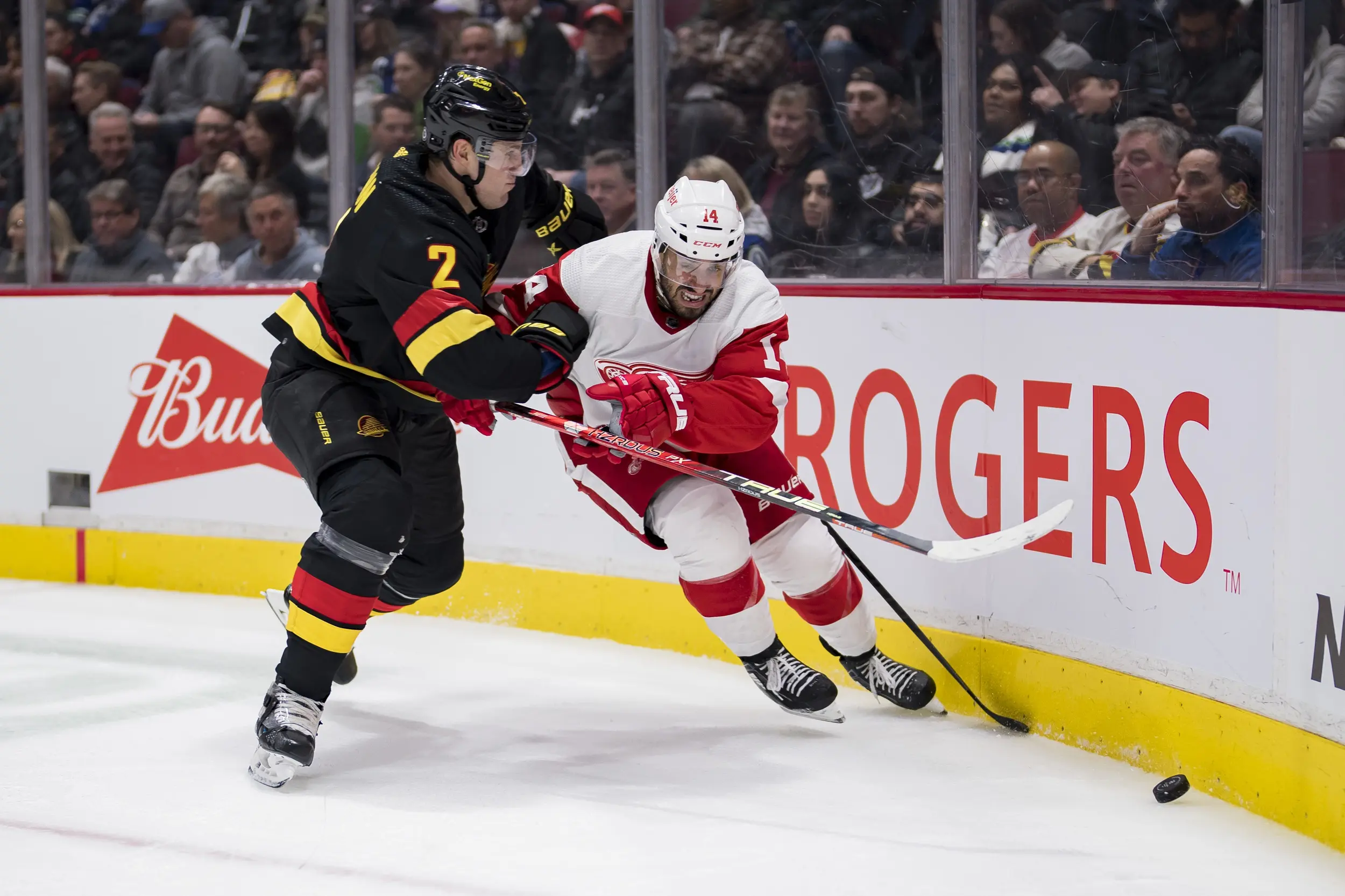
Photo credit: © Bob Frid-Imagn Images

Jul 10, 2026, 12:30 EDTUpdated: Jul 10, 2026, 12:28 EDT


It’s been three whole NHL seasons since Luke Schenn last suited up for the Vancouver Canucks. And in the sport of hockey, that’s an enormous amount of time.
Back then, in the 2021-22 and 2022-23 seasons, Schenn was making just $850,000 a season. At times, the Canucks had him playing on the top pairing with Quinn Hughes, and overall got enormous value out of the contract.
This time around, Schenn is making $2.25 million on his latest one-year deal. That’s a big pay increase from the last time, but the chances of Schenn playing as large a role for the Canucks in 2026-27 as he did in seasons past are low.
This version of Schenn is three years older, and truth be told, he might not be a true every-night NHL defender anymore.
But that’s actually perfectly alright for the Canucks and their intentions for their blueline.
To be fair, the 36-year-old Schenn has been an every-night player pretty much up until last season. After the Canucks traded him to Toronto in 2022-23, Schenn played the rest of the regular season and all 11 playoff games for the Maple Leafs.
He signed a three-year contract with the Nashville Predators that summer, and aside from a lower-body injury in October of 2023, he stayed in the lineup throughout the 2023-24 season and suited up for five of six playoff games against the Canucks.
Schenn remained one of the Predators’ regular defenders right up until he was traded near the deadline, first to Pittsburgh and then to the Winnipeg Jets a day later, before he’d ever suited up for the Penguins. He played out the remainder of the regular season for the Jets, and in 11 of their 13 playoff games through two rounds.
But then things changed this past 2025-26 season. Schenn started to be scratched more regularly by the Jets, including fairly sizeable chunks of time in November and December. This was in part due to Winnipeg having a deep-ish blueline, with five other vets – Josh Morrissey, Dylan DeMelo, Neal Pionk, Logan Stanley, and Dylan Samberg – all playing ahead of Schenn. That left Schenn to share time with some younger defenders, like Haydn Fleury and Elias Salomansson.
But it must be said that the Jets didn’t perform very well overall last season, including their blueline. The primary reason Schenn started getting scratched more often was his age and the fact that he was showing it more frequently.
That’s why when the Buffalo Sabres traded for both Schenn and Stanley at this most recent deadline, they saw Schenn as more of a throw-in. He’d ultimately play just four regular season games for the Sabres and was then inserted into their lineup for two playoff games against the Montreal Canadiens. Realistically, he sat about seventh or eighth on their depth chart.
Now, it might seem a little strange for the Canucks to seek out someone who has already fallen out of a couple NHL lineups, and then hand that person a $2.25 million contract and a full NMC. But the reality is that the Canucks don’t need Schenn to be an every-night player for them, either. In fact, his spending regular stints in the press box – call it ‘load management,’ if you will – is probably part of the plan, and part of the appeal.
Schenn will once again be sharing blueline space with some younger D. Filip Hronek has the top spot on the right side nailed down for the time being, and he can once again be expected to log 22+ minutes a night. The team would love to see Tom Willander continue to step into a top-four role behind Hronek, and Schenn’s presence doesn’t do much to threaten that. If Schenn has his ice time reasonably limited, that should still leave a good 20 or so minutes a night for Willander.
The next in line on the right side, aside from Schenn, is the 24-year-old Victor Mancini. Having only completed two full professional seasons, Mancini isn’t quite in a do-or-die situation yet, but he is at the point in his development where NHL minutes are crucial and beneficial. Allowing Mancini to platoon with Schenn on that bottom pairing for most of the year is actually a fairly ideal outcome overall, and it seems like the most likely one, too.
There’s also the 22-year-old Kirill Kudryavtsev to consider. He’s younger than Mancini, but he also has two pro seasons under his belt and is arguably further along his development path. The Canucks would also like to get Kudryavtsev plenty of NHL minutes this year, but until injuries occur, that’s going to be pretty tough on his natural left side, where Zeev Buium, Elias Pettersson, and Jamie Oleksiak are already in place. Thankfully, Kudryavtsev has also spent plenty of time on the right side, so he’s someone else the Canucks can insert onto that bottom pairing whenever Schenn is taking a break.
Here, Schenn’s personality and temperament are key. He’s someone who has wholeheartedly signed on to this Vancouver rebuild and to the mentorship role the front office has envisioned for him. It’s doubtful that he’d outright welcome healthy scratches, but Schenn seems like someone who will understand, and he’s never been one to complain. Mentorship is something he can accomplish whether he’s in the lineup or not. The role he can play in developing younger teammates is ultimately far more important, in the long run, than anything he might do on the ice.
There’s actually a lot to like in Schenn, Mancini, and Kudryavtsev swapping in and out of the lineup. Lessons can be taught in practice, demonstrations can be held on the ice, and observations can be made from the press box, leading directly back into more practice learning. It’s a role that Schenn seems almost custom-built for at this stage in his career, and that’s probably why the Canucks sought him out specifically when free agency opened this summer.
Schenn’s on-ice impact will almost certainly be less than it was the last time he was in Vancouver, and he’ll almost certainly be on the ice less in general. But the impact he can make, even while off the ice, can still be significant to the rebuild, and even his healthy scratches serve a role.
It’s all starting to feel like part of a plan, and that alone is a refreshing change.
Sponsored by bet365


Breaking News
- The Stanchies: Prime Lankinen returns, Canucks still go winless on road trip with 4-2 loss to Lightning
- Instant Reaction: Canucks give up four unanswered goals in 4-2 loss to Lightning
- Canucks: D Elias Pettersson’s impressive start is more than just passing the eye test
- What’s behind Marco Rossi’s seven-game scoring drought for the Canucks?
- Canucks Game Day: Looking to close out lengthy road trip with a win vs. Lightning

Vancouver CanucksTeam Cap Summary

Cap Summary
2026-27
2027-28
Projected Cap Hit
$87,295,050
$71,329,167
Projected Cap Space
$16,704,950
$42,170,833
Current Cap Space
$18,413,411
$42,170,833
Active Players
23/23
13/23
Draft Picks
Round
'27
'28
1
1
1
2
2
2
3
1
1