
CanucksArmy has no direct affiliation to the Vancouver Canucks, Canucks Sports & Entertainment, NHL, or NHLPA
31 days, 31 questions: Can the other Canucks forwards learn something from the BRÖ line?
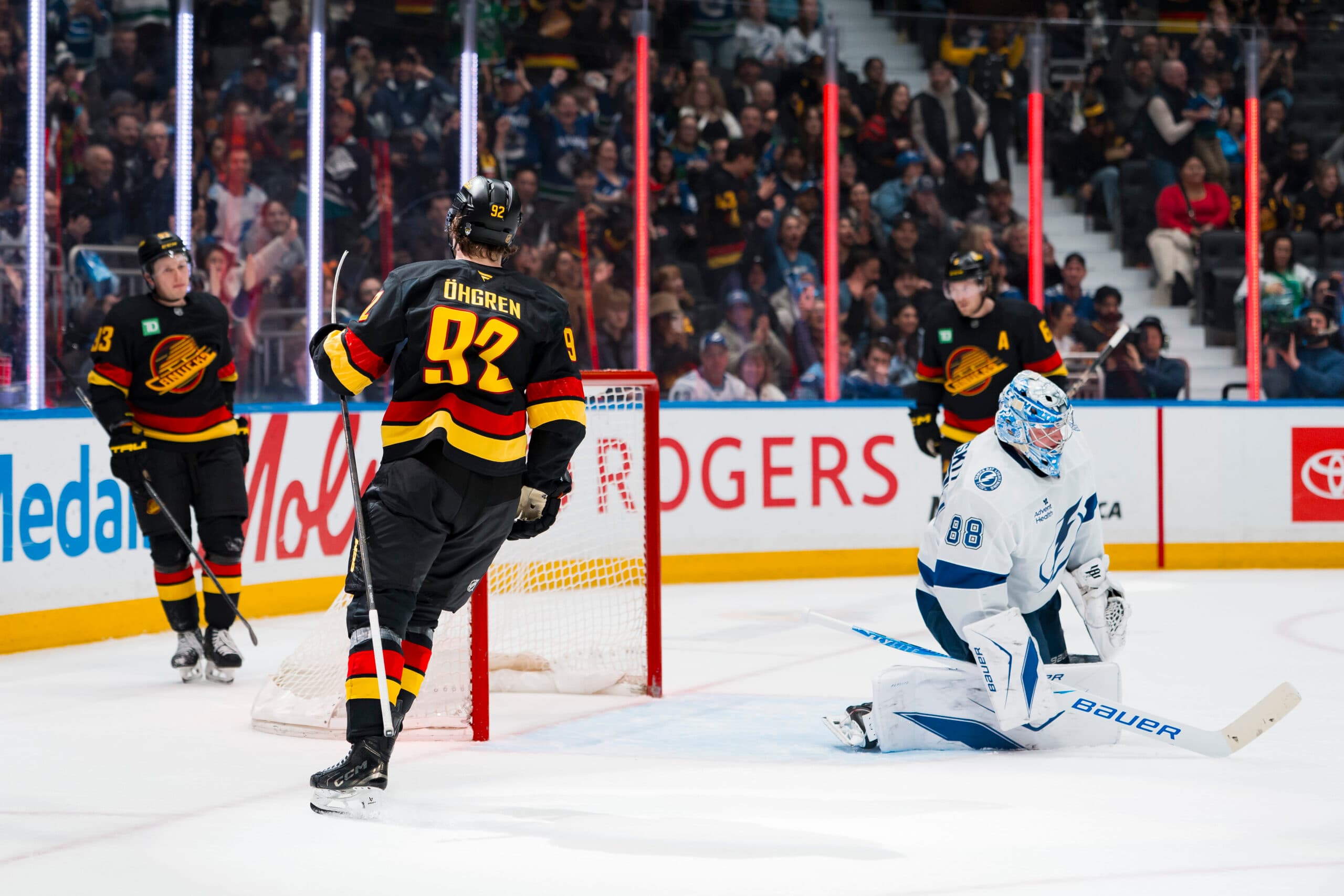
Photo credit: © Bob Frid-Imagn Images

By Elijah Ford
Aug 18, 2026, 16:00 EDTUpdated: Aug 18, 2026, 14:02 EDT


At the start of March 2025, the Vancouver Canucks had unplugged the life support on their season. They were firmly at the bottom of the NHL standings, the word “rebuild” had finally been uttered by then-President of Hockey Operations Jim Rutherford after trading Quinn Hughes, and overall, at that point, the organization did not have much to play for.
After being shellacked by the Dallas Stars 6-1 at home on March 2, then-Canucks head coach Adam Foote made a minor adjustment to his forward lines going into their game two days later against the Carolina Hurricanes. He rotated his wingers to put Liam Öhgren with Brock Boeser and Marco Rossi, who had already started playing together after Rossi returned to the lineup from injury in late February.
The trio did not instantly spark a connection that night. They were a minus-one at five-on-five, and their advanced numbers were objectively bad. But, to his credit, Foote kept the line together for their next game against the Chicago Blackhawks. In that game, the newly formed trio began creating chances at an exciting rate. Boeser ended with two goals, Rossi with an assist, and Öhgren was a plus-one in a 6-3 win. From there, the line started to rapidly develop its chemistry.
Before March 1, Boeser and Rossi were having miserable seasons. Boeser had scored only 12 goals and 26 points in 53 games, while Rossi had dealt with three separate lower-body injuries in five months, allowing him to play only 28 games up to that point. After being put on a line together with Öhgren at the start of the month, however, both of their seasons did a full 180. Boeser finished the last 22 games of the regular season at a point per game, while Rossi finished just under that with 20 points. Öhgren’s energy and checking continued to impress fans night to night, while the newly formed BRÖ line, as named by our own Lachlan Irvine, became a lightning rod in an otherwise lifeless season for the Canucks.
When asked about his new linemates and why they were finding success together, Rossi had a simple but insightful answer: “Everyone is bringing something different to the line, and I think that’s the key,” Rossi said. “[Öhgren] brings the speed. He goes on the forecheck really hard, and when he gets the puck, he finds us, and he tries to get open. Brock has a really good shot, so I try to find him whenever I have the puck.”
Those comments were refreshing for Canucks fans to hear. In a season full of injuries, trades and general instability in the lineup, hearing a player describe a line that fits each other’s games and can be played together night to night was a very welcome sound.
While watching the trio shift by shift, it became clear the playstyles of Öhgren and Rossi fit Boeser’s game like a glove. Both Öhgren and Rossi tend to do some of their best work behind the net and along the half-wall. With Öhgren’s physicality and Rossi’s low centre of gravity, both are able to win a good share of battles low in the offensive zone. One of Boeser’s best qualities on the ice is his ability to sense soft spots in the high-danger areas of the offensive zone, around the net and in the slot. With his linemates consistently possessing the puck down low, this became a lethal trait, with Öhgren and Rossi able to find Boeser in those areas during offensive-zone cycles.
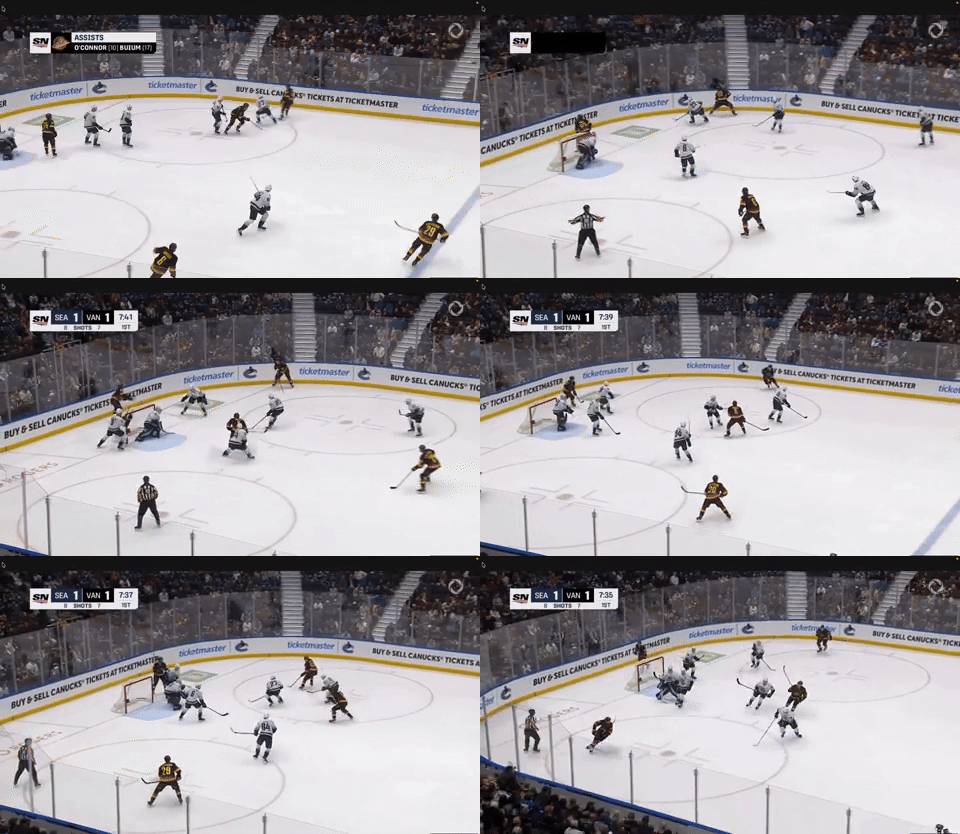
Öhgren and Rossi also helped offset some of Boeser’s biggest flaws on offence. In particular, Boeser’s speed and ability to create controlled zone entries have always been weaker parts of his game. His BRÖ linemates helped offset this, as both of them are very comfortable carrying the puck through the neutral zone. Rossi approaches the defence with smooth skating, cerebrally reading the ice with the puck. Öhgren does it with raw speed, which forces defenders to back up quickly, creating space behind him for a potential drop pass. Here we see Öhgren’s controlled zone entry turn into a cycle down low to Rossi, which leads to a great opportunity for Boeser.
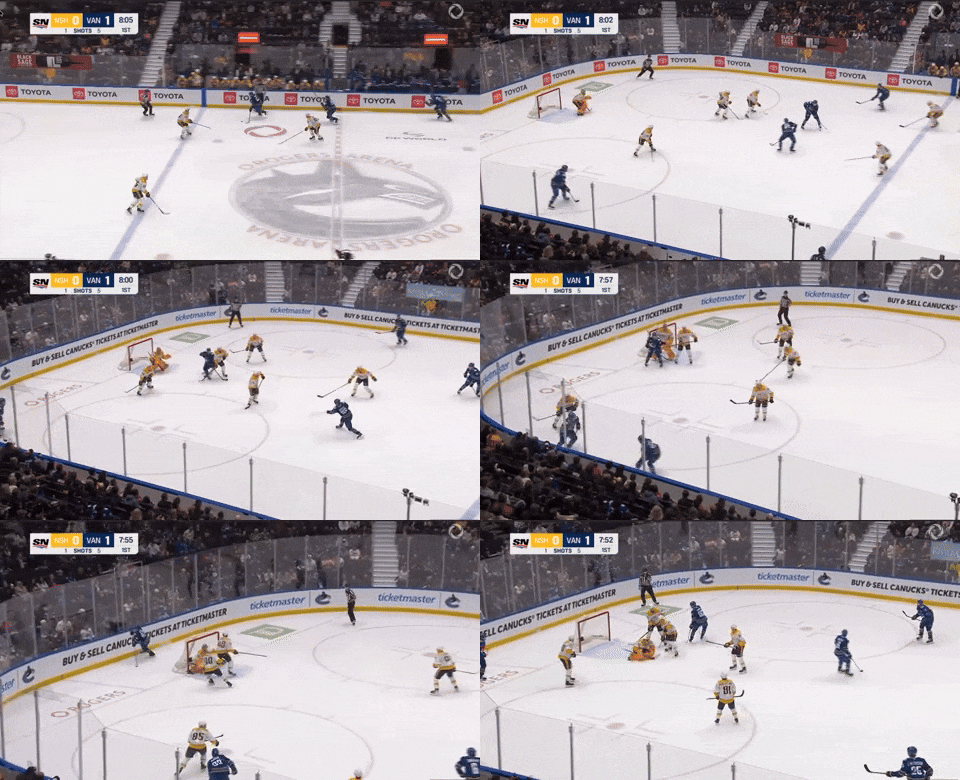
This is not to say Boeser was a passenger on this line. In fact, he was far from it. Boeser is heavy on the puck in the offensive zone, especially when he’s moving his feet the way he was late in the year. He created many turnovers along the boards for his linemates to capitalize on. Boeser is also a much better passer than he typically gets credit for. In particular, this shone on his breakout passes to streaking teammates, which created instant chances off the rush for a team that had trouble all year getting hemmed in its own zone.
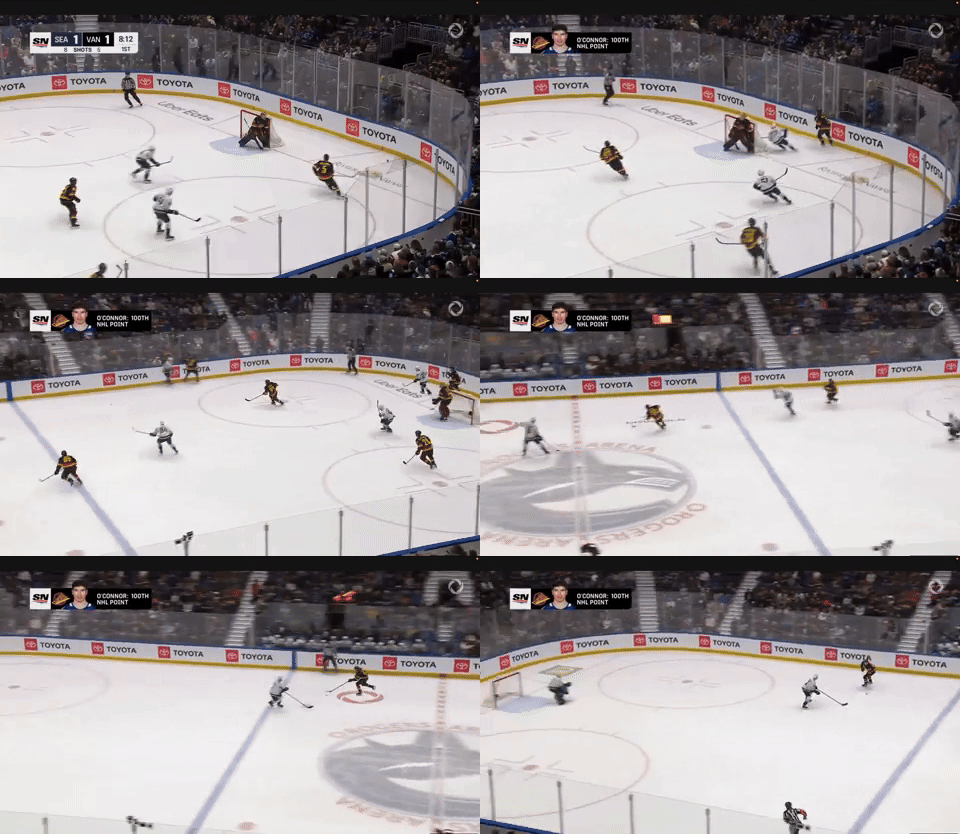
This leads into what the line needs to improve on going into next year, however: their play in their own zone. Although this line is expected to drive offence, there will be shifts when they need to hold their own on defence for an extended period. During those shifts last year, there was obvious room for improvement.
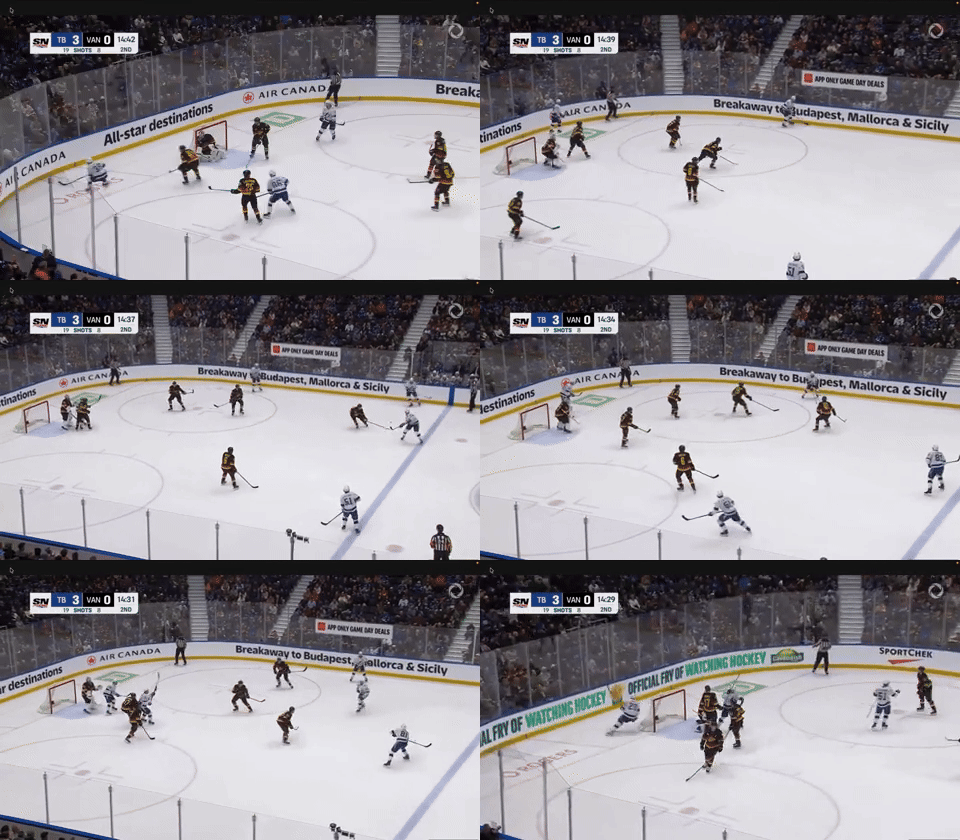
Now, it has to be noted that discussion around defensive-zone play for any specific player or line last year for the Canucks is an inexact science, as it seemed the majority of the team last year struggled to grasp Foote’s system. The BRÖ line was no exception, as exemplified by this play, in which Boeser has to literally point out to Öhgren which player he should be guarding.
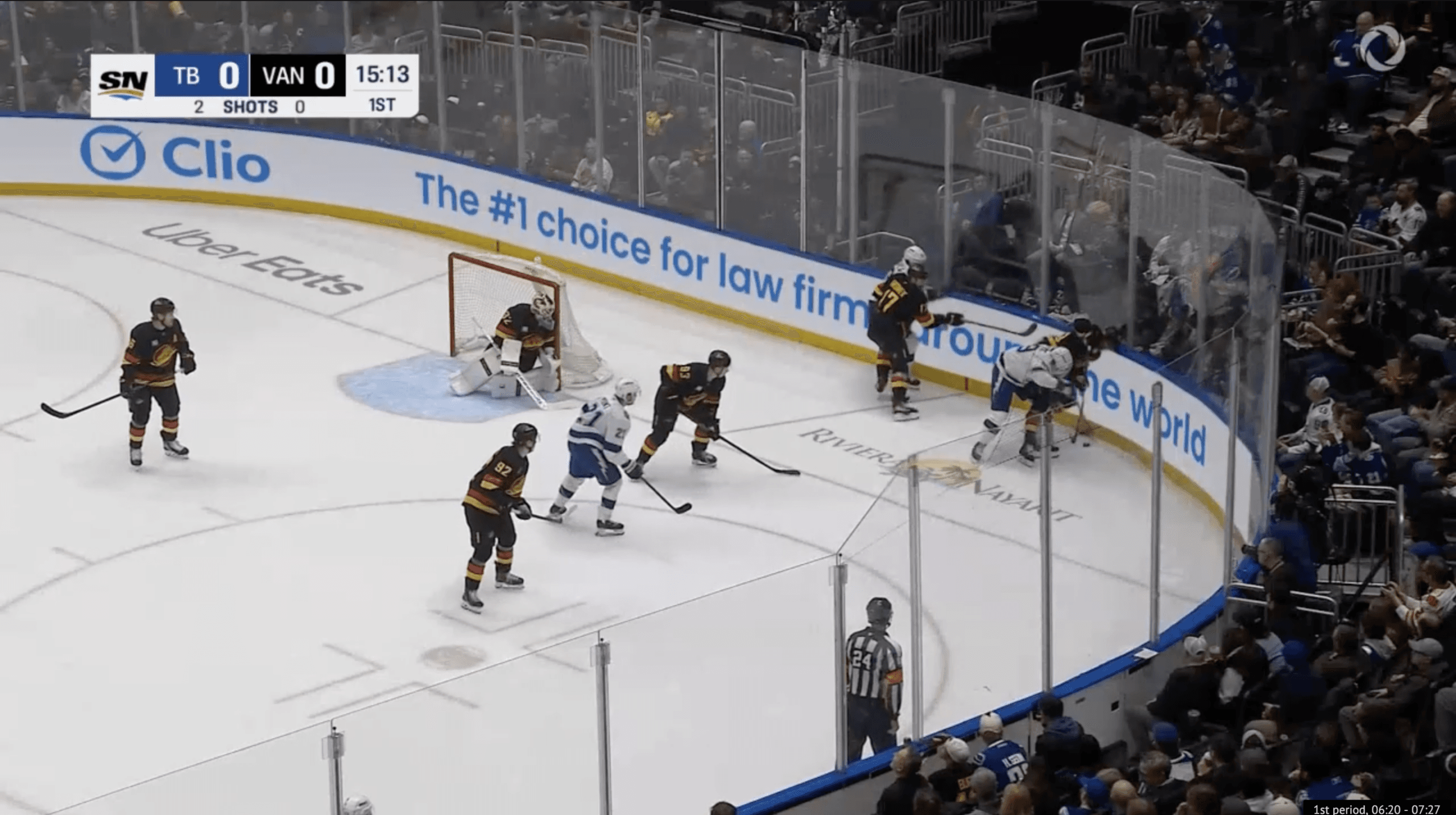
For the BRÖ line specifically, though, it was quite clear they had an itch to double-team the puck carrier as soon as possible rather than remaining in structure, which led to the defensive system collapsing more often than it should have. Boeser and Öhgren consistently dropped down much further along the boards than they were likely taught to in order to double-team the puck carrier and force a turnover, as we see here. When the puck carrier was able to slip the puck through one of the wingers to a defenceman, that player would have lots of time and space to create a play or get a shot to the net.
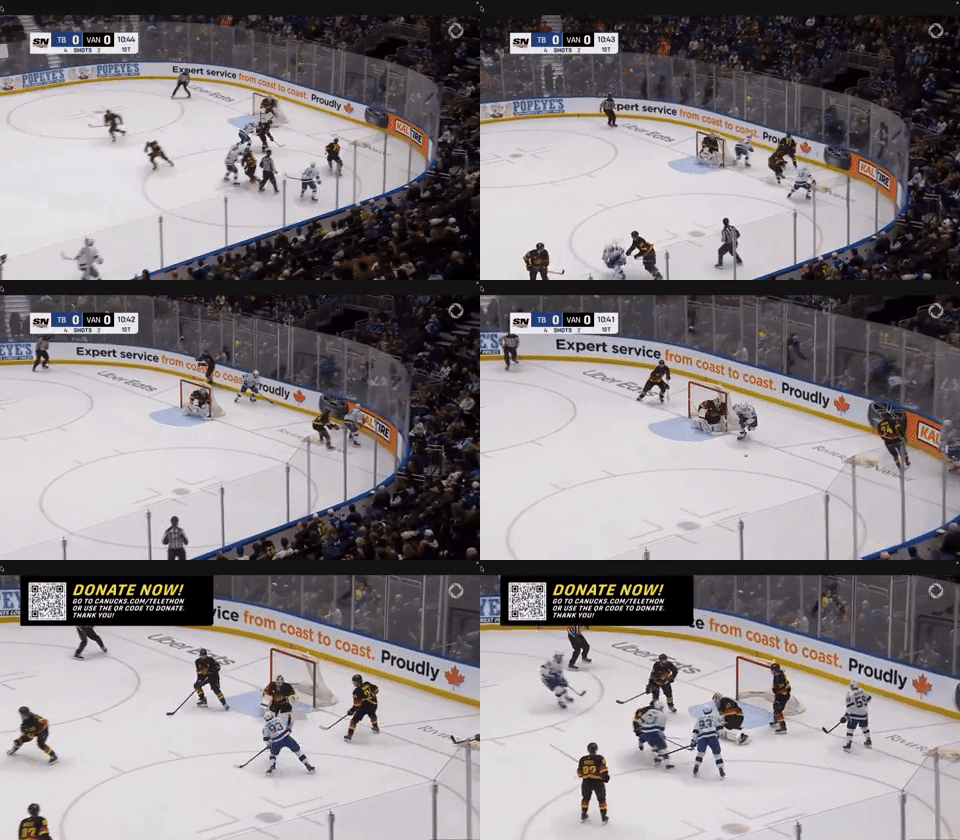
Along the same lines, they also had a tendency to simply leave the zone before confirming their defenceman had good control of the play and puck. This led to turnovers by their defenceman, which progressed into good scoring chances for their opponents more often than they should have.
These issues are correctable through coaching; however, with new head coach Manny Malhotra likely implementing an entirely new system anyway, their defensive lapses shouldn’t be setting off alarm bells. If the BRÖ line wants to take the next step to really impact winning, though, they need to prioritize the defensive side of the ice more than they did last year. Neglect is probably too strong a word to describe their commitment to defence, but while watching the line shift by shift, it was clear they lacked intensity in their own zone, especially when the team was down by a few goals.
We need to acknowledge now that forward lines rarely, if ever, remain the exact same through an 84-game regular season. Injuries, call-ups and new experimentation will happen throughout the year. The Canucks’ new coaching staff should learn from the BRÖ line’s success and decide which archetype Rossi, Boeser, and Öhgren should play if changes are needed.
For Rossi, we found he particularly excelled when he was able to be the second man in on the forecheck, reading the whole ice and searching for opportunities to pounce on the puck. He is also a phenomenal passer, so putting him with a player who is good at getting into high-danger areas like Boeser is a great fit. On paper, Rossi would work well with players like Linus Karlsson, Jake DeBrusk and Jonathan Lekkerimäki. Lekkerimäki, in particular, would be interesting to see, as Rossi may be able to help spark a breakout season for the former first-round pick.
Öhgren, despite being considered the lesser player of the three, seems to be the least dependent on his surrounding circumstances, as his style of play somewhat transcends what his linemates can help with. His best elements are his speed and relentless forechecking. Wherever he is in the lineup, those traits will be prevalent.
For Boeser, he seems to do his best work when his teammates are comfortable cycling on the half-wall in the offensive zone. A lot of times when Boeser makes a play along the boards, his first move after is to cut to the middle in hopes he will get the puck on a give-and-go. As mentioned before, he is also very good at finding soft spots in the middle of the ice when there doesn’t seem to be much room available. This would make him a good fit with a player like Filip Chytil, who can also help offset Boeser’s lack of controlled zone entries and foot speed. Other good fits could be a player like Max Sasson or… Elias Pettersson.
When watching the success of the BRÖ line, we couldn’t help but ask the question: would substituting Pettersson for Rossi on that line help spark a Pettersson bounce-back, or just break up an already effective trio? It’s impossible to know for sure, and a lot of it will have to do with how Pettersson performs individually next year, but based on history and informed speculation, it may be something the Canucks should consider trying.
According to Natural Stat Trick, the line of Pettersson, Boeser and Öhgren played almost 22 minutes together at five-on-five over three games, and the results were solid. They ended up with a 45.65 Corsi For %, which is actually better than the CF% the line had with Rossi, albeit in a much smaller sample size. We went back and watched every shift of those games, and although the tape was limited, we found a similar formula to what made the BRÖ line so successful. Pettersson and Öhgren worked well together on the half-walls, with Boeser providing support and finding lanes in the middle of the ice.
In the first clip, we see Öhgren’s forechecking ability and Pettersson’s skill on the half-wall take place in quick succession.
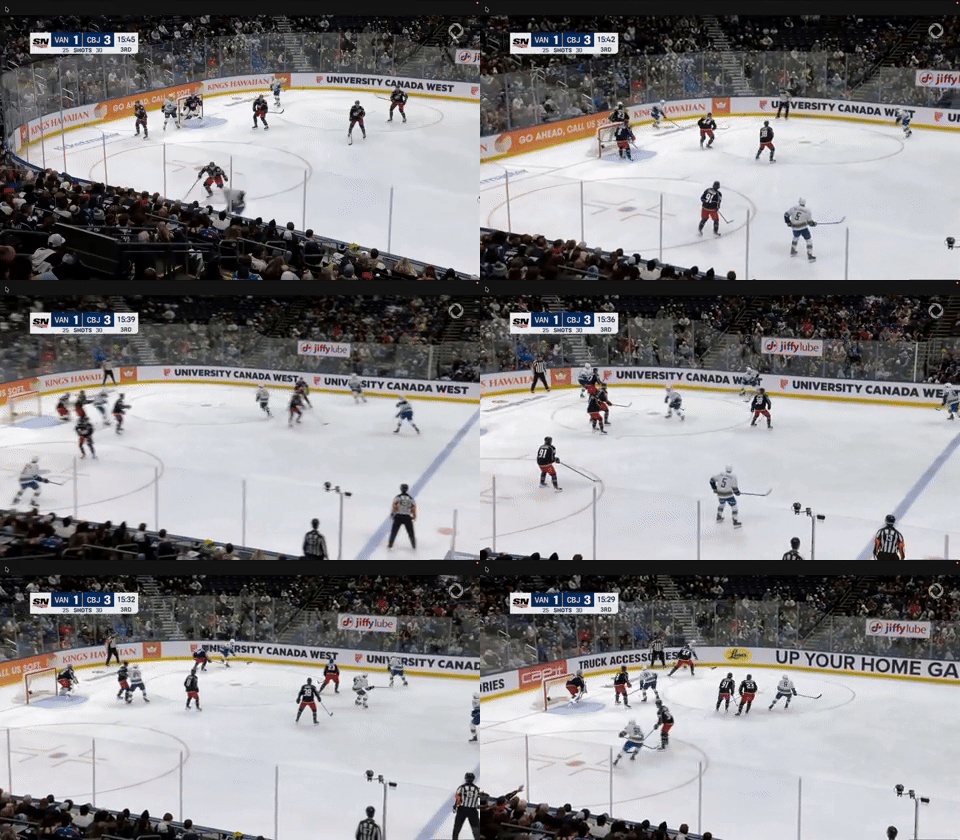
In the second example, we see Pettersson and Öhgren create a turnover below the goal line, which leads to an Öhgren shot. That shot could have easily been a pass to Boeser in the middle instead.
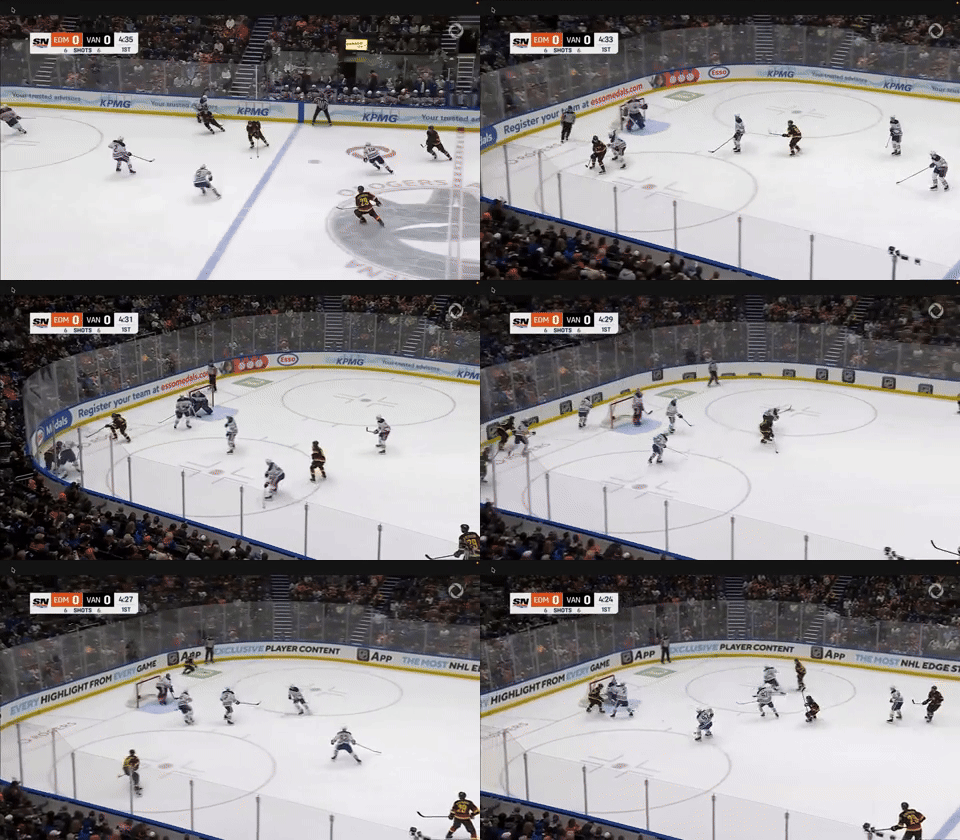
The BRÖ line was so important for the Canucks last year not just because of the chances they created, but also because of the takeaways that can be found in their success. Let’s hope the new coaching staff has identified what specifically made the trio so impactful and how they can apply those same principles to the rest of the forward group next season.
Sponsored by bet365


Breaking News
- Canucks Game Day: Looking to close out lengthy road trip with a win vs. Lightning
- Vancouver Canucks practice in Tampa Bay; Abbotsford signs defenceman to PTO
- Why did Canucks fans rate Aatu Räty higher than the rest of the league?
- What the Canucks are getting in new trade acquisitions Jacob Quillan and Brandon Buhr
- The Statsies: Tom Willander leads Canucks in xGF in overtime loss to Panthers

Vancouver CanucksTeam Cap Summary

Cap Summary
2026-27
2027-28
Projected Cap Hit
$87,295,050
$71,329,167
Projected Cap Space
$16,704,950
$42,170,833
Current Cap Space
$18,309,380
$42,170,833
Active Players
23/23
13/23
Draft Picks
Round
'27
'28
1
1
1
2
2
2
3
1
1