
CanucksArmy has no direct affiliation to the Vancouver Canucks, Canucks Sports & Entertainment, NHL, or NHLPA
Canucks: A look at the most painful points of two recent NHL rebuilds, and what came next for each
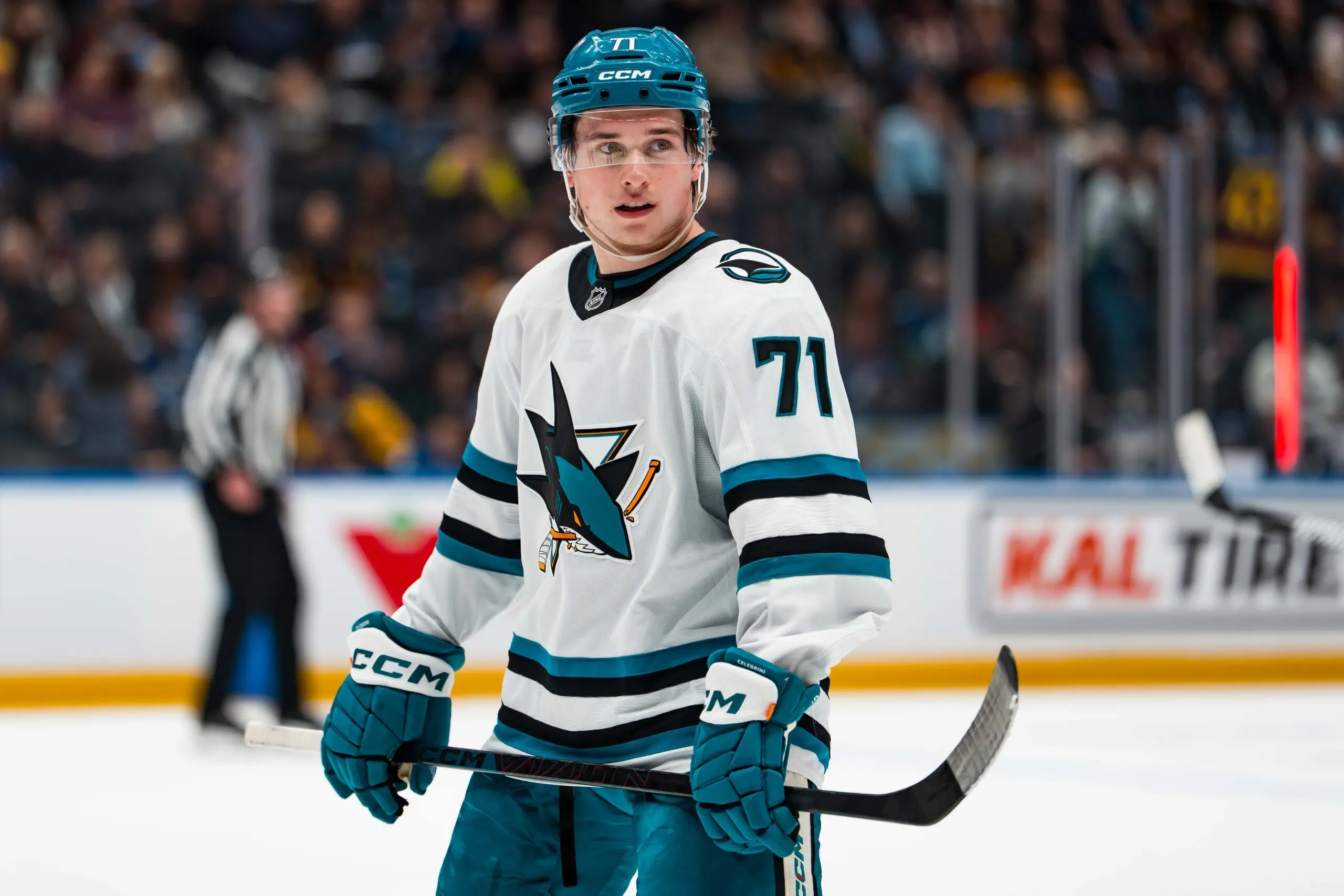
Photo credit: Bob Frid-Imagn Images

Oct 28, 2026, 17:00 EDTUpdated: Oct 28, 2026, 14:16 EDT


No one said rebuilding was easy.
As the losses have begun to pile up for the Vancouver Canucks early in the season, players, the head coach, and fans alike have begun to show more frustration with the on-ice results from both an individual and team perspective.
For the first few losses, it was relatively straightforward for everyone. “We’re not supposed to win” and “Even when we lose, we win” were common lines you’d read on social media, and the players and coach didn’t seem all that concerned, either. For the most part, the effort was there in those early losses, and the club entered the season with a mantra of “wins and losses don’t matter” in the early stages of their rebuild. But during the club’s recent 10-game losing streak — which they snapped on Tuesday night with a great comeback win over the Anaheim Ducks — the tone has certainly shifted both among fans and inside the Canucks’ locker room.
During the recent homestand, Manny Malhotra pointed to a lack of effort from his players, Elias Pettersson talked about how much all the losing “sucks”, and Brock Boeser called the Canucks’ 5-2 loss to the Detroit Red Wings “embarrassing” last week.
Pain is part of the process, but there is a difference between the standard bumps and bruises that a franchise goes through during a rebuild, and cruel and unusual punishment.
Let’s walk through a couple of the NHL’s most recent successful rebuilds, looking at their most painful moments to see how the Canucks’ pain stacks up against the rest of the field, and what could be coming next.
Ottawa Senators (2017-2024)
Worst Moment: Nine-game losing streak, Dec. 29th, 2019 – Jan 16th, 2020
After reaching the Eastern Conference Finals in 2017 and making it to game 7 before losing to Chris Kunitz and the Pittsburgh Penguins in overtime, the Ottawa Senators spent a few years in obscurity.
Stuck between the reality of an aging roster and owner Eugene Melnyk’s desire to win, GM Pierre Dorion walked a tightrope, often making moves that seemed to contradict one another. One moment, the club would trade Mark Stone to the Vegas Golden Knights; the next, it would trade draft capital for Vladislav Namestnikov and Mike Reilly.
During the Senators’ darkest hour, the club endured multiple extended losing streaks, including two nine-game stretches. The 2019-2020 streak, however, was particularly painful.
As part of a 20-game stretch in which the club won only three times, the Senators’ nine-game losing streak stemmed from a lack of finishing and goaltending. During the streak, only one of the Senators’ top five players by shots on goal posted a shooting percentage over five percent: Connor Brown.
Brady Tkachuk, the club’s leading scorer, was only 20 years old, and hadn’t developed into the star he would become. Drake Batherson, the only forward still on the Senators, only played 23 games that season.
The lack of star power up front, combined with a defence group with only one 20-point scorer, meant that when Tkachuk or Connor Brown, the team’s two highest-scoring players, went through a shooting lull, the club’s ability to produce was severely hurt.
At the other end of the rink, the Senators goalie situation was also in dire straits. Beloved Senators goalie Craig Anderson just so happened to go through the worst stretch of his season. In the five games he played during the nine-game streak, Anderson posted -4.68 goals saved above average, ranking 67th, last in the NHL.
During the nine-game losing streak, the club was fourth-last in shooting percentage at 7.17%, and second-last in save percentage at .874.
Although Chabot, Tkachuk, and Batherson would eventually become the backbone of the Senators’ next playoff team, their lack of production, combined with the lack of direction and results from the club, proved to be a cautionary tale that even when the first wave of help arrives on shore, the pain doesn’t stop immediately. It’s merely the first wave in a series of many that will hopefully push a team from the bottom of the standings all the way to the mountaintop.
For the Senators, the second wave of talent would soon be on their way.
Thanks to the Erik Karlsson trade, which sent the Senators a first-round pick that would eventually become the third overall selection, the Senators drafted Tim Stutzle. Then, with their fifth overall selection, the Senators drafted Jake Sanderson.
Stutzle is now the Senators’ top forward. Four seasons with 70-plus points, including a 90-point season, the 24-year-old German has done a magnificent job driving play up front and has solidified himself as a quality top-line centre.
Sanderson, meanwhile, is now the Senators’ top defenceman and arguably their most impactful player. With two consecutive 40-assist, 50-point seasons and defensive metrics that are even more impressive than his point totals, Sanderson has quickly become a top-10 defenceman in the league and may still have room to grow offensively.
In one draft, the Senators selected the two players who will go on to define the current and next generation of Senators teams as they attempt to win the club’s first Stanley Cup.
San Jose Sharks (2021-2026)
Worst Moment: Back-to-Back games with 10 goals against, November 2nd & 4th, 2023
They say it’s always darkest just before the dawn, and for the San Jose Sharks, the 2023-24 season was by far the worst in their rebuild. After going winless in October, the club entered November not only with its first win, but also its first game with fewer than three goals allowed and more than two goals scored.
Collectively, the club sported a shooting percentage of just 4.1% and an 89.6% save percentage. Already struggling to put shots on goal, averaging only 24.6 per game up to that point, the Sharks couldn’t shoot above their talent, so if their losing streak was going to end, their only hope was one of their goaltenders putting up an otherworldly performance.
I guess the Sharks didn’t specify those performances had to be positive.
On November 2nd, the Canucks, off to a great start in what would become a division-winning season, walked into the SAP Center and scored 10 goals on the Sharks.
Right out of the gate, Nico Sturm put the Sharks behind the eight ball with a double-minor high-sticking penalty. The Canucks capitalized on both power plays, and the goals kept coming.
Four in the first period, another four in the second, and two more in the third gave the Canucks their first 10-goal game in 31 years. With the Canucks getting nine multi-point performances, including a five-point night from Quinn Hughes, the Sharks couldn’t keep up with the high-end offensive talent the Canucks possessed at the time.
Two nights later, the Sharks welcomed the Pittsburgh Penguins to the SAP Centre, and for the second straight game, an early penalty sank them. This time, Reilly Smith capitalized on an Anthony Duclair roughing minor, quickly putting the Penguins up a lead they wouldn’t surrender. 11 minutes later, Smith scored his second goal, the second of what would be four points on the evening. A five-goal second period would put the game out of reach, before the Penguins would eventually finish the evening with a three-goal third period.
Jake Guentzel’s goal at 12:10 of the third period would put a stamp on Sharks history, marking the first time the club would surrender 10 goals in back-to-back games and making it the first NHL team to do so post-expansion. The last club to do so was the Boston Bruins in December 1965.
What came next for the Sharks?
However, the Sharks’ darkest hour would give way to light. After the 2023-24 season, the Sharks won the NHL’s draft lottery, which gave them the right to select Macklin Celebrini first overall.
Macklin Celebrini has since become the NHL’s brightest superstar. In his sophomore season, Celebrini recorded 45 goals and 70 assists, a staggering 115-point campaign that saw the young phenom break the Sharks’ single-season points record, previously held by Sharks legend and Hockey Hall of Fame Centre Joe Thornton. Internationally, Celebrini is already one of Team Canada’s most trusted players, playing on the top line alongside Nathan MacKinnon and Connor McDavid at the 2026 Olympic Games.
If the Canucks’ rebuild landed them a player of Celebrini’s calibre, they would not only be extremely lucky, but they’d immediately have one of the brightest futures in the league.
What it all means for the Canucks
With some proactive, savvy moves; the patience and willingness to take some pain; and perhaps a touch of lottery luck, the team can transform itself into a contender. Right now, however, Canucks fans need to bear with some losses, and ownership and management have to commit to seeing it through and keep moving out any valuable veterans who won’t be part of their long-term plans. After all, the absolute worst-case scenario would be for all this losing to be for nothing, right?
This season is only the first of many chapters in this rebuild. Enjoy the ride, and you’ll find an even greater love and appreciation for the end of the story.
READ NEXT: Canucks prospect Caleb Malhotra may have had his “coming out party” at NCAA level
Sponsored by bet365


Breaking News
- Canucks: A look at the most painful points of two recent NHL rebuilds, and what came next for each
- NHL Notebook: Blue Jackets place ex-Canucks defenceman Carson Soucy on NHL waivers
- ‘Glad to be somewhere I’m wanted’: Jacob Quillan excited for new opportunity with Canucks
- The Statsies: Willander and Öhgren’s underlying metrics stand out in Canucks’ wild comeback vs. Ducks
- The Stanchies: Lekkerimäki has arrived, Elias Pettersson goes full Macbeth, and Meriläinen gets his win

Vancouver CanucksTeam Cap Summary

Cap Summary
2026-27
2027-28
Projected Cap Hit
$87,295,050
$71,329,167
Projected Cap Space
$16,704,950
$42,170,833
Current Cap Space
$19,522,652
$42,170,833
Active Players
23/23
13/23
Draft Picks
Round
'27
'28
1
1
1
2
2
2
3
1
1