
CanucksArmy has no direct affiliation to the Vancouver Canucks, Canucks Sports & Entertainment, NHL, or NHLPA
Should the Canucks move Thatcher Demko before his trade protection kicks in?
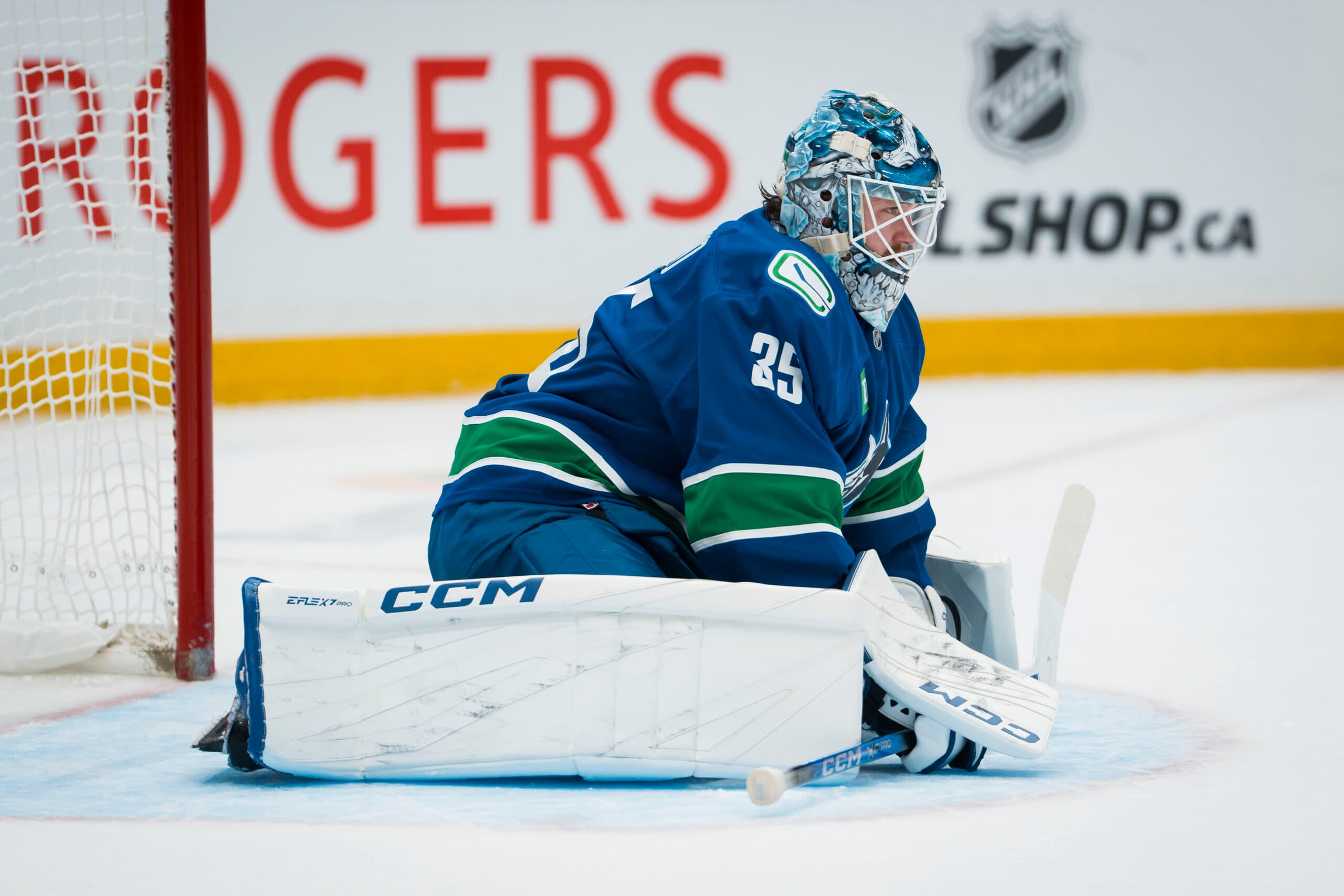
Photo credit: © Bob Frid-Imagn Images

Jun 9, 2026, 10:00 EDTUpdated: Jun 8, 2026, 23:54 EDT


Thatcher Demko’s future is one of the more interesting questions of the Vancouver Canucks’ offseason.
If the Canucks wanted to make a move, there is still a window. Demko’s three-year, $25.5 million extension begins in 2026-27, carrying an $8.5 million cap hit through 2028-29. According to PuckPedia, the deal also comes with full no-movement protection once it begins.
That does not mean a trade is at all likely. But once July 1 passes, the Canucks’ leverage changes dramatically, and Demko gains more control over his future.
This is a conversation Vancouver has been through before. Elias Pettersson’s name hovered around the trade block during the organization’s downfall. Still, the Canucks opted not to move him before his contract became a difficult piece of their cap picture. Pettersson is signed through 2031-32 at an $11.6 million cap hit, and his full no-movement protection could make an already complicated situation even harder to navigate.
That could loom large in how the new Canucks brass approaches the future here. The old regime did not need to extend Demko when they did. He still had a full season left on his previous deal, and after years of injuries, there was a reasonable argument for waiting to see whether his body could hold up before committing another three years at premium starter money. Instead, Vancouver gave him the extension and watched him start only 20 games.
That makes a lesser return easier to justify than it would have been two years ago. If the Canucks trade Demko before July 1 and receive less than his peak on-ice value suggests, it may look underwhelming in isolation. But clearing the full contract, avoiding three years of injury risk and preserving flexibility through the early stages of a rebuild could still be the better long-term outcome. The alternative is to bet on a healthy Demko, let his protection kick in, and accept that the organization may have a much harder time pivoting if the same health concerns return.
The argument for moving him is relatively straightforward. Demko is 30, expensive, and coming off another injury-shortened season. Vancouver announced in January that he would undergo hip surgery and miss the rest of the 2025-26 campaign, with the expectation that he would be ready for training camp. The San Diego-born goaltender finished the year with a record of 8-10-1, 2.90 goals-against average and .895 save percentage in 20 starts.
Plus, Vancouver already has Kevin Lankinen signed for four more years, giving the Canucks another veteran goalie on the books through 2029-30. Although, maybe spending $13 million between the pipes is part of the team’s plans to reach the cap floor.
There is also a recent internal precedent for acting before an extension begins, albeit under Jim Rutherford. The Canucks traded Conor Garland to the Columbus Blue Jackets before his six-year, $36 million extension kicked in, receiving a 2028 second-round pick and a 2026 third-round pick. That move showed the organization is willing to move off a player before new money and term fully take hold if the fit no longer makes sense.
Demko’s market would be far more diluted than Garland’s. A healthy Demko might still be one of the most talented goaltenders available if a contender misses on its first choice. But interested teams would be taking on three years at $8.5 million for a goalie with repeated injury setbacks. That likely lowers the return unless Vancouver retains salary or attaches a sweetener.
That may be the real question for Ryan Johnson and Co.: is clearing the contract more valuable than winning the trade?
Demko has publicly suggested his surgery should address his recurring injury, and if he arrives at training camp healthy, his value could rebound quickly. The risk is that by then all leverage will be gone.
The more realistic read is that Vancouver would likely be open to listening, but not actively shopping him. If a team calls with a serious offer before July 1, the Canucks would be foolish not to consider it. That is part of responsible asset management. But if the Canucks are required to retain salary for the next three seasons, or attach a significant sweetener, that would realistically dampen the club’s appetite to move on.
This could be a shrewd spot for the new Canucks brass to evaluate. A healthy Demko could be one of the few pieces Vancouver has capable of recouping significant draft capital or prospects, but his presence in the room may also be deemed him too important to move on from right now. Either way, betting on a fully healthy Demko comes with a heavy amount of risk.
The Canucks do not have to force a trade. But after Pettersson, Garland and now their longtime goaltender, they should understand the danger of waiting too long. Sometimes the best move is not the one that wins a trade on paper. Sometimes it is the one that prevents a risky contract from becoming a bigger problem down the line.
Sponsored by bet365


Breaking News
- Checking in on 16 former Canucks one week into 2026-27 season
- Blackfish: Malhotra’s NCAA debut, Cootes’ AHL debut, and more
- Scenes from practice: Mancini appears set to make season debut as Canucks start road trip in Carolina
- What a $127.5 million NHL salary cap could mean for the Canucks in 2028-29
- Breaking down how the Canucks have had so much success on the counterattack

Vancouver CanucksTeam Cap Summary

Cap Summary
2026-27
2027-28
Projected Cap Hit
$88,074,947
$71,329,167
Projected Cap Space
$15,925,053
$42,170,833
Current Cap Space
$16,610,002
$42,170,833
Active Players
23/23
13/23
Draft Picks
Round
'27
'28
1
1
1
2
2
2
3
1
1