
CanucksArmy has no direct affiliation to the Vancouver Canucks, Canucks Sports & Entertainment, NHL, or NHLPA
31 days, 31 questions: Could Canucks’ Victor Mancini be poised for a breakout season?
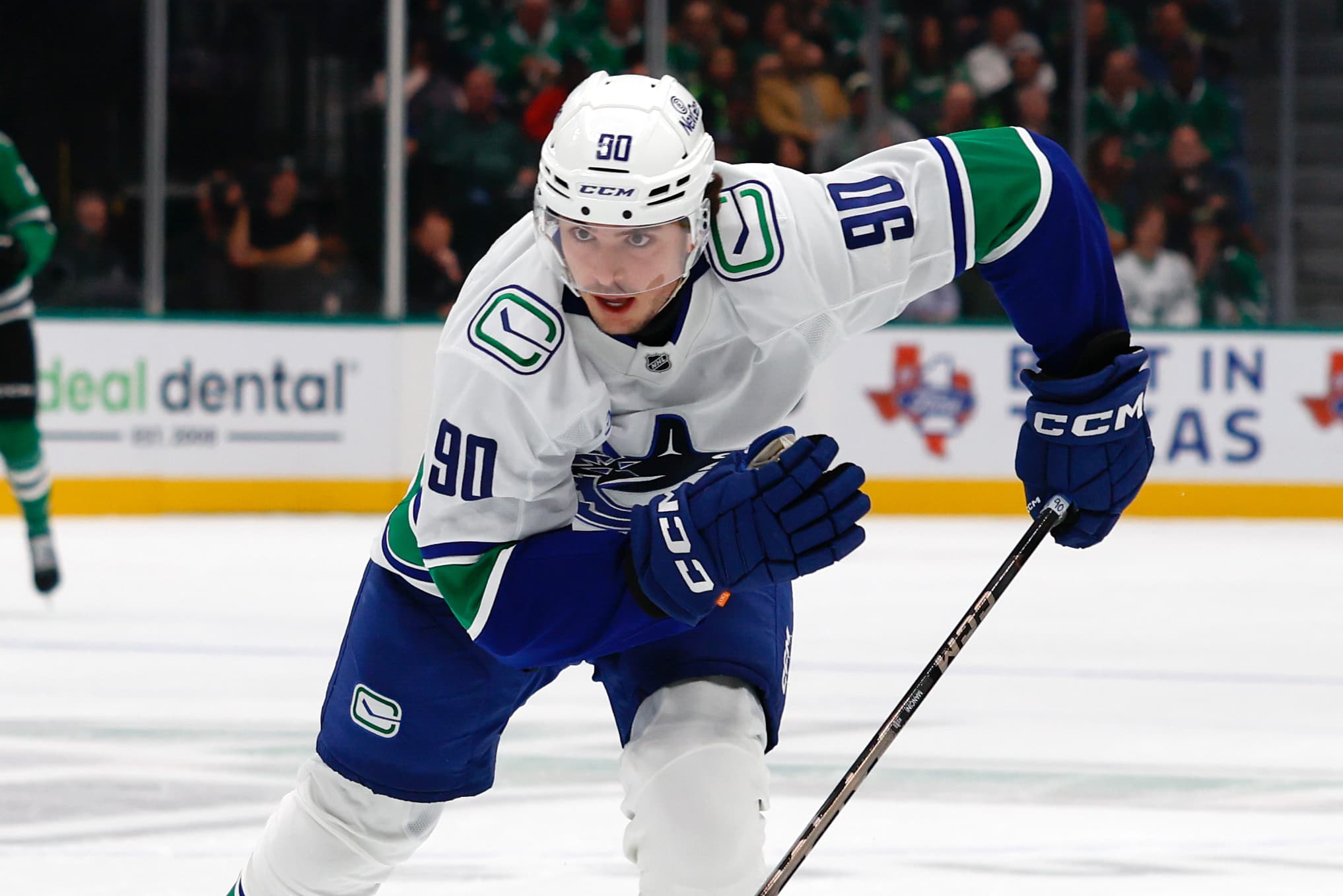
Photo credit: © Chris Jones-Imagn Images

By Elijah Ford
Aug 16, 2026, 12:00 EDTUpdated: Aug 16, 2026, 13:11 EDT


Welcome to a new series here at CanucksArmy, where over the month of August we’ll ask a new question each day about the Vancouver Canucks. We’re calling it “31 days, 31 questions”. Today, we’re examining whether Canucks defenceman Victor Mancini is poised for a breakout season in 2026-27.
When an organization is rebuilding, player development is arguably the most important department in the franchise. An organization’s ability to take a player’s raw talent and help convert it into NHL production is a huge determinant of that team’s long-term success.
The Canucks’ player development system has been hit-and-miss in recent years. They have had their share of success stories with players like Max Sasson and Linus Karlsson, who have shown exceptional growth within the Canucks organization over the past few years. However, players like Jonathan Lekkerimäki and Nils Höglander have struggled to find their games with Vancouver despite having a lot of natural skill on the ice. Moving forward, the most important project for that department may be 6’3″ right-handed defenceman Victor Mancini.
Mancini has been with the Canucks organization since early 2025 when he was one of the pieces included in the deal that sent J.T Miller to the New York Rangers. He immediately made his impact felt in Abbotsford that season, where he was a key component in their playoff run, which ultimately ended in a Calder Cup victory. In those playoffs, Mancini played some of Abbotsford’s toughest minutes, while surprising fans with his ability to carry the puck out of the zone if needed. Last year he split time between Abbotsford and Vancouver, playing over 20 games for each club. He had a good AHL season, finishing with a plus-one rating on an Abbotsford team that finished near the bottom of the standings last season.
His NHL games tell a different story. Mancini played 24 games with the big club and wound up with the worst Corsi For percentage of any player to play at least five games. It was quite clear that the Canucks’ coaching staff did not have much trust in Mancini at the NHL level last year. He averaged under 14 minutes a night during the season, playing under 12 minutes in a third of his games. Mancini was also in the 82nd percentile of offensive zone starts, which shows the staff didn’t feel he could consistently hold up in the defensive zone. Mancini was also a healthy scratch throughout the season, which culminated when he was in the press box for the final three games of the season.
However, Mancini has typically been a late bloomer. His junior career got caught up in the chaos of COVID in the early 2020s, which led to him being selected in his third year of draft eligibility in 2022. Mancini has a lot of the natural and physical tools needed to be a top four defenceman in the NHL. As mentioned, he is a towering presence on the ice, standing at 6’3″ and weighing somewhere around 225 pounds. A right-handed-shot defenceman that large in itself would make most NHL GM’s drool at the prospect of getting their hands on that player. Add in the fact he graduated Magna Cum Laude with a Bachelor of Science in Business Administration, and that his straight-line speed is impressive for a man his size, and you have a prospect that checks most of the boxes when it comes to god-given tools.
So what has been holding Mancini back at the NHL level? The answer, as it does for most prospects, lies within the nuances of the game that he hasn’t been able to fully grasp up to this point.
The biggest hole in Mancini’s game right now is his inability to consistently and cleanly retrieve pucks in his own end. Arguably the most important play for a defenceman to make shift-to-shift in the NHL is to take the puck dumped into his own zone and turn it into clean breakout passes the other way. Mancini struggles to process this element of the game at this stage of his career. Too often, instead of knowing what to do with the puck before he touches it, Mancini retrieves the puck and then takes a second to survey his options. This gives the forechecker more time to smother the puck along the boards and create turnovers. Also, when the forechecker is able to smother Mancini due to the extra time he allows, he has a tendency to act sporadically with the puck, shooting it blindly up the boards or flipping the puck in the air when there were other plays to be made that would retain possession.
Overall, poise is the biggest thing Mancini has struggled with at the NHL level. He even said as much when speaking about the elements of his game he wants to improve over the summer. “I feel like my play can be sporadic,” Mancini said. “I know you don’t have to do anything crazy at the NHL level, I don’t have to force opportunities, the opportunities will come.”
His current lack of poise also shows in his skating, which is a work in progress. Mancini has a tendency to get “happy feet” under pressure, where he tries to use his skating to avoid forecheckers rather than simply surveying the ice to find a better play. He gets away with it from time to time, as Mancini is generally a solid skater for his size. His speed when he gets a head of steam is impressive, and when he’s at top speed he is usually in good control of the puck and his body, which allows him to carry play up ice better than most. His details, however, still need improvement. Although he has good speed after a few strides, Mancini’s quickness is well below average for an NHL player. His agility is also quite weak, even for a player as big as he is. This allows forwards to create space for themselves in the corner against Mancini rather easily. His lack of quickness also makes him susceptible to getting beat to the puck consistently on simple dump-and-chase plays, as his first stride after pivoting is not where it needs to be. “You can never be too good of a skater,” Mancini said. “I want to work on calming my feet down”
A big element that goes into general poise and calmness on the ice is having confidence in your abilities from play-to-play. This is another element that Mancini has brought up consistently in interviews when discussing his game. “Just getting more confident, I talk about that a lot,” Mancini said. “When I’m confident, it doesn’t feel like I’m rushing plays; the game slows down.” When Mancini plays with swagger, as he did in Abbotsford, he has the ability to make plays that not many players his size can. Unfortunately for him, other than Filip Hronek, no other defenceman played with any confidence in Adam Foote’s defensive zone system last year. Foote’s hybrid man-to-man system proved difficult for the Canucks’ young defencemen to adjust to, considering the scheme is significantly different from what is typically taught through minor and junior hockey. A confidence boost should be brought by his former head coach in Abbotsford, Manny Malhotra, now behind the bench in Vancouver. It’s possible that a familiar face at head coach who he’s already had success with could be exactly what Mancini needs to spark a breakout season.
And a breakout season is absolutely on the board for this player; Mancini became more impressive with every shift we went back and reviewed. His motor cannot be questioned; Mancini brings a contagious energy to the ice whenever he is on the blueline. He is unafraid to use his size to knock opponents off the puck in the corner, or to clear the front of the net. He is good at getting shots on net from the point, and he typically makes the right choice when put in position to either pinch or fall back on defence.
What Mancini needs to do to become a night-to-night top six NHL defenceman is to get better at reading plays in his own zone. Although Mancini is often described by himself and others as a two-way defenceman, in an ideal world he would shift into a defensive defenceman with offensive upside. Mancini simply does not have the offensive awareness, agility, or stickhandling ability to be a real play driver in the offensive zone. He can make the simple plays, and as mentioned, he is good at carrying the puck into the zone, but that’s about where his offensive skillset ends. His offence is not good enough to offset defensive lapses, and he still makes plenty of those.
Too often, a puck would be played into Mancini’s corner, then reversed to the other corner as Mancini’s check raced to the front of the net. Because of his lack of agility, he often got beat to that spot, allowing high danger scoring chances. With Mancini’s quickness being below average, he needs to offset that with his IQ, knowing where to be before a play is made in the defensive zone. Hopefully this comes with time and experience as defencemen typically take longer to develop than forwards do.
Overall, it’s hard not to be excited about Mancini’s potential. He has all of the talent needed to be a lesser, younger version of Tyler Myers for the Canucks moving forward. What will ultimately decide his future, though, will be his ability to develop into a processor rather than a reactor. Right now Mancini is just a small step behind when it comes to nuances of playing NHL hockey shift-to-shift. If Malhotra and the Canucks’ coaching staff can help tutor his hockey IQ and sharpen his consistency in his own end, don’t be surprised if by the end of the year Mancini has developed into a legitimate top six defenceman with upside moving forward.
Sponsored by bet365


Breaking News
- Blackfish: Romani opens strong, Cootes continues to impress and Malhotra shows his offensive potential
- Scenes from morning skate: Chytil to make season debut for Canucks vs. Panthers
- What does the younger Elias Pettersson’s breakout mean for the Canucks and their rebuild?
- Kole Lind talks signing in Abbotsford, why he’s impressed by Braeden Cootes, and more
- Is the Canucks’ awful penalty kill hurting their ability to play tough?

Vancouver CanucksTeam Cap Summary

Cap Summary
2026-27
2027-28
Projected Cap Hit
$88,074,947
$71,329,167
Projected Cap Space
$15,925,053
$42,170,833
Current Cap Space
$17,259,555
$42,170,833
Active Players
23/23
13/23
Draft Picks
Round
'27
'28
1
1
1
2
2
2
3
1
1