
CanucksArmy has no direct affiliation to the Vancouver Canucks, Canucks Sports & Entertainment, NHL, or NHLPA
Why finishing last in this particular 2025-26 season is so important for the Canucks
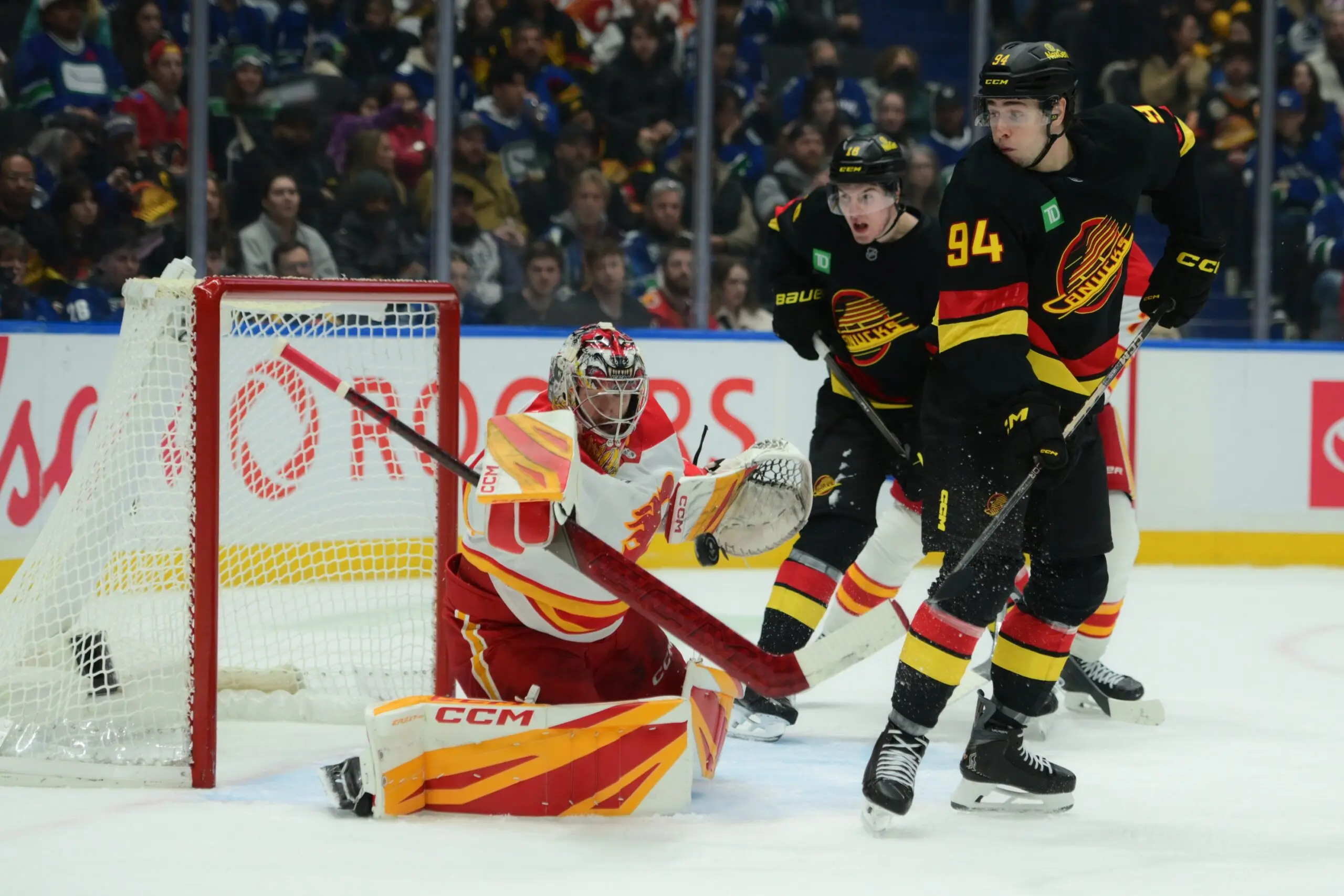
Photo credit: © Simon Fearn-Imagn Images

Feb 24, 2026, 12:30 ESTUpdated: Feb 24, 2026, 12:28 EST


The concept of tanking is hardly a new one in Vancouver Canucks circles. This is a team that has tanked before, and there’s a long and storied history of so-called “tank commanders” suiting up for or coaching this franchise.
But has there ever been such a concerted focus on and desire for the Canucks to finish dead last in a season as there is right now? The answer would seem to be “no,” and that demands at least a bit of an explanation.
After all, to say that everything comes down to this singular season would be inaccurate. Even the 77-year-old Jim Rutherford can admit this is a long-term process. Even the most optimistic prognosticators will say this rebuild might take at least two to three years. That means that the Canucks will almost certainly hang around the bottom of the standings for a while yet. The tank will continue beyond 2025-26, is what we’re saying.
So why is finishing last this year, specifically, being held up as a goal of such importance?
As it turns out, there are several reasons.
The first is, quite obviously, immediacy. Everyone is talking about this season because it’s the current one. Moreover, the Canucks are already in last place and have been for quite a stretch. It’s a little easier to suggest, and to swallow, a team staying in last place than cheer for your team to actually drop in the standings. This boat was never really floating, so it’s easier to justify hoping it stays sunk.
But there is a little more to it than that.
As has been noted before, the 2026 draft class is virtually built for tanking. In the past, we’ve seen tanking not work out for teams. They finish in last, but they lose the lottery, and so they aren’t really rewarded for all that losing. They have to settle for a lesser prospect.
But the 2026 NHL Entry Draft is unique in that it’s both top-heavy and specifically led by three top-tier talents. Gavin McKenna, Ivar Stenberg, and Keaton Verhoeff have all been neck-and-neck for the distinction of top prospect this year, and while the Canucks might prefer one of the two forwards in that trio, any would be a fine prize for a tanked season.
To understand what we’re getting at here, you have to understand the harshness of the modern draft lottery. A team that finished in last place used to have up to a 48% chance of landing the first overall pick (under the 2000-2012 lottery model). Nowadays, however, the team that finishes last has only a 25.5% chance at the first overall pick and a subsequent 18.8% chance at the second overall pick.
What that means is that the team that finishes last is actually most likely, to the tune of 55.7%, to draft third overall. And what that really means is that, no matter how hard they tank, the Canucks will walk into the draft lottery with their likeliest outcome being the third overall pick in the 2026 NHL Entry Draft.
In most years, that would be a colossal disappointment. To complete a campaign of excessive losing, only to miss out on both the best prospect in the draft and the runner-up, is a brutal result. And it would still be at least a little disappointing this year, too. Even if the Canucks hold all three top prospects in relatively equal regard, they’d surely like the freedom to make their selection all the same.
But unlike most drafts, there just isn’t that notable talent drop-off between first overall and third overall that there normally is. In other words, dropping from first overall to third overall is the least consequential it has ever been in this particular season. Sooner or later, the ongoing rebuilding process makes the tanking process more difficult.
Which makes this the best and most rewarding season to really shoot for last overall. It’s the season in which that finish is guaranteed to yield the best prospect, regardless of the lottery.
But there’s even more to the timing than that. Another somewhat uncomfortable fact to confront about the Canucks’ rebuild is that it has already begun. Perhaps not in earnest, but there are pieces already in place that the team hopes will be part of the future they are building toward.
In this, we are mainly talking about the Canucks’ youngest pieces, like Braeden Cootes (19), Zeev Buium (20), Tom Willander (21), Liam Öhgren (22), and the younger Elias Pettersson (22).
All of those players are still in the early stages of their careers. To state right now that the clock is ticking on their prime playing days would be preposterous. And yet, a clock is ticking all the same. These players have all already begun their NHL careers. That means that their development into better NHL players, and hopefully stars, is already ongoing.
Think of it this way. Whoever the Canucks draft this year will be three years younger than Willander, who was drafted back in 2023. That’s not a problem. When Willander is 25, that player will be 22. Their prime years will still mostly overlap, allowing the Canucks to aim for a new competitive window that aligns with the majority of their youth’s expected peak.
But the further down the road draft picks come, the wider that gap becomes. A player drafted in 2027 is four years separated from Willander, a player drafted in 2028 is five years separated, and so on.
The sooner the Canucks get their pieces in place and develop at the same relative pace in the same relative environment, the better. A bird in the hand is worth two in the bush in this case, as it is in most cases.
One also has to wonder at which point the Cootes/Buium/Willander/etc. contingent starts taking the decision out of the Canucks’ hands. Inevitably, those players are going to develop, and as they do, they’re going to make it harder for the Canucks to stay down at the bottom of the standings.
All of which is not to say that tanking won’t be important in the years to come, too. The Canucks need an abundance of elite talent infused throughout their lineup, and that sort of talent usually only comes from the top of the draft.
But even if we look just one year ahead, to the 2027 draft class, we see a very different picture. That draft is said to be a little deeper, and while it’s tough to say a year-and-a-half out, it does seem to be replete with high-quality centre prospects.
But that talent is decidedly more spread out. So, it’s a little easier to imagine a scenario in which the Canucks don’t quite finish last overall next year, and still wind up rewarded with a great prospect.
Finishing last overall two, or even three, years in a row would be the absolute ideal to secure the types of players the Canucks truly need. But if they had to pick out one singular season in which tanking to the bottom of the standings was the most important, it’s this current season, hands down. If they had to pick one year to finish last overall, it would be this year.
And, conveniently enough, they’re already there. They just need to maintain that spot for the rest of the year, and they’re guaranteed at least the third overall pick, which means they’re guaranteed to get a top prospect to add to a burgeoning core that is just a few years older than said prospect.
That, more so than the immediacy of it all, is why folks are so dead-set on dead-last in 2025-26. It’s a unique and timely opportunity that the Canucks seem well on their way to making the most of.
Sponsored by bet365


Breaking News
- The Canucks have every reason to give Leevi Meriläinen a run of starts
- A look inside the Canucks early-season penalty killing struggles
- ‘Best news ever’: Max Lapierre thrilled to see Canucks put Sedins, Johnson, and Malhotra in charge
- The Statsies: Numbers back the eye test on Jonathan Lekkerimäki in Canucks’ loss to Hurricanes
- The Stanchies: 3 positives, 3 negatives, rebuilding lessons, and more from Canucks’ loss to Canes

Vancouver CanucksTeam Cap Summary

Cap Summary
2026-27
2027-28
Projected Cap Hit
$88,074,947
$71,329,167
Projected Cap Space
$15,925,053
$42,170,833
Current Cap Space
$16,790,545
$42,170,833
Active Players
23/23
13/23
Draft Picks
Round
'27
'28
1
1
1
2
2
2
3
1
1