
CanucksArmy has no direct affiliation to the Vancouver Canucks, Canucks Sports & Entertainment, NHL, or NHLPA
What the next Canucks coaching staff will have to do better (for the sake of the rebuild)
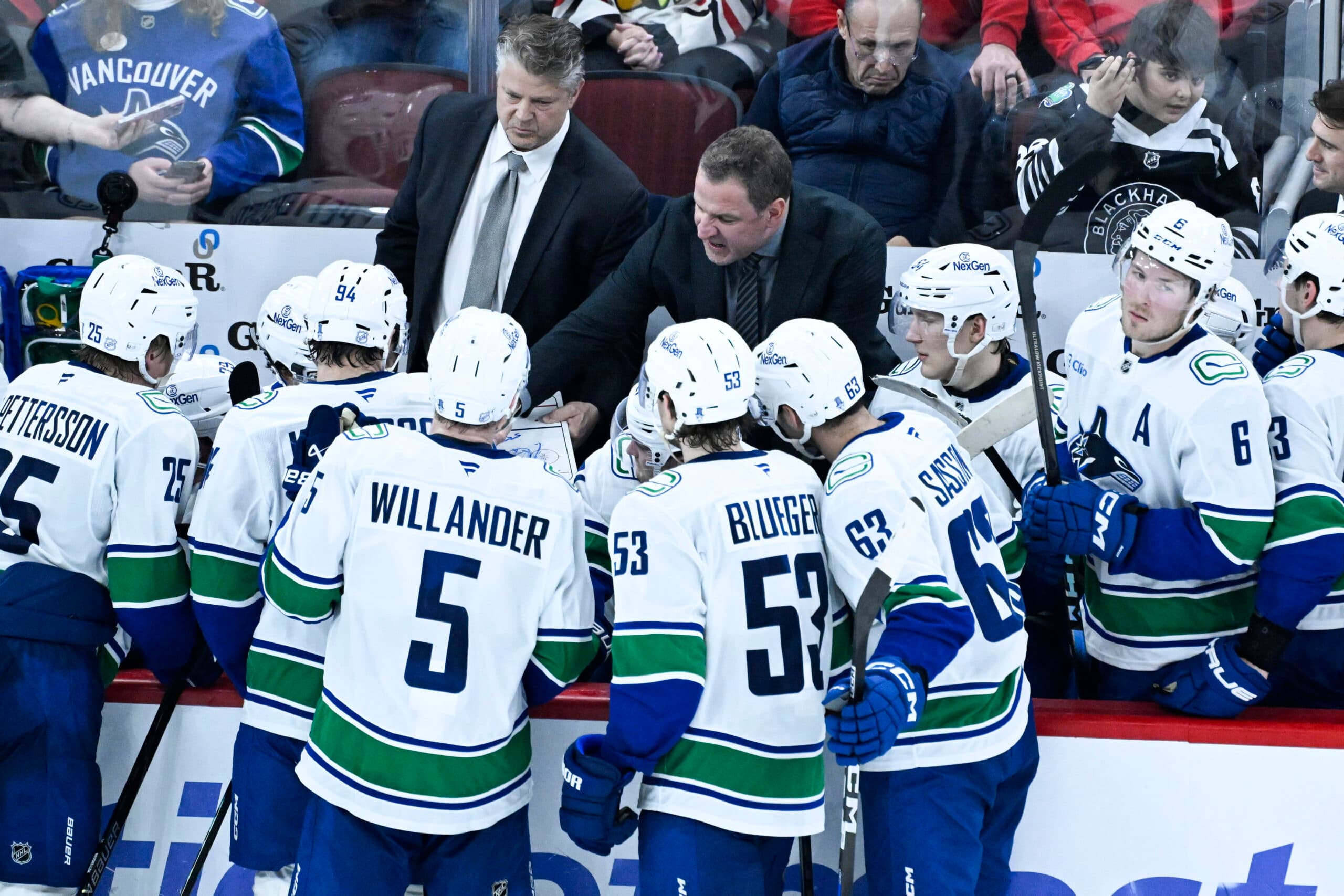
Photo credit: © Matt Marton-Imagn Images

May 21, 2026, 12:30 EDTUpdated: May 21, 2026, 12:26 EDT


The Vancouver Canucks decision to part ways with Adam Foote and the rest of the 2025-26 coaching staff was an obvious one. And there are plenty of obvious things to say about it.
Yes, firing Foote was the right decision for GM Ryan Johnson and co-POHOs Henrik and Daniel Sedin. No, it doesn’t mean the end of the tank. Clearly, the next coaching staff – whether they be helmed by Manny Malhotra, or someone else – will need to be better than the last one.
But better at what? It’s tempting to say ‘everything,’ as the Canucks were the worst team in hockey last season by a big country mile, and ranked toward the bottom in nearly every important statistical category.
However, the next coaching staff of the Vancouver Canucks are being hired for a more specific job. They’re not just being hired to be at the head of a hockey team, they’re being hired to be at the forefront of “The Rebuild,” and that’s going to call for some more specific improvements from the kind of coaching the Foote Clan had to offer.
Improvements like…
Playing Young Players More (While Being Willing To Play Veterans Less)
We did say there was some obvious stuff to say here, and this is about as obvious as it gets. As the Canucks rebuild, they’re going to have to play their young talent as much as possible, and specifically for the purpose of said young talent’s continued development. We know this, and we know Foote didn’t do a great job of it, which led to conflict with management – more on that in a moment.
But it’s one thing to say ‘play the youth more,’ and another to say what needs to happen in order for that to occur, which is ‘play the veterans less.’ The Canucks are still a team with plenty of vets, and though there will be some offseason trading, they’re still fairly likely to go into 2026-27 with a number of older players still on the roster. And this might include prominent names who have experienced recent relative on-ice success, like Brock Boeser and Jake DeBrusk and especially Filip Hronek.
To use the most poignant example possible, the new coaching staff is going to have to be willing to cut back on, say, Hronek’s minutes and responsibilities a bit for the express purpose of increasing, say, Tom Willander’s own minutes and responsibilities. Even if that means a reduction in on-ice effectiveness. The reason for this is because the development of players like Willander is far more crucial than anything any veteran player is going to accomplish over the next several years.
Anyone taking a long view of the Canucks can see that. The next coaching staff has to, too. Speaking of which…
Cohesion with Management on a Long-Term Plan (And a Similar Level of Commitment in Return)
In defence of Foote, he did receive a fairly confusing mandate in his one and only season as head coach. He was more-or-less hired as a last-ditch effort to convince Quinn Hughes to stay, and that meant entering the 2025-26 season trying to win.
When that really, really didn’t work out, and the Canucks switched over to a rebuild plan partway through the year, it’s not exactly surprising that Foote struggled to adjust his approach. A coach who started the year with a plan to let his veterans lead and slowly integrate more youth into the lineup continued to do just that, which led to a reported clash with Patrik Allvin, which eventually led to both parties being ousted.
To say that the new coaching staff needs to be more on the same page, from the get-go, as the Johnson-Sedin-Sedin Regime almost goes without saying. The new head coach needs to be hired with that long-term, slow-build plan in place, and they need to receive a similar long-term commitment from management in return. We’ve talked before about how coaches who are concerned with their own immediate future can’t be expected to make decisions to benefit the long-term. The new coach needs to know that they’re there for the long haul and for results several years down the road, not right away.
They need a clear mandate, and the freedom and encouragement to coach toward that mandate, even when the losses continue to pile up.
Special Teams as Learning Assignments
The short and sweet statement here is that the Canucks need to employ their young players more on special teams. Last year, veterans tended to dominate the power play, with the only youth in the top eight for PP time-on-ice being Marco Rossi, who isn’t even all that young, relatively speaking.
The same was true on the penalty kill, where only one young Canuck got more an a minute of shorthanded time per game, that being the younger Elias Pettersson.
But the reason why the youth needs to play more on special teams is important to say, too, and it’s the simple fact that very few – and possibly none – of these veterans will be conducting power plays or executing penalty kills when the games truly start to matter again in a few years.
If the Canucks know they’re handing the keys over to the next wave, then lessons need to be learned in all aspects of the game, including special teams. Putting the young players in these positions will inevitably lead to hiccups and contribute to losing, but that’s part of the plan, too. The players who are going to be on the PP and the PK down the road need to start on that road today.
Details and Principles over Structure
Structure was almost a trademark under former coach Rick Tocchet, and while Foote’s team didn’t employ said structure nearly as effectively, the same emphasis was there.
But an emphasis on structure doesn’t make the most sense for a rebuilding team. Think of it this way: the Canucks are going to want their new, youthful core to get better and better with each passing year. Ideally, these players are going to grow by leaps and bounds. And as they do, the structure of how they play should inevitably change to accommodate all that growth.
Boxing a very young team into a certain structure now is just something the team will have to unlearn and evolve away from eventually, anyway. There’s a different focus that can be taken.
If one reads about how coach Martin St. Louis has achieved such quick success with his own rebuilt squad in Montreal, it’s an emphasis on details and principles over structure. At this stage, it’s less important to drill into a player’s head that they’ve got to be at a certain spot on the ice during a certain play. It’s more important, one might argue, to go over those split-second on-ice decisions as learning opportunities, and to drill on more general principles like ‘getting in hard on the forecheck’ or ‘making sacrifices to maintain possession’ are both more immediately relevant, and will continue to be relevant down the road when the shape of the team changes.
There are important foundational lessons to be laid down by the next coaching staff. But those lessons do not necessarily begin with Structure this time around.
Allowing the Freedom to Get Creative (And Make Mistakes)
This one goes hand-in-hand with the last entry, and most of the other ones, too. Foote’s particular approach to the team was a negative influence for a few different reasons, and one of them had to do with stifling creativity.
Simply put, when youth is getting sat for veterans on a regular basis, that youth is going to be hyper-aware of making mistakes on the ice – because those mistakes are costing them ice-time. And while limiting mistakes is part of the hockey growth process, it really can’t come at the cost of creativity. The Canucks have some young pieces with enormous, skillful potential. That skill needs to be given room to grow, and that comes from fostering on-ice creativity, and from being more forgiving of the on-ice mistakes that come from attempting that creativity.
It was disappointing to see Zeev Buium arrive in Vancouver and immediately seem to lose some of that creative flair he was demonstrating in Minnesota. The next coaching staff needs to shift their emphasis to the growth process entirely, where new things get tried all the time, and some of them don’t work out, and that’s okay.
Placing an Emphasis on Backbone (And Forgiving Those Sorts of Penalties)
One last note, and it’ll probably be our most well-received. The Canucks need to do a better job of standing up for one another, and of showing backbone on the ice. Few will disagree with this notion, because if a team is going to lose, it might as well not get bullied at the same time. Most will probably also agree that, as tough as they were as players, Tocchet and Foote’s Canucks teams were surprisingly wimpy.
That seemed to change late last season with both the arrival of Curtis Douglas and the young core’s own stated desire to start sticking up for one another. And it seemed like a very positive change for team culture.
That needs to continue under the new coaching staff. Now, that’s partly on management, who will need to add and adjust the grit factor of the lineup accordingly – first by re-signing Douglas, and then by adding more like him.
But it’s also on coaching. They’ll need to both encourage more on-ice truculence, and be more forgiving of those kinds of penalties, meaning the roughings and crosschecks and fighting majors that will inevitably come with making pushback a priority.
How will this help the rebuild? Same as everything else on this list. If the players on the Canucks, and especially the young players, know they’ll be backed up and protected on the ice, they’re going to play bigger. They’re going to take more risks, and they’re going to gain confident. And as a result, they’re going to grow. Which really has to be the whole point of this next coaching staff. Everything else is secondary in a rebuild.
Sponsored by bet365


Breaking News
- The Stanchies: 3 positives, 3 negatives, rebuilding lessons, and more from Canucks’ loss to Canes
- Instant Reaction: DeBrusk scores twice at 5v5 while Pettersson adds two assists in Canucks’ loss to Hurricanes
- Canucks notebook: Cotter’s keeping receipts, Elias Pettersson says he’s ‘having a lot of fun’
- Scenes from morning skate: Canucks healthy scratch Schenn and Gallagher against Stanley Cup champs in Carolina
- How many roster spots might the Canucks need to open up between now and next season?

Vancouver CanucksTeam Cap Summary

Cap Summary
2026-27
2027-28
Projected Cap Hit
$88,074,947
$71,329,167
Projected Cap Space
$15,925,053
$42,170,833
Current Cap Space
$16,699,785
$42,170,833
Active Players
23/23
13/23
Draft Picks
Round
'27
'28
1
1
1
2
2
2
3
1
1