
CanucksArmy has no direct affiliation to the Vancouver Canucks, Canucks Sports & Entertainment, NHL, or NHLPA
What can the Canucks learn from the Penguins’ rebuild?: Canucks Conversation
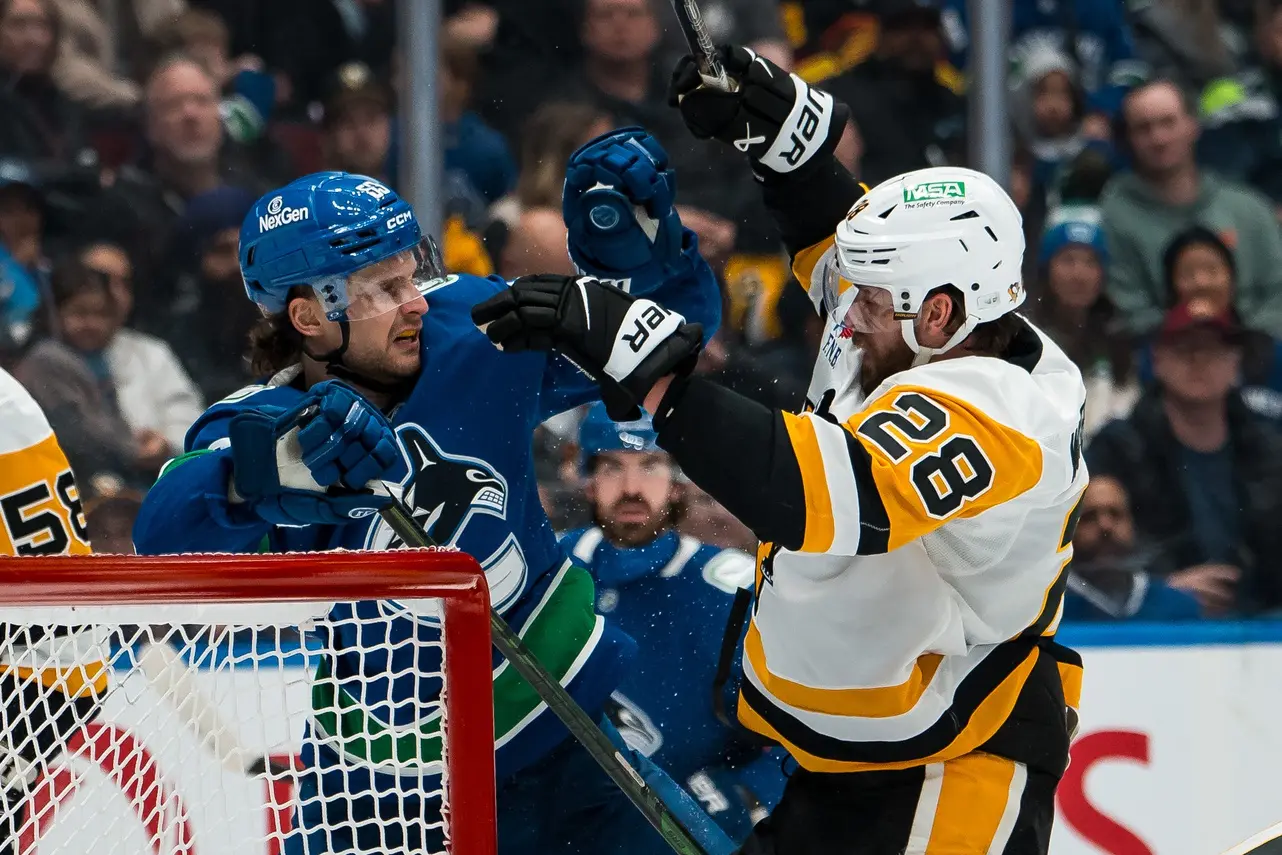
Photo credit: © Bob Frid-Imagn Images

Feb 27, 2026, 12:00 ESTUpdated: Feb 27, 2026, 01:54 EST


On Wednesday’s episode of Canucks Conversation, David Quadrelli and Harman Dayal looked at what the Canucks can learn from the Pittsburgh Penguins’ retool/rebuild under Kyle Dubas – and whether Vancouver has the patience to apply those same principles.
Harman pointed to one specific strategy Pittsburgh has leaned into.
“The Penguins have an intentional strategy under Kyle Dubas of trading for picks that are further away and essentially hoping that in those future years, that contending team will have a worse year than expected and that second-round pick ends up in the 30s rather than the 50s or 60s. That’s a significant valuation swing.”
It’s a bet on regression. Instead of taking the nearest available draft capital, Pittsburgh has targeted selections far enough down the line that circumstances can change.
“When you look at their track record now, it’s very impressive and I don’t think many people talk about it. At last year’s trade deadline, they traded Luke Schenn to the Winnipeg Jets for a second- and fourth-round pick. They own Winnipeg’s second-round pick this year and we know the Jets have had a nightmare of a season. Nobody would have thought the Jets, after the year they had last season, would be bottom five in the league right now.”
That’s the upside of delayed gratification.
“Acquiring a draft pick that’s further out – yes, you have to wait longer to draft a player and then for that player to develop – but there’s upside if that team is already established and could fall off. In 2027, the Penguins own the Rangers’ second-round pick, who are going to be awful for a long time. That will be a high second-rounder, and they made that trade back in 2024. In the Jarry-Skinner trade, they targeted the Oilers’ 2029 second-round pick, which is fascinating to me because by then, maybe McDavid is already out of town and that could end up being a really high pick.”
For Harm, it’s a concept the Canucks need to seriously consider, especially when dealing with contenders.
“It’s different when, for example, you’re trading Sherwood to the Sharks. Take the draft capital you can right away because the Sharks aren’t an established team and are on an upward trajectory, and you know their second-round picks will be relatively high. But if you’re dealing with contending teams, try and bet on their downfall in future years.”
The obvious question, though, is whether Vancouver has the stomach for that kind of timeline.
“We’ve heard management talk about wanting a quicker turnaround, and this is where if you’re trading for a 2028 pick, you’re going to have to wait longer. I hope they have the patience to understand that it’s going to be a long rebuild. Rather than prioritizing draft picks that you can convert into prospects right away, waiting a bit longer for perhaps a higher payoff is all about delayed gratification and showing patience – which historically this organization hasn’t done.”
Quads added another takeaway from Pittsburgh’s approach, focusing less on draft strategy and more on asset management.
“Signing veteran guys to one or two-year deals can aid you in your rebuild. Because the Penguins are second in the Metro right now, they’re not going to trade any of their vet guys. But you look at Anthony Mantha on a one-year, low-cost deal; he’s up to 20 goals and 22 assists after a couple down years. He needed to rebuild his value a bit, the Penguins offered him an opportunity to play, he’s run with it, and now you’d assume he’s going to get paid in free agency.”
In Pittsburgh’s case, their competitiveness limits the flip potential. For a team earlier in its cycle, the opportunity is different.
“If it were the Canucks and you bring in a guy like that, you can go trade him for a second-round pick – or in the case of Kiefer Sherwood, two second-round picks. You don’t need to go big-game hunting and try to accelerate out of this too quickly.”
It’s a slower path, but potentially a more sustainable one – if the Canucks are willing to stay the course.
Watch the full replay of the show below!
PRESENTED BY THE DAILY FACEOFF TRADE DEADLINE SPECIAL
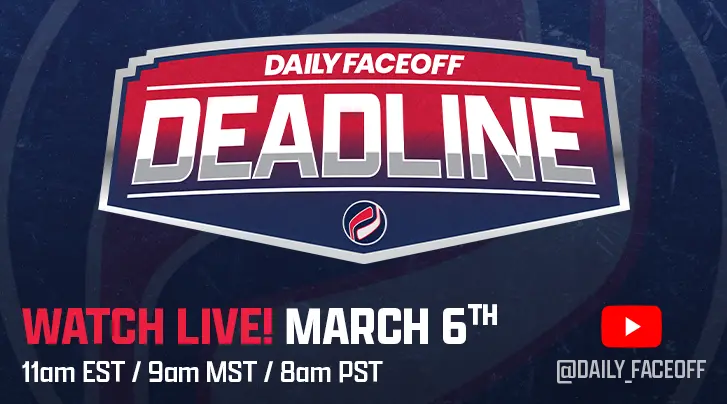
The 2026 Trade Deadline Special is going LIVE March 6th. Join the Daily Faceoff crew on Friday, March 6th from 8 AM-12:30 PM PT for wall-to-wall coverage of every single move as it happens. Get instant reaction, expert analysis, and exclusive insights from special guests throughout the day. Tune in LIVE on the Daily Faceoff YouTube channel and don’t miss a second of deadline day chaos.


Breaking News
- Meet the three men reviving beloved ‘Sports Page’ in an all-new format
- Canucks Game Day: Dealing with the Devils in early Saturday start in New Jersey
- The Canucks have every reason to give Leevi Meriläinen a run of starts
- A look inside the Canucks early-season penalty killing struggles
- ‘Best news ever’: Max Lapierre thrilled to see Canucks put Sedins, Johnson, and Malhotra in charge

Vancouver CanucksTeam Cap Summary

Cap Summary
2026-27
2027-28
Projected Cap Hit
$88,074,947
$71,329,167
Projected Cap Space
$15,925,053
$42,170,833
Current Cap Space
$16,790,545
$42,170,833
Active Players
23/23
13/23
Draft Picks
Round
'27
'28
1
1
1
2
2
2
3
1
1