
CanucksArmy has no direct affiliation to the Vancouver Canucks, Canucks Sports & Entertainment, NHL, or NHLPA
Ryan Johnson’s first moves as Canucks GM a refreshing shift in asset management
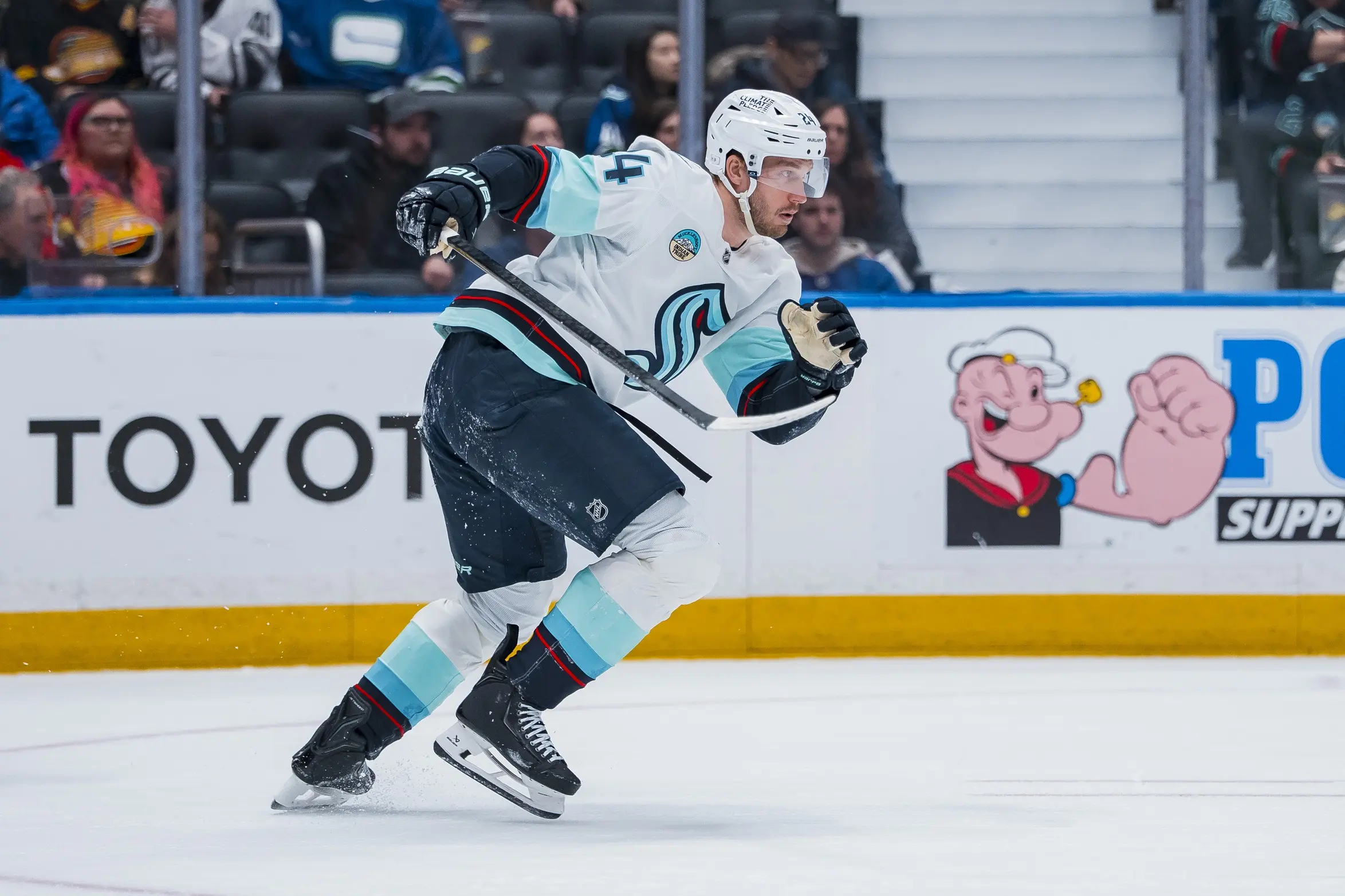
Photo credit: © Bob Frid-Imagn Images

Jul 3, 2026, 11:00 EDTUpdated: Jul 2, 2026, 22:22 EDT


Let’s just come right out and say it. The Vancouver Canucks have not always been well-managed over the past decade or so. And if there’s been a particular weakness of the last two managerial regimes, led by the Jims Benning and Rutherford, it’s been asset management.
The Canucks faithful are all too familiar with the various flavours of poor asset management and have seen countless examples over the years. Too many draft picks dealt for short-term solutions. Ill-timed trades. Over-bloated and under-skilled rosters. And if there was one realm in which the Canucks have managed their assets particularly poorly, it’s definitely been via free agency.
If we just go back to last year’s July 1, we have a pretty good case in point. Faced with expiring or soon-to-be-expiring veteran contracts, and with the knowledge that Quinn Hughes was already one foot out the door, the Canucks should have already cashed in on folks like Brock Boeser, Conor Garland, and Thatcher Demko, selling each of them as rentals to instantly refresh the cupboard of prospects and picks and give the rebuild a kickstart.
Instead, the Canucks announced lengthy new contracts for all three on July 1, and have regretted it pretty much ever since. Now, they’d absolutely love to get out of those Boeser and Demko contracts, and they’ve already got out of Garland – albeit at a discounted return.
By the time Hughes’ departure was official, and the rebuild was more formally announced and committed to, it was too late to go back and do anything about those missed-opportunities-turned-burdensome-contracts.
But it was not too late to clean house, management-wise, and let someone else take over the rebuild, and that’s exactly what the Canucks did. And, though we’re only a month or so into the new regime, the early returns on GM Ryan Johnson and co-POHOs Henrik and Daniel Sedin haven’t just been positive; they’ve been a downright refreshing change of pace, especially when it comes to asset management.
Johnson and Co.’s first act was to manage their coaching assets correctly and avoid a pointless loss to another organization by promoting Manny Malhotra to head coach. Then, the focus was turned more to on-ice assets.
Even their earliest moves seemed to have a clear vision. The Canucks kept and used nine draft picks at the 2026 Entry Draft, placing an obvious emphasis on size and character. Then the Canucks cut ties with Nils Höglander, shipping him off to Nashville for a future third-round pick in a move plainly aimed at reducing roster bloat that had limited opportunities for younger players in past seasons.
Then the asset management showcase really began in earnest.
Several pundits, including a few here at CanucksArmy, had suggested that the Canucks would be making a smart investment on the Montreal Canadiens’ Brendan Gallagher, reasoning that a one-year rental of him would be cheap, offer key mentorship, and could then possibly be turned into a lucrative trade chip at the Trade Deadline. It’s the exact sort of efficient asset management that certain folks in the media and fanbase have been advocating for over the past decade with very little success.
So, it was a little bit shocking when the Canucks actually went and did it. Not only that, but they seemed to prioritize getting the Canadiens to retain on Gallagher’s salary, rather than accepting a draft pick sweetener for taking on his whole deal. This would seem to make Gallagher into a far more tradeable asset down the road, especially if the Canucks explore the option of double retention, and it’s encouraging to think that this managerial group might already be thinking and planning in that way.
That only continued once free agency formally opened up on this year’s July 1.
The annual Free Agent Frenzy had almost become a date to be feared on the Canucks calendar. Almost every year, the various front offices of the Canucks seemed to head into their July 1sts ready and willing to make dumb decisions with long-term consequences, and that continued right up until 2025. But not 2026.
The Canucks first signed two sturdy veterans in Paul Cotter and Luke Schenn to one-year, $2 million-ish contracts. Cotter is young for a UFA at 26, having gone unqualified by the New Jersey Devils. He seems like a smart bet on someone who could take a step forward with more opportunity in Vancouver.
Schenn, on the other hand, is a well-established and respected quantity in this league.
But it’s less about the players themselves here, and more about the contracts. One-year deals carry no risk of long-term consequences by their very nature. If Cotter or Schenn do not work out, the Canucks haven’t invested very much in them at all.
They’re also perfectly sized for deadline sales, if the Canucks want to go down that route. Schenn has been a proven deadline commodity on a few occasions, and went for a sizeable package at this most recent deadline (along with Logan Stanley to Buffalo for a second, a top prospect, and a fourth). Cotter is the kind of physical depth player with upside that playoff rosters are always looking to add. The Canucks will be able to shop both of them and Gallagher around at the deadline if they wish. Expiring contracts are the easiest to move, and all of these are sized right for the Canucks to employ retention to juice the value on any deal that requires it.
These are not the boat-anchor contracts that have come from free agencies past. These are short-term, transferable assets that are arriving with the Canucks, with their exit strategies already in place.
The real masterclass in asset management came later on July 1, and it was a two-parter. First, the Canucks dealt Marcus Pettersson to the New York Rangers for a 2030 top-10-protected first-round pick.
That, alone, is some sharp asset management. Or, re-management, more accurately. The Rutherford Regime bungled in transforming the first round pick they got back for JT Miller – one that would ultimately be slotted at 12th overall – for Pettersson and Drew O’Connor. Having already signed Pettersson to a lengthy extension, only to watch his play immediately drop off, most assumed that the hopes of re-cashing him for a different first were long gone.
And yet, Johnson not only managed to turn Pettersson back into a first, but he might also have done a considerable deal more than that. Within the hour, Johnson had effectively replaced Pettersson on the blueline with Jamie Oleksiak. With all his bulk and truculence, Oleksiak probably fits the Canucks’ vision of an ideal veteran better, anyway, and his contract certainly fits their vision to a T. Pettersson had five more years left on his extension at a $5.5 million AAV. Oleksiak comes in at just two years and an AAV of just $5 million.
In other words, the Canucks replaced one of their defenders with a better fit, signed for slightly less, for half the term, and picked up a future first-round pick in the process. Now, it’s easy enough to envision them flipping Oleksiak, too, around the 2028 Trade Deadline, and maybe recouping another high draft pick while they’re at it.
That is positive asset management. To take a regrettable decision by the previous regime and turn it into multiple future-oriented assets without compromising anything important is remarkable. It’s remarkable, and a really sharp contrast from the type of untidy business that was typically done here before.
If this Canucks rebuild is going to be truly successful, it’s going to require patience, commitment, and a boatload of more picks and prospects. Johnson and Co. are already showing well on all three of those fronts, and it’s hard not to be encouraged by the work they’ve put together thus far.
Sponsored by bet365


Breaking News
- Canucks Game Day: Desperate to shore up the penalty kill against the Rangers
- The Statsies: D Elias Pettersson leads Canucks in CF% in loss to Devils
- Friedman: Canucks ‘considering’ a trade for Flames forward Conor Zary
- The Stanchies: Kevin Lankinen takes the loss after playing for five minutes of Canucks’ 4-1 loss to New Jersey
- Instant Reaction: Special teams the story as Canucks lose 4-1 to Devils

Vancouver CanucksTeam Cap Summary

Cap Summary
2026-27
2027-28
Projected Cap Hit
$88,074,947
$71,329,167
Projected Cap Space
$15,925,053
$42,170,833
Current Cap Space
$16,882,297
$42,170,833
Active Players
23/23
13/23
Draft Picks
Round
'27
'28
1
1
1
2
2
2
3
1
1