
CanucksArmy has no direct affiliation to the Vancouver Canucks, Canucks Sports & Entertainment, NHL, or NHLPA
CA Draft profiles: Keaton Verheoff brings incredible size and solid upside
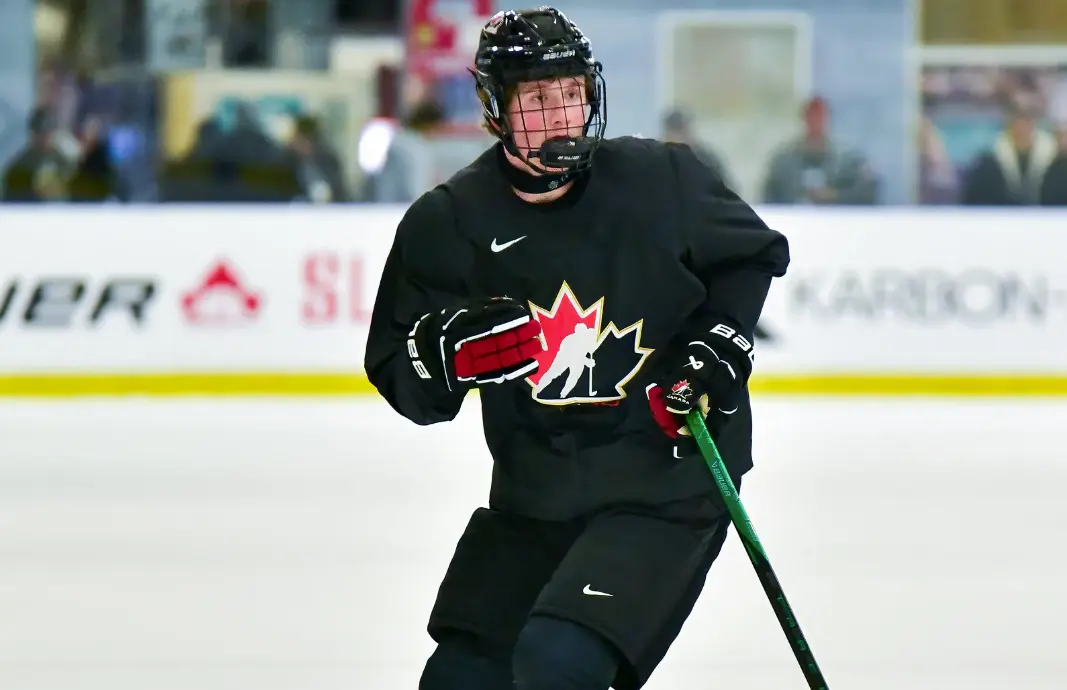
Photo credit: © Steven Ellis/The Nation Network


The Vancouver Canucks have officially clinched the 32nd spot in the NHL standings, securing the best odds (25.5%) at the first overall pick in the 2026 NHL Draft.
Assuming no major moves are made at the podium, the organization holds 10 draft picks and a crucial opportunity to restock a prospect pool that has begun to thin out.
With that in mind, we begin our draft profile series.
While the primary focus will remain on players within Vancouver’s likely selection range, we’ll also highlight several notable names over the coming months to provide a full picture of this year’s class.
Today, we bring you the NCAA’s youngest defenceman, who’s challenged himself with the jump after dominating the WHL ranks.
Keaton Verheoff
Team: North Dakota (NCAA) | Age: 17 | Position: Defence | Height: 6’4 | Weight: 212 lbs | Shoots: Right | Points: 36 GP, 6G, 14A | Central Scouting mid-term rank: #2 North American Skater
Like Gavin McKenna, Keaton Verhoeff bet on himself by making the rare jump to the NCAA as a 17-year-old. In doing so, he became the youngest defenceman in college hockey this season.
That context is important to keep in mind, as evaluating his season requires some nuance, as nearly every aspect of his game would have looked far more polished had he remained at the junior level among his peers.
The Fort Saskatchewan, Alberta native has long been viewed as one of the premier defensive prospects in this 2026 class. While players like Chase Reid have recently closed the gap, Verhoeff’s reputation was built on an exceptional draft-minus-one season with the Victoria Royals and has been building ever since. As a 16-year-old, he recorded 45 points and finished tied for second among all WHL defencemen with 21 goals.
That alone is impressive. Doing it at that age is borderline insane.
Following his stellar year, Verhoeff took advantage of the new NCAA pathway available to him, joining North Dakota alongside a fellow Victoria teammate and Calgary Flames prospect Cole Reschny.
As a freshman, he recorded 20 points (six goals, 14 assists), finishing second among all U19 defencemen in that regard. He also helped North Dakota reach the Frozen Four tournament in Las Vegas, where they lost 2-1 to Wisconsin in the semifinals. Averaging around 18 minutes for the year, he was earning big minutes and seeing time on the team’s top power play unit. He also earned a roster spot with Team Canada at the World Junior Championship, taking home a Bronze Medal.
It’s an impressive resume for any player, but achieving all of this before your 18th birthday is something else entirely.
In terms of projection, it really doesn’t take long to understand the appeal in his profile. At 6-foot-4 and 212 pounds, Verhoeff already possesses an NHL-ready frame at a young age, with plenty of runway to further grow. While he isn’t a punishing, open-ice hitter, he’s physically strong and uses his body effectively. He handles contact well and can step up by utilizing his frame in 50/50 situations, while also using his incredibly long reach to break up plays with ease.
Aside from his size, the majority of intrigue comes from the offensive side of the game. Evidenced by his 21 goals at the major junior ranks, he has the ability to score goals from distance and has all the makings of what could be a solid producer for years to come.
His ability to score those goals comes from an above-average shot. His one timer is heavy, and he’s able to release his snapshot on a dime, using one fluid catch-and-release motion that should make him a potent power play option from the point or flank positions at the highest levels. Whether firing from distance or working downhill into high-danger areas using his reach for protection, he shows a willingness to attack and create offence in multiple ways.
Beyond that, he flashes surprisingly crafty hands for a player of his size. While it does come paired with some dysfunction, it’s an extremely effective tool when equipped with his reach. That combination allows him to maneuver through opponents and create space and time for himself. He’s also eager to jump into the play and contributes with relatively smart offensive instincts, recognizing when to activate and when to distribute. All told, the foundation of a potential two-way defenceman with high-end offensive upside clearly lies within this player and should easily be one of the first defencemen taken off the board this June.
Of course, like most prospects in this draft, there are concerns.
Unlike Chase Reid’s fluid and explosive mobility, Verhoeff shows some struggles with his feet. He’s not a poor skater, per se, but for a player projected near the top of the draft, his “average” skating raises some questions.
In straight lines, there are few concerns. He’s a powerful player, and in controlled offensive situations, he can navigate effectively and generate some decent speed and power off the rush. But his lateral movement lacks quickness, and his backward skating can leave him quite vulnerable against attackers. At the NCAA level, that has already led to many instances where he’s been beaten and burned off the rush. His quick pivots can be an issue, leading to him catching an edge or stumbling at times.
Under pressure, some uneasy tendencies in both his mobility and mental limitations become more apparent. Whether it’s defensive reads, breakout attempts or offensive zone plays, he tends to make poor decisions, try too much or simply force unnecessary mistakes. Working off pressure, he appears to be rushed easily in the defensive zone and isn’t quite dynamic enough to get himself out of jams. That leads to off-target passes and scrambled defensive zone dump-outs. Considering his size advantage, you’d like to see him be a little more patient and confident in himself.
It’s these areas that continue to make him a bit of a polarizing prospect. There are a ton of tools to adore, and they could project among the top of this class. But on the other hand, there is a rawness to his game, with obvious work to be done in various areas. But that’s not all that different from nearly every player in this particular draft class that carries very few flawless profiles. Chase Reid, for example, has his own varying tendencies that lead to turnovers and questionable plays.
With Verhoeff, the intrigue lies in his long-term projection. The reality is that he is still incredibly young — roughly half a year behind Chase Reid in development — and already competing at a higher level than most draft-eligible defencemen. Even once he’s drafted, he’s still poised to be one of the younger defenders within the NCAA ranks. Mistakes are expected, and if anything, you must admire his willingness to put his future on the line and take the plunge among 20-to-25-year-old forwards. Does that negate his flaws? That’s up for the amateur scouts to decide.
A return to North Dakota for his sophomore season will be critical, giving him further time to improve his skating, clean up his decision-making, and round out his defensive game. After all, right-shot defencemen with this combination of size and offensive upside don’t come around often. Even with some clear areas to address, Keaton Verhoeff projects as one of the first defencemen off the board and a player teams will be willing to bet on near the top of the 2026 NHL Draft.
Sponsored by bet365


Breaking News
- The Stanchies: 3 positives, 3 negatives, rebuilding lessons, and more from Canucks’ loss to Canes
- Instant Reaction: DeBrusk scores twice at 5v5 while Pettersson adds two assists in Canucks’ loss to Hurricanes
- Canucks notebook: Cotter’s keeping receipts, Elias Pettersson says he’s ‘having a lot of fun’
- Scenes from morning skate: Canucks healthy scratch Schenn and Gallagher against Stanley Cup champs in Carolina
- How many roster spots might the Canucks need to open up between now and next season?

Vancouver CanucksTeam Cap Summary

Cap Summary
2026-27
2027-28
Projected Cap Hit
$88,074,947
$71,329,167
Projected Cap Space
$15,925,053
$42,170,833
Current Cap Space
$16,699,785
$42,170,833
Active Players
23/23
13/23
Draft Picks
Round
'27
'28
1
1
1
2
2
2
3
1
1