
CanucksArmy has no direct affiliation to the Vancouver Canucks, Canucks Sports & Entertainment, NHL, or NHLPA
What fans should expect from Brendan Gallagher and where he fits on a young Canucks squad
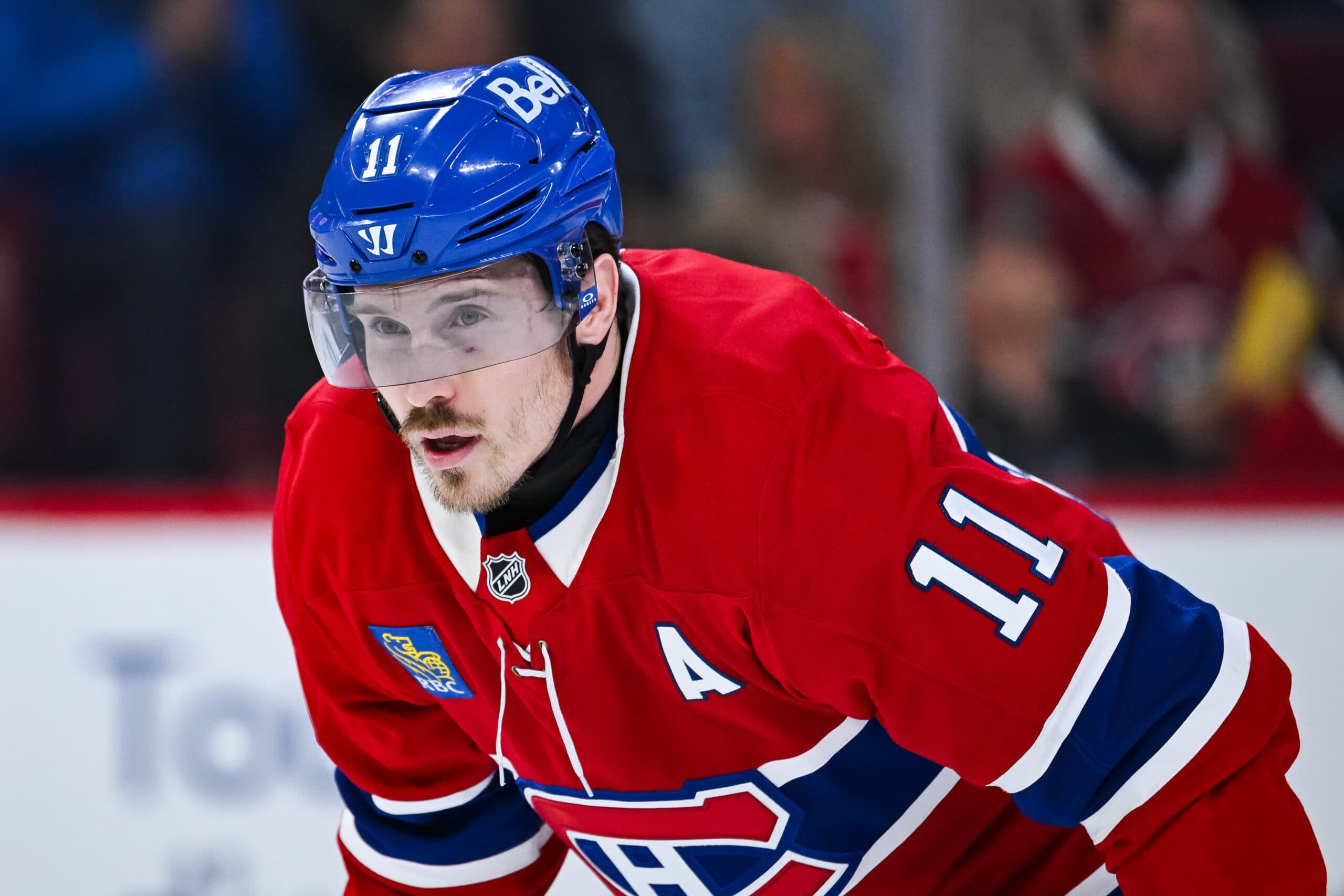
Photo credit: David Kirouac-Imagn Images

Jul 13, 2026, 16:30 EDTUpdated: Jul 13, 2026, 16:18 EDT


Brendan Gallagher’s seven-goal season makes it easy to view the Vancouver Canucks’ newest winger as a fading veteran whose best years are behind him. And that is probably true. But there are more elements to the scrappy winger’s game than just goals and points.
Vancouver acquired the Delta, B.C. native from the Montreal Canadiens for future considerations, with the Canadiens retaining half of his $6.5-million cap hit. That leaves the Canucks carrying $3.25 million for the final season of his contract. For a grizzled veteran with the kind of playoff experience that Gallagher has — with the appropriate usage — that contract should be able to be flipped again by the deadline.
The 34-year-old still has the tools to play in the NHL. He creates chances near the crease, pressures defenders on the forecheck, and posts respectable territorial results. His finishing collapsed last season, but his five-on-five impact remained close to breaking even.
He won’t bounce back to the top-six forward he once was, but in a fourth-line role, there’s potential for Gallagher to turn into a successful reclamation project for the Canucks.
With that in mind, here’s what the new Number-7 still has to offer the Canucks:
Limited offensive upside
Gallagher finished 2025-26 with seven goals and 16 assists in 77 games while averaging 12:21 minutes per night. His 5.8% shooting rate fell well below his 9.8% career mark and helped explain the drop from the 21 goals he scored one year earlier.
MoneyPuck credited the long-time Canadien with 14.91 individual expected goals across all situations. He finished almost eight below expected and generated 121 shots. The model adjusted that projection to 13.51 goals after accounting for shooting talent, suggesting his conversion ability has slipped while still enduring an unusually cold season by Gallagher’s standards. A reasonable rebound might place him around 10 to 14 goals, based on last season’s metrics.
Gallagher’s offence continues to come from around the crease. Five of his seven goals in 2025-26 were scored from high-danger areas, while the other two came from mid-range. He did not score from long distance, reinforcing how dependent his production remains on getting inside and finding opportunities near the net. That skill set could buy the former Vancouver Giant some minutes on the second power-play unit.
Capable five-on-five results
The veteran’s five-on-five performance did not fall as sharply as his goal total. Gallagher averaged 10:45 at full strength last season and finished with a 51.0% share of shot attempts, a 49.0% expected-goal rate, and a 52.9% share of the actual scoring. Montreal generated more overall attempts than it surrendered with him on the ice, although the quality of those opportunities was slightly below break-even. His relative numbers were also positive, with a Corsi percentage of +3.0 and an expected-goal percentage of +0.9 compared with the Canadiens’ results when he was on the bench.
So he can’t really drive a line, but he won’t get buried every night either. Montreal’s problem became that Gallagher’s production declined faster than his ability to help his line spend time in the offensive zone. However, he still helped the Canadiens tilt the ice territorially in his minutes.
The gap between his current form and his previous impact is significant, and that continued decline is part of the gamble when acquiring an aging veteran. Gallagher recorded a 54.0% expected-goal share with a plus-9.1 relative mark in 2024-25, following a 51.0% rate and plus-6.7 relative result the year before.
His five-on-five ice time has since dropped from 12:06 to 10:45 per game, while his scoring rate declined from 0.73 to 0.36 goals per 60 minutes. His points-per-60 figure also slipped from 1.63 to 1.31.
All of that indicates that the Canucks are getting a winger who can survive bottom-six minutes without surrendering run of play, but not an established driver capable of carrying weaker linemates.
Where he could fit
Gallagher projects best deployed on a fourth line beside forwards who can transport the puck and create entries, allowing the tenacious forechecker to focus on recovering possession and reaching the crease.
Along with his territorial play, his legs have also held up better than his scoring. Gallagher reached a maximum speed of 36.72 km/h in 2025-26, placing him in the 78th percentile, plus 100 bursts above 32 km/h, good for the 71st percentile. His total distance skated of 227.23 km over 77 games ranked near the middle of the league, at the 54th percentile.
Repeated bursts, however, provide a better indication of how often he can hit that pace. Gallagher averaged 0.44 bursts above 32 km/h per kilometre skated, showing that his straight-line acceleration remained functional on a per-shift basis.
A Cotter-Sasson-Gallagher combination is an intriguing fit on paper, with their best sequences likely to start with speed through the neutral zone, applying pressure below the goal line, and crashing the blue paint. Sasson centred Cotter and Mathieu Olivier for Team USA at the 2026 IIHF World Championship, serving as a template for what the Canucks could recreate at the bottom of its own lineup.
Sasson would supply the line’s transition element. His 38.13 km/h peak ranked in the 97th percentile last season, while his 190 bursts above approximately 32 km/h ranked in the 93rd percentile. The Birmingham, Michigan native also maintained a higher average skating speed than his potential linemate, so he could pick up the slack in that area of the ice.
Cotter offers a similar north-south dimension from the left side. The new Canuck reached 37.21 km/h and produced 12 bursts above 35.4 km/h. His 0.73 high-speed bursts per kilometre nearly doubled Gallagher’s rate of 0.44. The 6-foot-2 winger recorded 192 hits last season and could serve as the unit’s first forechecker.
With that division of labour, Gallagher can arrive behind the initial attack, establish position around the net and pounce on rebounds.
Gallagher has averaged virtually no penalty killing time since 2017-18, when he was used for roughly 15 seconds per night shorthanded. Montreal used Gallagher for zero penalty-killing minutes per game in each of the past four seasons, so Vancouver is not getting a boost to its PK unit from this acquisition.
The local product has one previous connection on the roster, as he and Jamie Oleksiak represented Canada at the 2012 World Junior Championship, where the country won bronze.
Despite a shrinking role and reduced playmaking ability, Gallagher brings 14 seasons of NHL experience to a rebuilding Canucks squad and will still be able to manage some interior offence for what will be a somewhat offensively challenged team during 2026-27.
If he can score around a dozen goals, chip in 20-30 points, and help an identity line create energy, this is surely to look like a successful addition for the Canucks. But Gallagher’s greatest value may ultimately come from the example he sets for Vancouver’s younger forwards.
Sasson, Aatu Räty, and Jonathan Lekkerimäki can learn from Gallagher’s approach to reduced minutes, difficult stretches, and the daily expectations of staying in the league. His role will be smaller than it was during his peak in Montreal, but he will still have a powerful influence in the Canucks dressing room. He can show an emerging group how to remain engaged without top-line usage or earn trust through detail and purpose on every shift.
For a Vancouver team trying to establish stronger habits, his example, more than anything, could be Gallagher’s legacy as a Canuck.
Sponsored by bet365


Breaking News
- Manny Malhotra and Brock Boeser offer up slightly different theories for Canucks’ struggles
- The Stanchies: Jonathan Lekkerimäki notches a goal and an assist, and that’s all we’ll say
- ‘It’s embarrassing’: Brock Boeser brutally honest following Canucks’ ninth straight loss
- Instant Reaction: Canucks go nearly 40 minutes without a shot in 5-2 loss to Red Wings
- What’s behind ex-Canuck Conor Garland’s struggles in Columbus?

Vancouver CanucksTeam Cap Summary

Cap Summary
2026-27
2027-28
Projected Cap Hit
$87,295,050
$71,329,167
Projected Cap Space
$16,704,950
$42,170,833
Current Cap Space
$18,951,815
$42,170,833
Active Players
23/23
13/23
Draft Picks
Round
'27
'28
1
1
1
2
2
2
3
1
1