
CanucksArmy has no direct affiliation to the Vancouver Canucks, Canucks Sports & Entertainment, NHL, or NHLPA
Canucks: What happened the last time a controversial former captain returned to Vancouver?
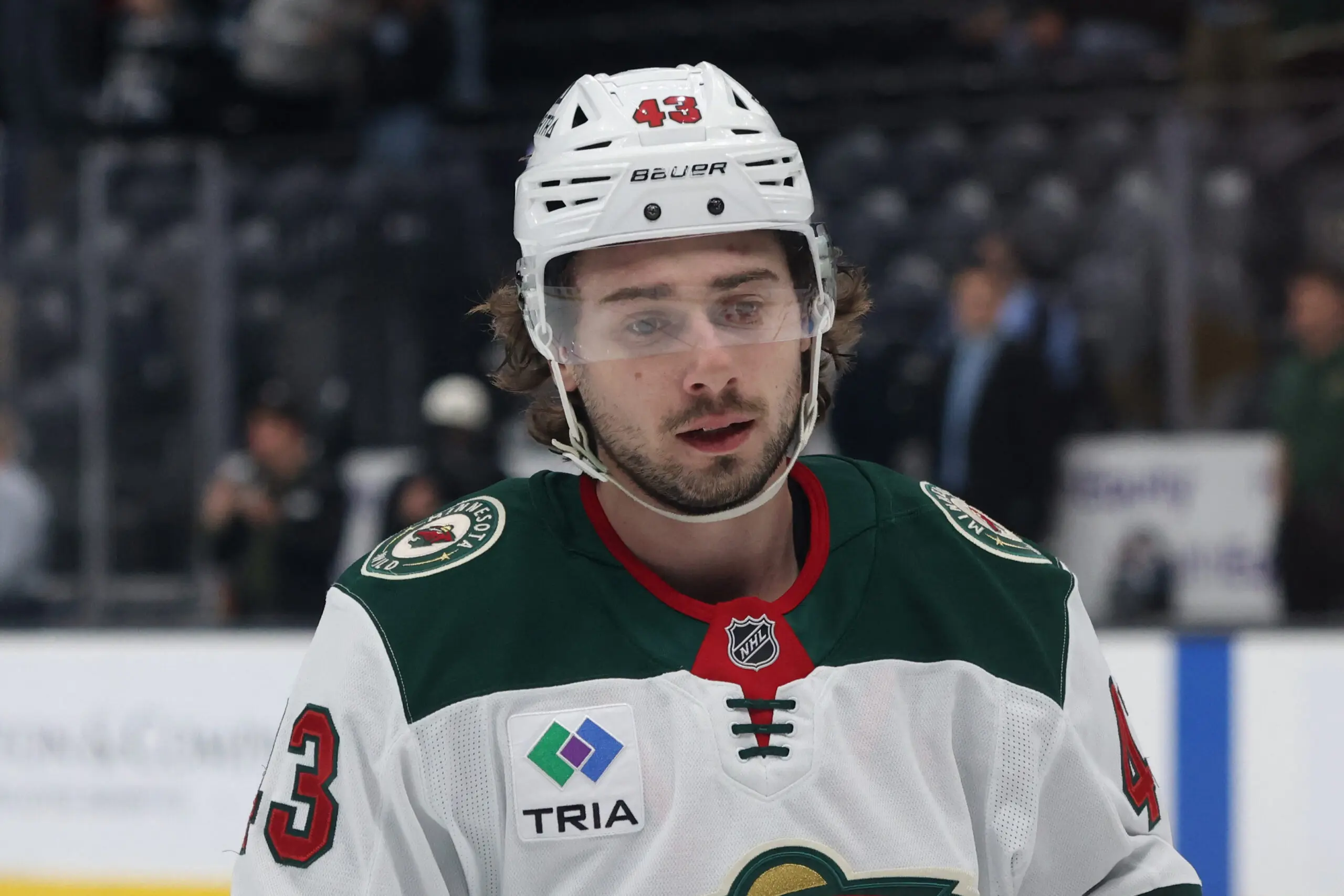
Photo credit: Rob Gray-Imagn Images

Oct 25, 2026, 17:00 EDTUpdated: Oct 25, 2026, 13:49 EDT


The game between the Minnesota Wild and Vancouver Canucks on this Sunday, October 25, marks the first return of Quinn Hughes to Vancouver since the former captain was traded to the Wild. And if we have to explain why that’s a big deal, you’re probably reading the wrong blog.
Fan reactions to former captains Brady Tkachuk and Dylan Larkin in Ottawa and Detroit, respectively (or should that be “disrespectively”?), gave us a preview of what to expect – namely, a lot of boos, a lot of sarcastic signs, and maybe a derisive chant or two.
The city of Vancouver also got a preview of this night about 25 years ago, which was the last time a controversial captain returned to town after joining another team. That, of course, was Mark Messier with the New York Rangers, and the date was November 17, 2000.
Messier’s tenure with and departure from the Canucks were very different from Hughes’ time in Vancouver. Whereas Hughes was a franchise icon for a number of years before a villainous turn, Messier was a figure of some fan ire immediately upon his arrival. That had a lot to do with his past as a rival of the Canucks on the Edmonton Oilers, and especially the New York Rangers, and it had a lot to do with the stripping of Trevor Linden’s captaincy so that Messier could wear the ‘C,’ something we later learned Messier more-or-less insisted upon. To top off all that, Messier took the jersey number 11, which had been unofficially retired in honour of Wayne Maki, a former Canuck lost far too early to brain cancer.
From there, the enmity only grew. The Canucks brought in Mike Keenan, Messier’s former bench boss in New York and easily the cruellest man to ever coach the Canucks, and formed a far closer relationship with him than any captain should have with their coach. Messier and Keenan would appear to somewhat conspire to run some popular Canucks out of town, including Linden and Gino Odjick.
Hockey-wise, Messier underperformed on the ice, especially compared to his sizeable contract, and the Canucks missed the playoffs in each of his three years with the Canucks. Messier posted 60 points or less in each of those seasons after scoring 84 in his last season with the Rangers.
This led the Canucks to buy out the final two years of Messier’s contract for about $2 million in June 2000. But the ill will wasn’t done there. Messier wound up asking the Canucks for an additional $6 million over a deferred payment clause. That dispute had barely begun by the time of his return in 2000, and would wind up being a decade-long legal saga that ended with an arbitrator ruling in Messier’s favour in 2012.
There are some key differences between the Messier and Hughes situations. Hughes’ on-ice performance can’t really be questioned in the same way, aside from a perceived lack of effort toward the end. And at least the Canucks managed to trade Hughes instead of just cutting him loose, which garnered a significant trade return. Still, there’s a common thread of a captain making it plain enough that they did not really want to be in Vancouver, and would rather be somewhere else, and that’s always going to be taken personally by a passionate base of fans.
And so, the stage was set for a very unpopular homecoming on November 17, 2000.
Messier spoke fondly of his time in Vancouver prior to the game, as we heard from Hughes in the run-up to Sunday. It didn’t change anything. Messier received much of the same reaction Tkachuk got in Ottawa this past week, minus any hint of international bad blood.
Messier was, naturally, booed heavily every time he touched the puck, with the boos only getting louder as the night wore on, especially after Messier registered a late assist. He was met with a number of signs that mostly poked fun at his potato chip sponsorship deal, like “Messier is a Lays-Z Boy,” “Bet You Can’t Win Just One,” or the far more direct “Corporate Sellout.” A big banner was rolled out that read “Younger, Faster, Better… No More Mess, Eh?,” which is a little clumsy, but certainly gets the point across.
Actually, that banner hints toward another important point to be made, which is what happened on the ice. In many ways, Messier’s Hateful Homecoming marked a real changing of the guard in Vancouver. A generational shift, if you will.
The Canucks won 4-3. Their scorers included Markus Naslund, who would inherit the “C” from Messier, and Todd Bertuzzi, who would go on to fulfill some of Messier’s false promise as a true power forward. Rookie Daniel Sedin also scored what would be the seventh goal of his young career, continuing a hot start that is often forgotten about. (Matt Cooke scored, too, but that’s harder to make narratively significant.)
In other words, the Canucks didn’t just beat Messier; they beat Messier on the backs of the new generation of talent that had taken over in the wake of Messier’s departure. It was an event that clearly marked the beginning of a new chapter, one that would lead to the Canucks making the playoffs that season after four years without. From there, it was on to the halcyon days of the West Coast Express and then onto the 2011 Stanley Cup Finals run.
It was both meaningful and a little symbolic that the likes of Naslund, Bertuzzi, and Daniel Sedin played a role in handing Messier that defeat, and giving the fans something to cheer about amidst the rain of boos.
The boos, the signs, and probably a chant or two are all but inevitable when Hughes makes his own return on Sunday. But if the Canucks could get a similar result on the ice, a win that snaps a nine-game losing streak, ideally powered by their next generation of would-be stars, that would probably mean a whole lot more in the long run.
Sponsored by bet365


Breaking News
- Canucks: What happened the last time a controversial former captain returned to Vancouver?
- Scenes from morning skate: Canucks looking to snap winless skid and spoil Quinn Hughes’ homecoming
- Canucks place defenceman Jack Thompson on NHL waivers
- Could the Canucks swing a trade for Capitals forward Ivan Miroshnichenko?
- Canucks’ Ohgren responds to healthy scratch: ‘I know I have to play harder’

Vancouver CanucksTeam Cap Summary

Cap Summary
2026-27
2027-28
Projected Cap Hit
$87,295,050
$71,329,167
Projected Cap Space
$16,704,950
$42,170,833
Current Cap Space
$19,176,096
$42,170,833
Active Players
23/23
13/23
Draft Picks
Round
'27
'28
1
1
1
2
2
2
3
1
1