
CanucksArmy has no direct affiliation to the Vancouver Canucks, Canucks Sports & Entertainment, NHL, or NHLPA
Trading down from third overall may be tempting, but it’s something the Canucks should avoid
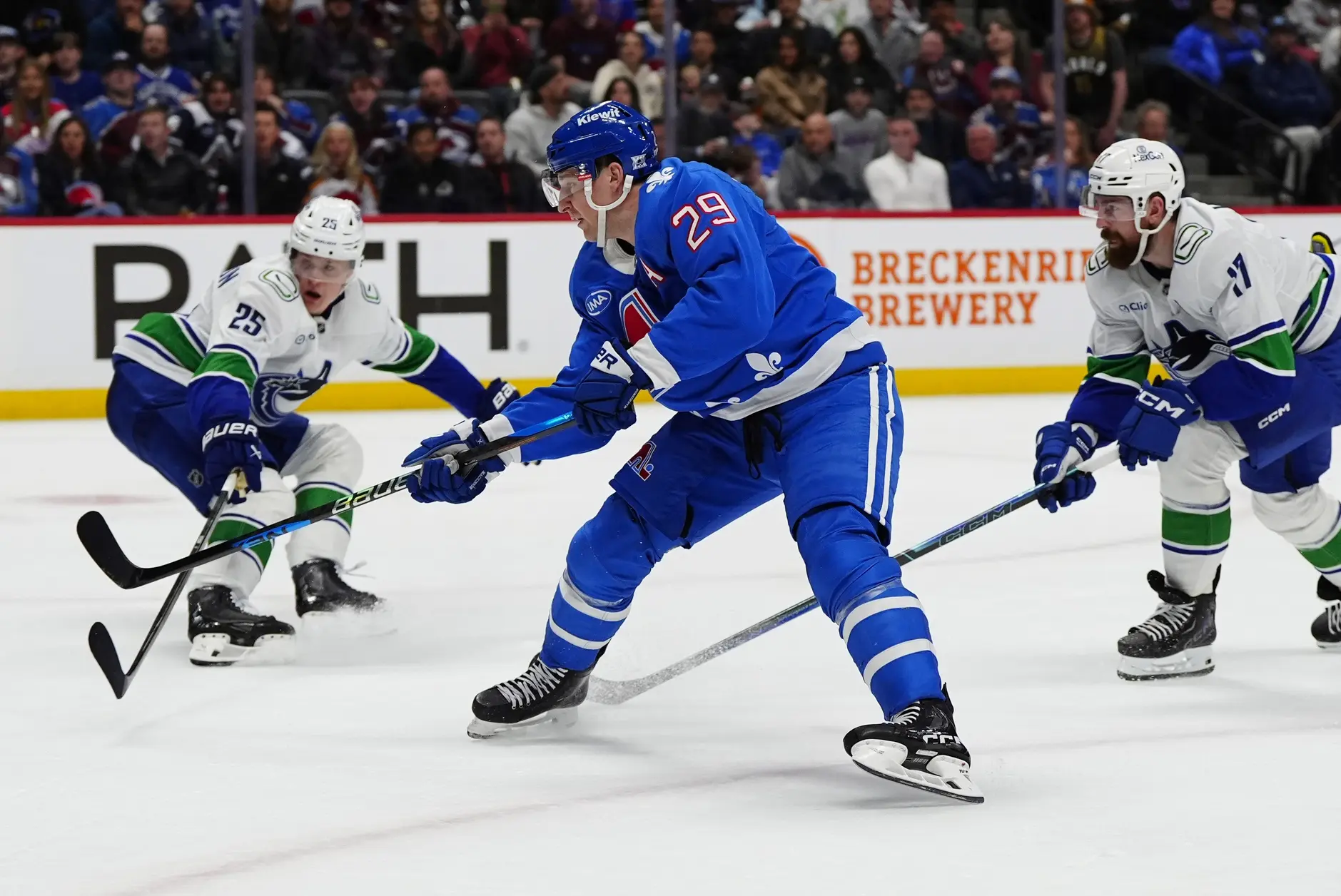
Photo credit: © Ron Chenoy-Imagn Images

May 13, 2026, 12:09 EDTUpdated: May 13, 2026, 19:02 EDT


The Vancouver Canucks have a top-three draft pick for the first time since 1999. The odds are best that the Canucks are going to use that pick to make a selection at the end of June, and chances are good that said player will be a very high-quality prospect.
But in the wake of the disappointment of losing the 2026 Draft Lottery – an act which shunted the Canucks down from a potential first overall pick to third – another suggestion has been floated around, and it’s the idea of the Canucks trading down to later in the first round.
It’s not hard to see the logic in this suggestion. The top of the 2026 Draft Class is a crowded and uncertain one, in which the rankings seem to shift almost daily, and can range wildly from pundit to pundit. Most are sure Gavin McKenna is going to the Toronto Maple Leafs at first overall, though that’s not set in stone. Many believe that Ivar Stenberg will go next to the San Jose Sharks, but then maybe they’d prefer to draft a defender. That could leave Stenberg from the Canucks, but then there’s word that they might prefer a centre in Caleb Malhotra, anyway, or perhaps one of the defenders like Keaton Verhoeff, Chase Reid, or Carson Carels.
The thinking goes that if the Canucks were to trade down from third to, say, fifth or sixth overall, they would still stand a good chance of getting one of their preferred prospects and a bonus future-based asset. It normally costs at least a second-round pick to move up spots within the first round, and that’s got to be even more true this close to the top.
The Canucks, in the very earliest days of a rebuild, are still a bit asset-poor. They still have a huge need to increase the outright quantity of their picks and prospects, and trading down is a great way to turn one asset into several.
But as tempting as that might be, it’s a path the Canucks should largely avoid. Because as much as quantity is an issue with their future-based assets, quality remains the number one thing they should be after. And quality comes from drafting as high as possible.
The Canucks still lack a true centrepiece to their rebuild, and we’re not talking about on-ice positionality. What they lack is a definitive future franchise player around whom they can truly build. There is some hope that Zeev Buium can be that quality of player one day, but some are still not quite sure of that. For the Canucks’ rebuild to be a true success, the reality is that they’re probably going to have to add at least a player or two better than Buium over the next couple of drafts. And the best way to do that is to be slotted as high as possible in those drafts, and then to stay there.
Trades out of the top five of the NHL Draft do happen, but they are exceptionally rare. The most recent example of this happening, in 2018, was accidental, featuring the San Jose Sharks sending a conditional 2020 first-round pick to the Ottawa Senators as part of the Erik Karlsson trade. That first was conditional on San Jose making the playoffs in 2019, which they did. The Sharks then proceeded to tank out the next year, resulting in that pick becoming third overall. The Senators used it to select Tim Stutzle, who has since become their franchise forward.
Beyond a slip-up, you’ve got to go back to 2004 to find the first real example, in which the Columbus Blue Jackets traded the fourth overall pick to the Carolina Hurricanes for the eighth and the 59th picks. The Hurricanes picked Andrew Ladd, who had a fine career and is now retired. The Blue Jackets picked Alexandre Picard, a bust, at eighth.
Before that, it was a 2003 trade that sent the first overall pick (Marc-Andre Fleury) to Pittsburgh in exchange for future Canuck Mikael Samuelsson and the third overall pick. The Panthers used that pick to select Nathan Horton, who played a slightly different role in Canucks history.
The point in bringing up this history is to suggest that the actual odds of the Canucks moving their third-overall pick for a package of lower picks are exceedingly low, so much so as to be genuinely unprecedented in the modern NHL era.
And there’s a good reason for that. Time and again, the very best players tend to come from the very top of the draft.
The top playoff scorers, as of this writing, include Mitch Marner (fourth overall), Jack Eichel (second overall), Quinn Hughes (seventh overall), Nathan MacKinnon (first overall), Taylor Hall (first overall), and Cutter Gauthier (fifth overall).
And, sure, Kirill Kaprizov, drafted at 135th overall in 2015, is in there, too, which proves that sometimes teams can get extremely lucky at the draft. But when it comes to adding talent via the draft, it’s easier to be good than to be lucky. And by good, we mean slotted in a good position, like third overall.
In other words, what we’re really saying here is that adding another second-rounder or two to the cupboard in exchange for a slightly lower first-round pick is tempting, and there’s some logic in it, but it’s not the right choice for the Canucks at this stage in their rebuild. All the second-round picks in the world probably don’t equate to the value in selecting the very best player available, and having the ability to build around that player.
In other, other words, the Canucks need to worry about the main course before they go seeking additional side courses. The time to round out the rebuild meal will come later. Right now, the priority has to be quality over quantity, which means staying at third rather than trading down.
Sponsored by bet365


Recent articles from Stephan Roget
Breaking News
- Scenes from practice: Rossi returns and Canucks shake up forward lines in effort to snap 8-game losing streak
- Canucks and their fans hit a home run honouring John Garrett on Cheech night
- What are the Canucks’ expiring UFAs worth in a trade now, and where might they be by the deadline?
- ‘Same story again’: Canucks’ Pettersson and Sasson express frustration after losing streak extends to eight
- The Stanchies: Hot dogs fall from the sky as Canucks fall 6-3 to the Hurricanes

Vancouver CanucksTeam Cap Summary

Cap Summary
2026-27
2027-28
Projected Cap Hit
$87,295,050
$71,329,167
Projected Cap Space
$16,704,950
$42,170,833
Current Cap Space
$18,732,718
$42,170,833
Active Players
23/23
13/23
Draft Picks
Round
'27
'28
1
1
1
2
2
2
3
1
1