
CanucksArmy has no direct affiliation to the Vancouver Canucks, Canucks Sports & Entertainment, NHL, or NHLPA
One deadline positive: Confirmation the Canucks traded Kiefer Sherwood at the right time
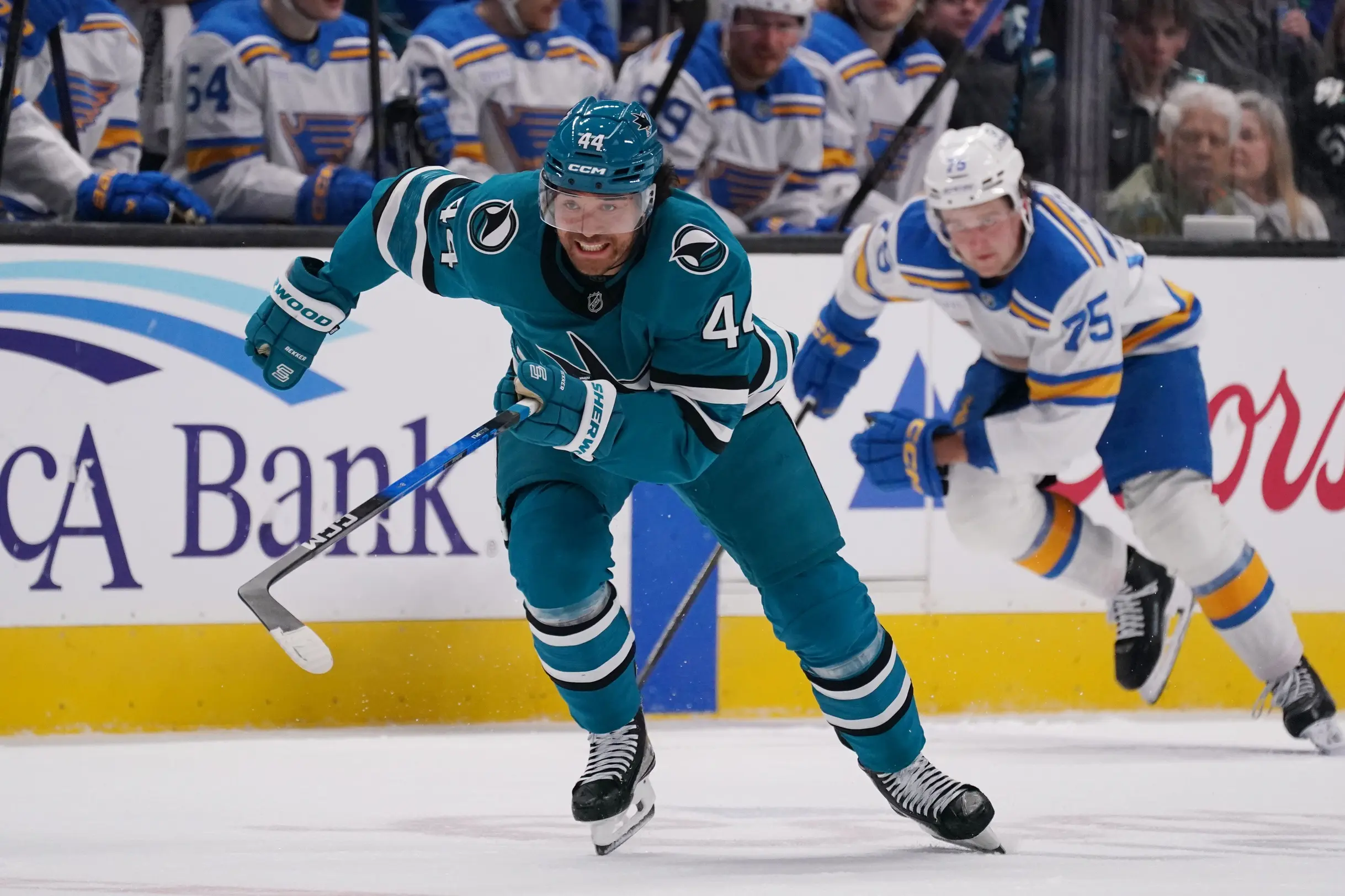
Photo credit: © David Gonzales-Imagn Images

Mar 8, 2026, 10:00 EDTUpdated: Mar 9, 2026, 11:21 EDT


The 2026 NHL Trade Deadline has come and gone, and this year’s edition did not quite live up to the hype for the Vancouver Canucks. That said, with at least some moves being made, including the dealing of Conor Garland, David Kampf, and Lukas Reichel for various draft picks, it can’t be called anything close to the Canucks’ worst deadline ever. And there were a number of positives to be taken from it, even if a bit of hindsight is required to see some of them.
One of the largest positives coming out of Trade Deadline Week had nothing to do with a deal in the making, but everything to do with a deal already made. It was confirmation that the Canucks did indeed trade Kiefer Sherwood at the exact right time. And to a franchise that is all too comfortable with regret, it’s nice to be able to look back on something and think “Nailed it.”
The Canucks came into 2025-26 with some designs on re-signing Sherwood. When he and his camp’s ask was too big – and it sure was, as time will tell – the goal switched to selling the pending UFA for as sizeable a return as was possible.
For a while, the Canucks had hopes of turning Sherwood into a first round pick, at least. As the season began, Sherwood himself seemed to do everything in his power to make that a reality. Coming off the heels of a career season, Sherwood stepped forward instead of taking a step back. He came out gangbusters, with nine goals in the month of October alone. Vancouver started to shop him around, and their ask stayed high.
But those offers involving a first never materialized. And as Sherwood started to slow down on the ice, and suffered a couple of minor maladies, the Canucks ultimately decided to pull the trigger on something slightly lesser. On January 19, a few weeks ahead of the Olympic Roster Freeze, the Canucks dealt Sherwood to the San Jose Sharks for a 2026 second round pick, a 2027 second round pick, and minor league defender Cole Clayton.
It wasn’t a bad return, by any means. But there were those who wondered about both the outcome and the timing. For some, not landing a first round pick meant that maybe Sherwood should have been extended, instead. For others, it was wondering about whether or not the Canucks could have got more back for Sherwood if they’d waited longer, and perhaps as long as the Trade Deadline itself.
Thankfully, with the power of hindsight, we can now say any such worries were decidedly for naught. We know this because of where the situation went next between Sherwood and the Sharks.
Sherwood was injured at the time of the trade. It took him until February 4 to play his first game for the Sharks, and then the Olympic Break hit. As of this writing, he’s played six games total with San Jose, and has three points in those six games.
In the interim, the Sharks fell out of the playoffs. They’re not out of the race by any stretch of the imagination, just two points back with a game in hand, but they’re no longer in the same firm position they were when they traded for Sherwood. That led to at least some consideration of the Sharks flipping Sherwood to another destination, in the hopes of recouping the draft picks they paid to Vancouver.
We don’t hold or claim any insider information on how those negotiations went. But it’s pretty obvious that the Sharks were not going to get back what they paid for Sherwood. There were the injuries. There was the fact that Sherwood was already slowing down considerably in Vancouver prior to the trade – with a ten-game goalless drought between November and December, and just one goal post-Christmas. The Canucks may not have traded Sherwood at the peak of his play, but perhaps at the peak of his value, right before his regression back to his personal mean became impossible to ignore.
But, then again, regardless of Sherwood’s own performance, the whole notion of waiting until the deadline for better offers was an erroneous one, anyway. Those better offers probably would have never materialized for Sherwood, because they didn’t really materialize for anyone. A very comparable UFA in Toronto’s Bobby McMann – who should have gone for at least equal value to Sherwood, if not more – went for a second and a fourth. The only firsts that got handed out were for the truly, truly big names, like John Carlson, Justin Faulk, Brayden Schenn, and Nazem Kadri.
In other words, we essentially know firsthand that the Canucks would not have got anything more back for Sherwood had they waited longer. We know this because of the way the market turned out at the deadline, and we know this because, by all reports, San Jose probably would have flipped him again if such offers were available.
So, San Jose instead did what they felt they had to, and extended Sherwood to a whopping five-year contract with an AAV of $5.75 million. That’s a mighty big chunk of change, and it will carry Sherwood from age 31 right through to 35.
We don’t think we need to do much work here to explain why that was a contract that the Canucks, under any circumstances, could not have given Sherwood. It’s probably too expensive of a contract for post-prime years under any circumstance, but it would be an especially poor fit for a rebuilding franchise that only hopes to compete in the deal’s latter years. Avoiding even thinking about a contract like this is one more reason the Canucks dealt Sherwood at the right time.
But it’s also easy enough to see how the Sharks convinced themselves into this. They dealt considerable draft capital for Sherwood, and their timing was more than a little off on it. Sherwood wound up not having enough time to make any real difference in the Sharks’ playoff hopes pre-deadline. Moreover, the Sharks failed at any attempts they might have made to recoup that draft capital. And so, rather than risk having Sherwood walk away for nothing at the end of the year after having paid up for him, the Sharks bent to his asks and signed him to that extension pre-deadline, ensuring they got at least something long-term for their investment.
This is pretty close to a sunk-cost fallacy, but it’s the kind of thinking that NHL teams employ all the time. It’s also perhaps not quite as devastating a decision if made by the Sharks, as opposed to by the Canucks. The Sharks do hope to compete right away, and they should be able to make the most of the best years of Sherwood’s new contract. There’s still some chance of them not entirely regretting it.
But there should be no regrets from the Canucks here. Everything that transpired leading into the Sherwood trade, and everything that has transpired since, tells us that the Canucks traded him at the exact right time to maximize on his value. In the end, that value didn’t end up being quite as high as some thought it would be. But it was still higher than the market turned in for similar players at the deadline, and it was still a lot better than being put in a position anywhere near thoughts of an extension.
Sponsored by bet365


Breaking News
- Vancouver Canucks practice in Tampa Bay; Abbotsford signs defenceman to PTO
- Why did Canucks fans rate Aatu Räty higher than the rest of the league?
- What the Canucks are getting in new trade acquisitions Jacob Quillan and Brandon Buhr
- The Statsies: Tom Willander leads Canucks in xGF in overtime loss to Panthers
- The Stanchies: Brady Tkachuk’s natural hat trick extends Canucks losing streak to 6 in OT loss to Panthers

Vancouver CanucksTeam Cap Summary

Cap Summary
2026-27
2027-28
Projected Cap Hit
$87,295,050
$71,329,167
Projected Cap Space
$16,704,950
$42,170,833
Current Cap Space
$18,309,380
$42,170,833
Active Players
23/23
13/23
Draft Picks
Round
'27
'28
1
1
1
2
2
2
3
1
1